Preparing for surgery and recovery
Exercise and daily preparation before knee replacement
Maintain feasible movement and prepare for recovery rather than training through pain.
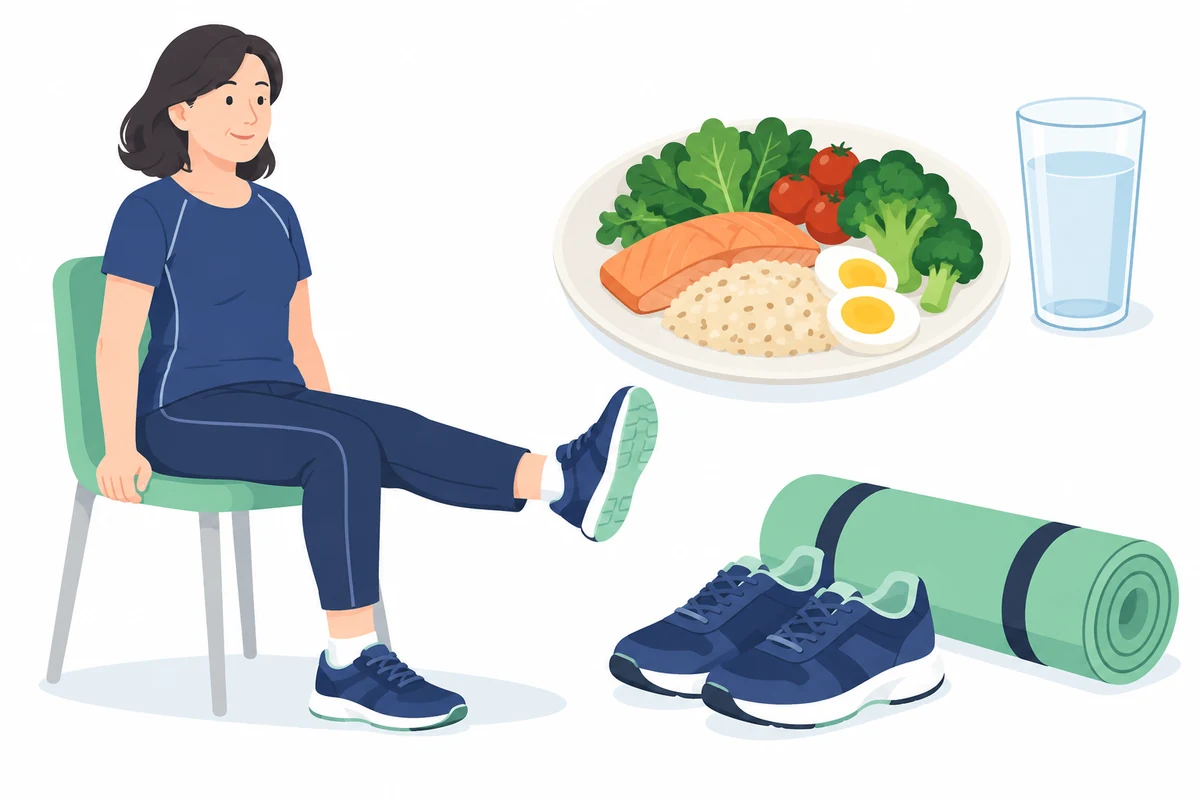
At a glance
- Learn strength and movement exercises that fit your condition.
- Review nutrition, glucose and medicines, not weight alone.
- Prepare aids, a safe home and help after discharge.
Waiting for surgery does not necessarily mean resting from all exercise. Preparation is not a competition to train harder. It aims to preserve feasible strength and movement and to learn postoperative exercise and daily routines, adjusted for pain and other conditions.
Three parts of preoperative preparation
Function
Tailored exercise, movement and safe walking
Health
Nutrition, glucose, anemia and medicine plan
Home
Aids, safety, meals and transport support
Function, health and medicines, home support
Review current function
Assess walking, standing from a chair and knee movement. Report spine or hip conditions, dizziness and previous falls so that exercise can be selected safely.
The starting point helps recovery planning. More preoperative exercise does not guarantee freedom from complications or better long-term outcomes; research programmes and effects vary.
Choose adjustable activities
Learn appropriate thigh-muscle activation, seated knee extension, range-of-motion work and safe walking. Cycling or water-based activity may be alternatives when prolonged walking is difficult.
Repetitions and intensity depend on pain, strength and other conditions. Avoid starting with heavy loads or forced deep bending. Increased next-day pain or swelling is a reason to adjust and consult the rehabilitation team.
Prepare nutrition, health and medicines
Rapid weight loss through severe food restriction can reduce strength and fitness. Discuss nutrition, glucose, anemia and smoking with the surgical team.
Report all prescriptions, nonprescription medicines and supplements, and obtain specific instructions about continuation or stopping. Do not change them or add new products without a plan.
Practise the post-discharge routine
Learn walking-aid use, chair and bathroom transfers and safe stairs where needed. Reduce trip hazards and arrange meals, transport and help.
NICE recommends advice on pre- and postoperative exercise, lifestyle and independent function. Clarify who will teach rehabilitation and whom to contact after discharge so the plan remains practical.
Common Questions
Should I stop exercising before surgery?
If there is no contraindication or restriction, feasible activity can continue. Check the type and load appropriate for your symptoms.
Does hard training guarantee recovery?
Preparation may help, but programmes and effects differ; it is not a guarantee.
Where do I start if pain is severe?
Assess pain and agree on limited movements, aids and home preparation with the team. Do not force a target amount.
Evidence and references
01When to seek medical care
Each warning sign is a separate reason to seek care. Follow the action below if any one applies.
Emergency department · call 119 in Korea
- Call 119 for sudden breathlessness or chest pain, severe faintness or loss of consciousness. Do not wait for calf swelling to appear.
- Go to an emergency department if you suddenly cannot bear any weight, or if an injured knee swells rapidly or looks deformed. A cold or numb foot after injury also needs immediate assessment.
- Seek emergency care for a hot, swollen and severely painful joint with high fever, shaking chills, confusion or inability to bear weight.
- With back or leg pain, go immediately to an emergency department for new difficulty passing urine, loss of bladder or bowel control, or numbness around the genitals or anus. Severe or rapidly worsening weakness or numbness in both legs also needs immediate assessment.
Same-day assessment
- Arrange assessment today for a newly hot, swollen joint, sudden severe pain, or a knee locked so that it cannot fully straighten. Joint infection can occur without fever.
- Have new swelling or pain in one calf assessed today for a possible blood clot. Call 119 immediately if breathlessness or chest pain develops.
- Severe knee pain or a new limp in a growing adolescent may come from a hip condition such as slipped capital femoral epiphysis. Stop walking and sport and arrange assessment today. Go directly to emergency care if they cannot bear weight.
- Stop running and seek assessment today for new recurring groin pain, pain with walking or at night, or a limp. A femoral neck stress fracture needs to be considered. Keep weight off the painful leg until assessed. Go to emergency care if you cannot bear weight.
Book an outpatient appointment
- If none of the warning signs above is present, book an appointment for pain lasting a few weeks, repeated swelling or reduced daily activity and exercise.