It's hard to tell a county by the name of O'Dary.
After hearing that your knee bows inward, you may wonder how much it will change. Similar-looking bowlegs can start with different alignment and joint conditions. The shape on one image and the rate of change over several years are different pieces of information.
The study examined how quickly knee alignment changes and the characteristics of knees that change rapidly. It tracked the shape of the whole leg, extending the assessment of OA beyond joint space alone.
I compared the first photo of the same bridge to the tracking photo.
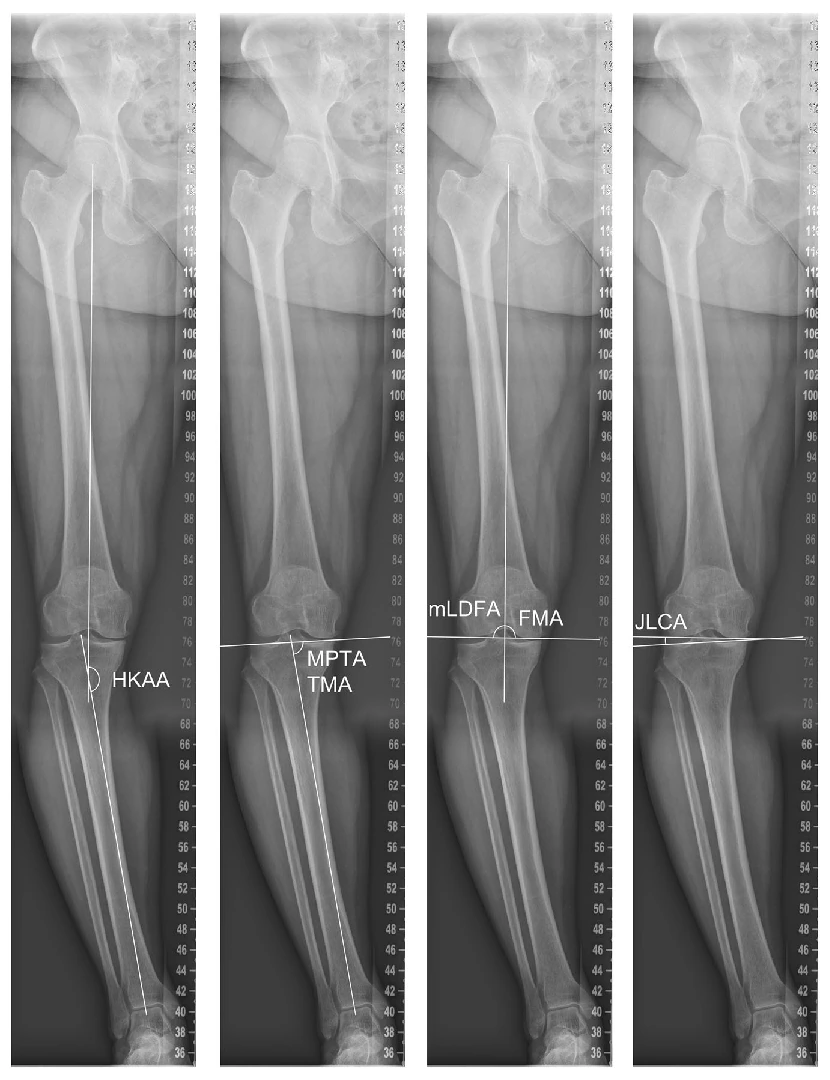
We analyzed standing full-length X-rays of 10,841 legs from a tertiary hospital. HKAA connects the hip, knee and ankle; baseline alignment was classified as bow-legged varus, neutral or knock-kneed valgus. The count refers to limbs, not people.
“Rapid progression” was defined as alignment change of at least 0.50° per year in the same direction. JLCA and radiographic OA grade were also assessed. Analyses accounting for age, sex and BMI examined each measure’s association with progression.
The final analysis included 4,316 patients with both legs and 2,209 with one leg. Cases in which previous surgery or other conditions made original alignment difficult to assess were excluded, to examine change during the course of arthritis.
Rapid change was observed in about one-third of the group with baseline varus alignment
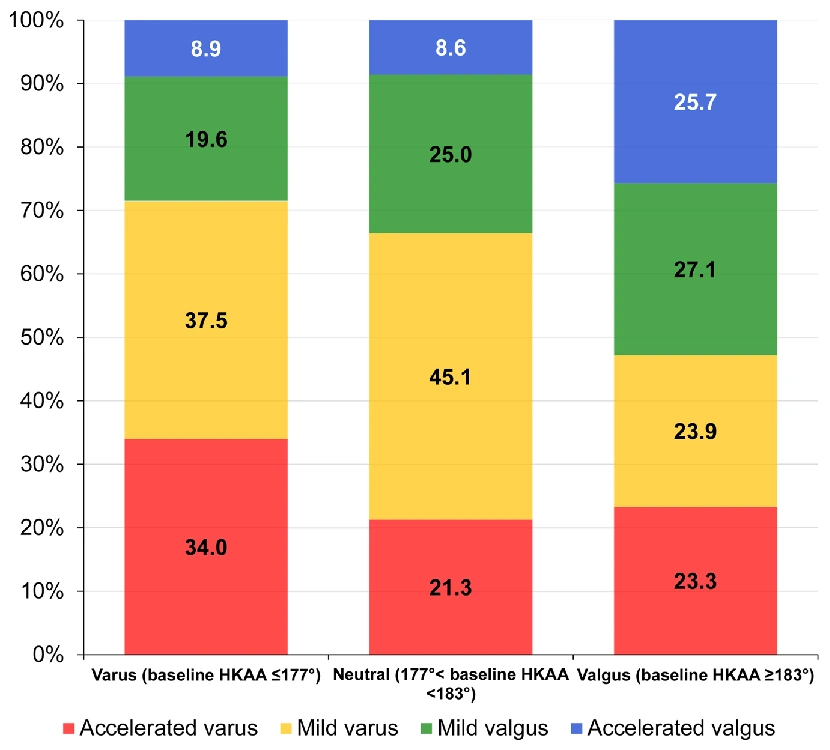
Among knees initially in varus, 34.0% changed further toward varus by at least 0.50° per year. Among those initially in valgus, 25.7% met the same threshold toward valgus. These are proportions meeting the study criterion; they do not mean that legs became 34% more bowed on average.
Initial alignment, JLCA, and arthritis grade were associated with faster change. This is why several image findings need to be considered together. These results do not directly calculate an individual’s future change.
Original Figure 3
 Enlarge Figure
The original graph separates progression direction and rate by baseline alignment. Annual progression of at least 0.50° in the same direction occurred in 34.0% of the varus group and 25.7% of the valgus group.
Knee Surgery, Sports Traumatology, Arthroscopy (2026). DOI: 10.1002/ksa.70293 · Original Figure 3
Original Figure 9
 Enlarge Figure
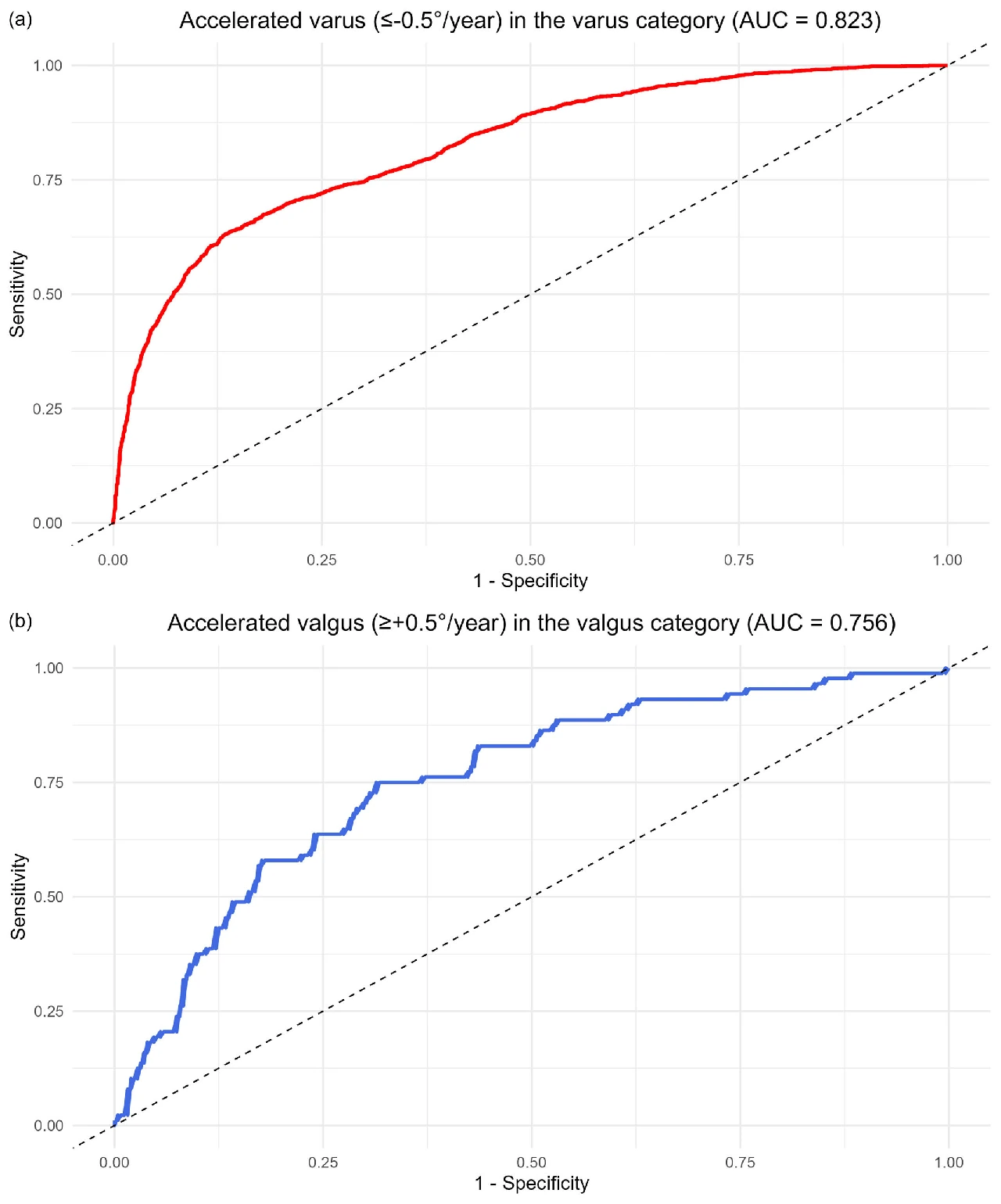
ROC curves for rapid varus and valgus progression, with AUCs of 0.823 and 0.756, respectively.
Knee Surgery, Sports Traumatology, Arthroscopy (2026). DOI: 10.1002/ksa.70293 · Original Figure 9
How would you like to read this study in the clinic?
Alongside “Do I have bowlegs?”, you can ask “Has my alignment changed compared with earlier images?” Both current shape and change over time help explain what is happening. Radiographic angles and discomfort in daily life should be assessed separately.
The study proposes imaging measures that may help identify knees with faster alignment progression. It does not recommend surgery above a particular angle or regular full-length X-rays for every patient.
It's different to say that words are related to causes.
It's an observational study in one hospital, so we need to make sure that the same percentage occurs elsewhere or in the general population. The subjects were patients with tracked X-rays, and their scans did not represent all the natural scans of knee.
And even though we've observed the fact that JLCA is large and that alignment changes rapidly, there's no way to conclude that changing it will stop treatment from progressing. The results are accurate as you read on the basis of which knee will be studied more closely.
In particular, 0.50 degrees per year is the research standard set in this paper. We didn't use it as a common benchmark for starting treatment or determining surgery. It's based on the duration of observation and video conditions.