Preparing for surgery and recovery
When can I change from a walker to a cane?
Use gait quality, balance and knee control rather than a fixed date.
At a glance
- Use aids to practise safe, controlled walking.
- Have height, side and walking sequence checked.
- Assess fatigue and turns before reducing support.
A walker is not a sign of poor progress. Pain and swelling after surgery can reduce thigh strength and change balance. Walking aids help prevent falls while you practise a controlled gait. Your stability matters more than the day another patient stopped using an aid.
Check function before reducing support
- 01
Provide support
Correct fit and weight-bearing instructions
- 02
Check function
Balance, knee control and turns
- 03
Adjust the stage
Reduce support without a marked limp
A sequence linking adequate support, gait assessment and a trial of reduced support
Admission is usually the day before surgery; walking starts the day after
You are usually admitted the day before surgery. After the operation, walking starts on the first postoperative day with guidance from the care team.
Discharge is usually on the fifth day after surgery. This is counted from the operation, not from admission. Your discharge date may change according to your health and recovery.
Understand what support is needed
Check permitted weight bearing, knee buckling, foot clearance and large body leans. Restrictions may differ when other procedures accompany replacement. Less pain is not permission to change weight-bearing instructions.
Walkers, crutches and canes offer different support. Wrist or shoulder problems, home layout and stairs influence selection. Practise with the rehabilitation team to identify likely problems before going home.
Learn the fit and technique in person
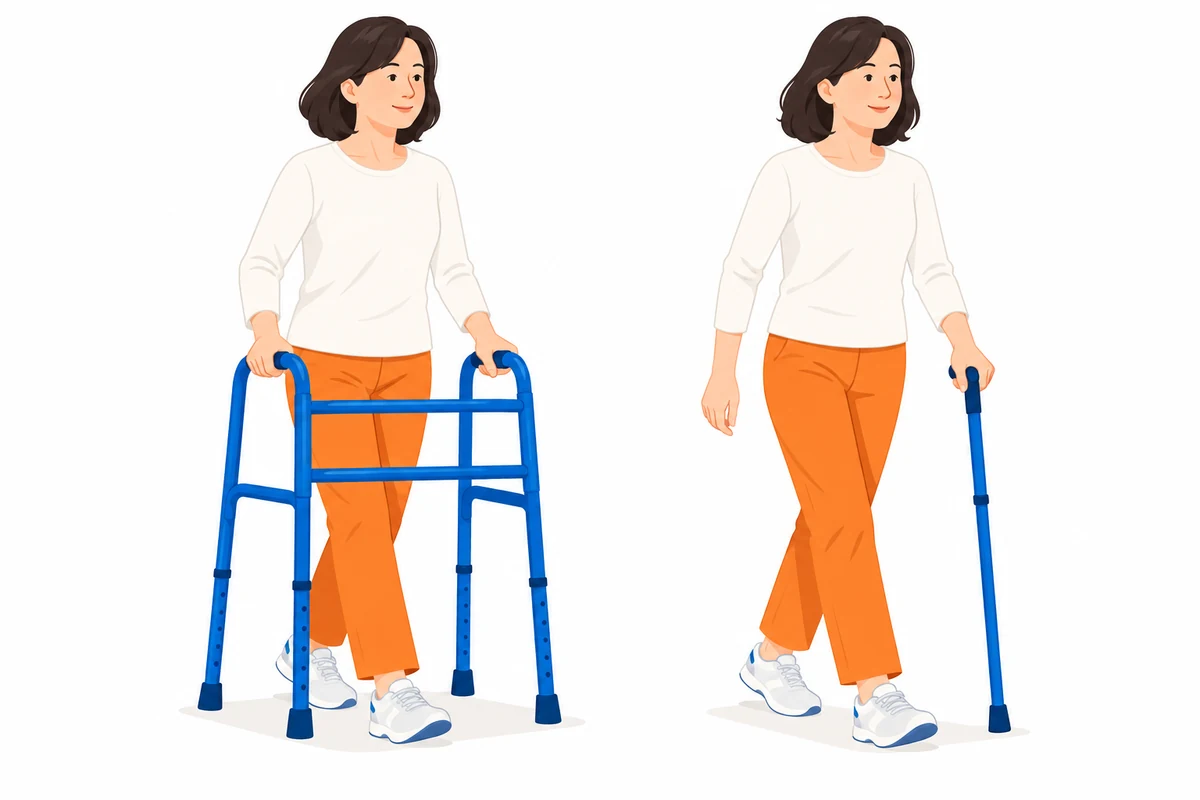
Check handle height, elbow position and body placement. Pushing a walker too far forward or hanging from its handles can be unstable. The order of moving the aid and feet must match your weight-bearing instructions.
A single cane is usually held opposite the operated leg, but bilateral surgery or arm problems may require another approach. Ask a therapist to check your own technique rather than relying only on an online illustration.
Assess gait quality before reducing support
Check that the knee does not buckle, the foot clears the floor and the limp is not marked. Test turns, chair transfers and balance when tired. A few successful indoor steps are different from independent outdoor mobility.
If a less supportive aid increases limping or pain, returning temporarily to more support is reasonable. This protects useful practice rather than representing failure. Learn stairs and slopes separately from level walking.
Reduce environmental fall risks
Avoid slippery socks, wet floors and loose rugs. Inspect rubber tips, wheels and locking mechanisms. Keep the aid and lighting within reach for night-time bathroom trips.
Repeated buckling or new dizziness needs assessment of the cause, not only a different aid. Severe pain, deformity or inability to bear weight after a fall warrants prompt review. Safe mobility is more important than giving up equipment quickly.
Common Questions
When can I use just one cane?
The team checks weight-bearing instructions, strength, balance and gait. There is no universal postoperative week.
Can I stop using it indoors?
Even short distances can pose a fall risk. Include night-time mobility and fatigue in the decision.
Will prolonged aid use weaken my muscles?
Combine necessary support with approved strengthening. Controlled practice is more useful than forced independence with a marked limp.
Evidence and references
01When to seek medical care
Each warning sign is a separate reason to seek care. Follow the action below if any one applies.
Emergency department · call 119 in Korea
- Call 119 for sudden breathlessness or chest pain, severe faintness or loss of consciousness. Do not wait for calf swelling to appear.
- Go to an emergency department if you suddenly cannot bear any weight, or if an injured knee swells rapidly or looks deformed. A cold or numb foot after injury also needs immediate assessment.
- Seek emergency care for a hot, swollen and severely painful joint with high fever, shaking chills, confusion or inability to bear weight.
- With back or leg pain, go immediately to an emergency department for new difficulty passing urine, loss of bladder or bowel control, or numbness around the genitals or anus. Severe or rapidly worsening weakness or numbness in both legs also needs immediate assessment.
Same-day assessment
- Arrange assessment today for a newly hot, swollen joint, sudden severe pain, or a knee locked so that it cannot fully straighten. Joint infection can occur without fever.
- Have new swelling or pain in one calf assessed today for a possible blood clot. Call 119 immediately if breathlessness or chest pain develops.
- Severe knee pain or a new limp in a growing adolescent may come from a hip condition such as slipped capital femoral epiphysis. Stop walking and sport and arrange assessment today. Go directly to emergency care if they cannot bear weight.
- Stop running and seek assessment today for new recurring groin pain, pain with walking or at night, or a limp. A femoral neck stress fracture needs to be considered. Keep weight off the painful leg until assessed. Go to emergency care if you cannot bear weight.
Book an outpatient appointment
- If none of the warning signs above is present, book an appointment for pain lasting a few weeks, repeated swelling or reduced daily activity and exercise.