Daily life and exercise
Using a stationary bike with osteoarthritis
Fit the seat and resistance, then adjust time and intensity to the knee’s response.
At a glance
- Fit the seat and equipment safely without locking the knee.
- Current position, fitness and symptoms matter more than meeting a general target immediately.
- Change time or resistance separately and include strength work.
A stationary bike can be an aerobic option when long walks are difficult. The seat shares body weight and resistance is adjustable, but repeated knee bending is not comfortable for everyone. Assess the actual position and response rather than the equipment label.
Three adjustments for a stationary bike
- 01
Position
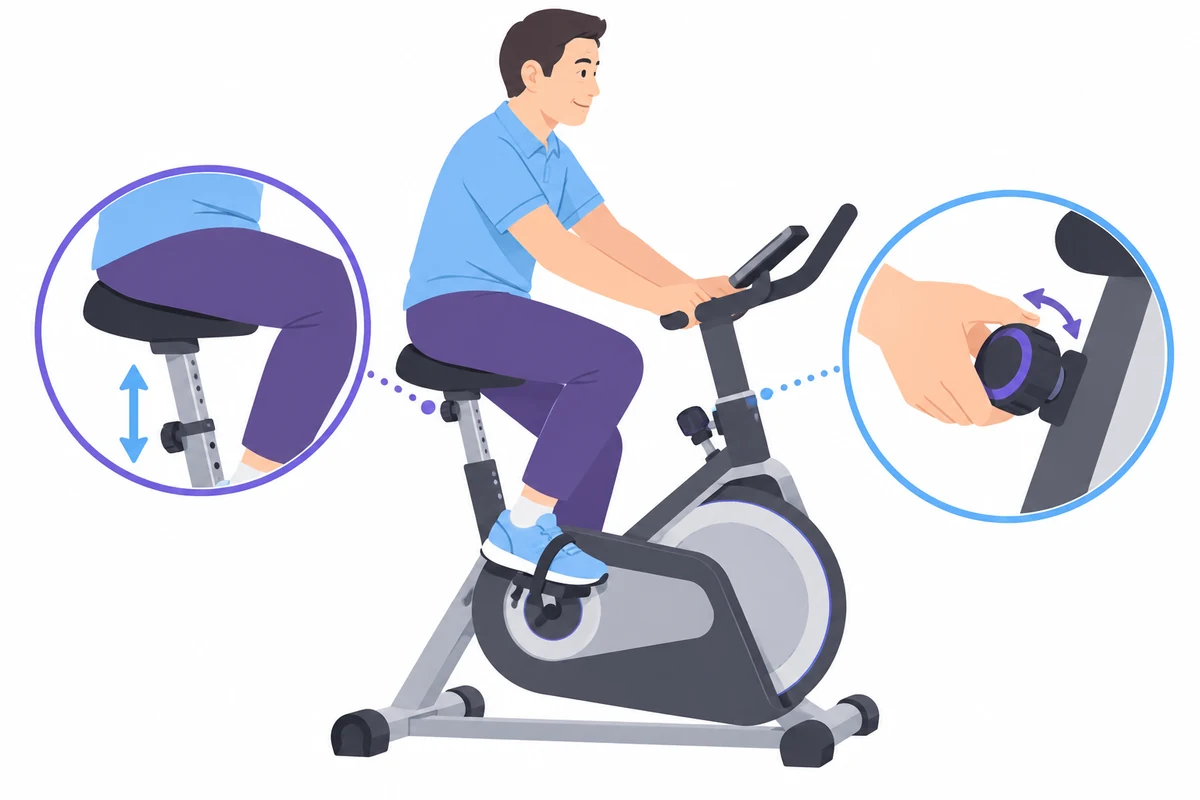
Check seat height, pedal contact and pelvic movement.
- 02
Start
Use low resistance for a manageable time with steady movement.
- 03
Adjust
Change time or resistance separately; monitor swelling and walking.
Three panels show seat position, low resistance and response-based progression
Get on safely and fit the position
Check that the bike is stable, space is clear and support is available when getting on or off. A low seat requires more knee bending; a seat that is too high can cause pelvic rocking or insecure pedal contact.
Find a comfortable position with a slight knee bend at the furthest pedal point rather than locking the knee. One angle is not correct for everyone. If balance or back problems are present, compare options such as a recumbent bike with a physiotherapist.
Begin with controlled movement at low resistance
Start with an easy resistance and a steady movement rather than pressing heavily. Check whether bending causes front, inner or back pain. Do not force a full revolution using body weight if the range is difficult.
AAOS arthritis exercise advice describes an aerobic goal of 20–30 minutes on 3–4 days a week, with ten-minute segments when needed. This is a general goal and example of dividing activity, not a requirement on the first day. A smaller starting amount can suit current fitness and symptoms.
Do not increase time and resistance together
Once position and movement are manageable, change time or resistance gradually, one at a time. Reduce effort if breathing prevents conversation or pain makes you twist the body. Displayed calories or speed alone do not establish a suitable intensity.
After surgery, check movement, weight-bearing and associated repair restrictions first. Do not adopt general arthritis durations or resistance automatically. Compare swelling and walking before and after activity, and review position and dose if movement deteriorates.
Combine cycling with strength and daily activity
Cycling supports aerobic activity but does not replace every demand of rising from a chair, balance and thigh strength. Plan relevant strength work and ordinary activity too. Comfortable cycling should not lead to ignoring other functions.
Stop and review sharp pain, new swelling or buckling. Brief muscle fatigue differs from persistently worse walking after exercise. Finding an amount you can sustain comfortably comes before tolerating high resistance.
Common Questions
Is a higher seat always better?
Too high a seat can cause pelvic rocking and poor pedal contact. Fit it using actual comfortable movement.
Must every session last 30 minutes?
No. General goals differ from an individual starting dose. Divide activity and monitor the response.
Can I ride immediately after surgery?
The procedure, range, wound and associated repairs matter. Follow the relevant rehabilitation plan.
Evidence and references
01When to seek medical care
Each warning sign is a separate reason to seek care. Follow the action below if any one applies.
Emergency department · call 119 in Korea
- Call 119 for sudden breathlessness or chest pain, severe faintness or loss of consciousness. Do not wait for calf swelling to appear.
- Go to an emergency department if you suddenly cannot bear any weight, or if an injured knee swells rapidly or looks deformed. A cold or numb foot after injury also needs immediate assessment.
- Seek emergency care for a hot, swollen and severely painful joint with high fever, shaking chills, confusion or inability to bear weight.
- With back or leg pain, go immediately to an emergency department for new difficulty passing urine, loss of bladder or bowel control, or numbness around the genitals or anus. Severe or rapidly worsening weakness or numbness in both legs also needs immediate assessment.
Same-day assessment
- Arrange assessment today for a newly hot, swollen joint, sudden severe pain, or a knee locked so that it cannot fully straighten. Joint infection can occur without fever.
- Have new swelling or pain in one calf assessed today for a possible blood clot. Call 119 immediately if breathlessness or chest pain develops.
- Severe knee pain or a new limp in a growing adolescent may come from a hip condition such as slipped capital femoral epiphysis. Stop walking and sport and arrange assessment today. Go directly to emergency care if they cannot bear weight.
- Stop running and seek assessment today for new recurring groin pain, pain with walking or at night, or a limp. A femoral neck stress fracture needs to be considered. Keep weight off the painful leg until assessed. Go to emergency care if you cannot bear weight.
Book an outpatient appointment
- If none of the warning signs above is present, book an appointment for pain lasting a few weeks, repeated swelling or reduced daily activity and exercise.