Injuries, tendons and menisci
Common runner pain: consider both location and how it changes
Distinguish knee, Achilles and shin symptoms and bring a useful training history.
At a glance
- Record onset and next-day response as well as pain location.
- Review changes in long runs, speed and hills.
- Focal bone pain or sudden loss of strength warrants earlier assessment.
After a run, it is tempting to blame one shoe or one movement pattern. Pain in the same area can arise from muscle, tendon, bone or other tissues. Note when it began, what happens the next day and whether ordinary walking is affected.
Three coordinates for describing pain
- 01
Location
Point to the area; distinguish broad discomfort from one spot.
- 02
Timing
Compare during activity, afterward and the next morning.
- 03
Function
Check walking, stairs, push-off and any limp.
Three panels show pain location, change over time and walking or running function
Location is a clue to the tissue
Reviews of runner injuries commonly report problems at the knee, foot and ankle, and lower leg. Patellofemoral pain, Achilles tendinopathy and medial shin pain are examples. Participants and injury definitions vary, so a published percentage is not your personal probability of injury.
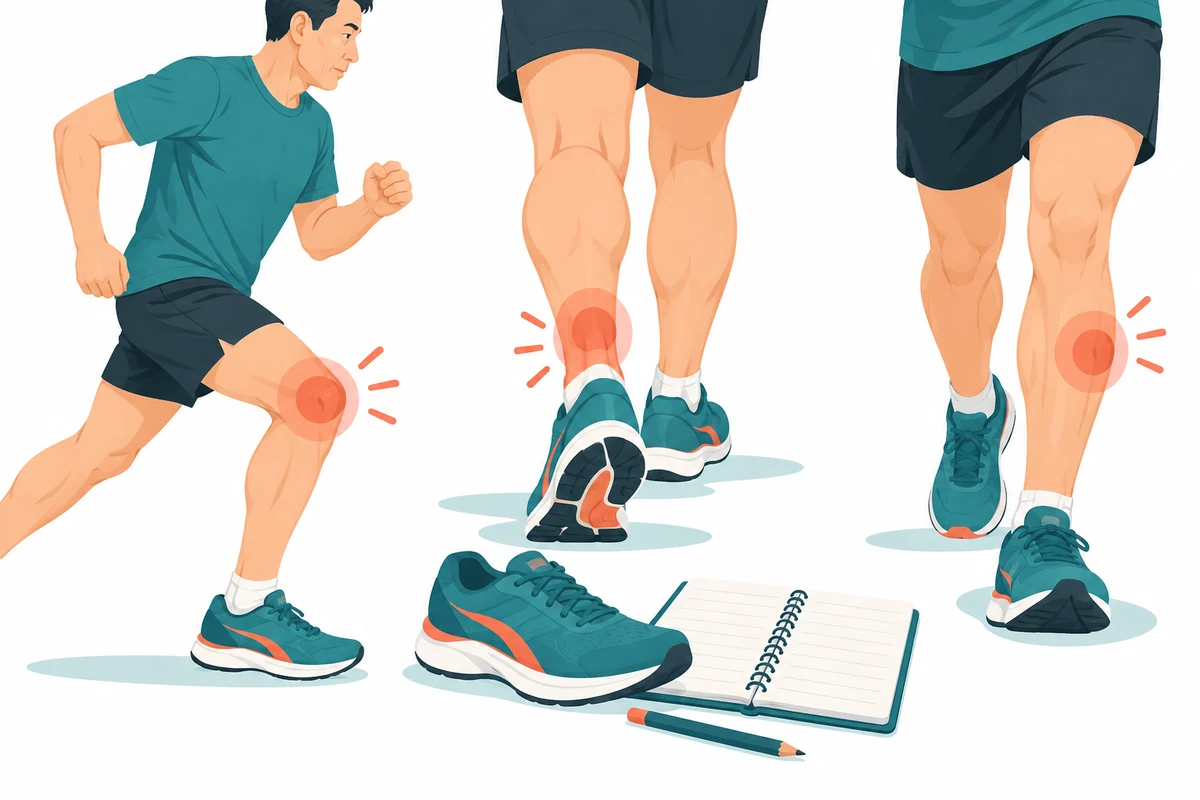
Pain at the front and outside of the knee involves different possibilities. Calf muscle soreness and Achilles pain also need distinction. Broad shin discomfort should not automatically receive the same explanation as sharply localized bone pain. A pain map helps, but location alone does not establish a diagnosis.
Record the timing
Note whether both muscles ache after an unusually long run or a sharp pain recurs at one site. Does it occur only during running, ease after warming up and return later, or begin with the first morning steps? Temporary improvement as you warm up does not establish that continuing is appropriate.
Alongside distance and time, record speed, hills, surface, new shoes, previous injuries, sleep and food intake. Attributing symptoms to body shape or gait alone can miss a recent training change. Compare the past month with the week symptoms began to identify adjustments during your consultation.
Choose what to reduce in the next week
If someone who runs on Tuesday, Thursday and Saturday develops discomfort after Saturday’s long run, one option is to omit the long run and hills the following week and use comfortable activity on level ground. Reduce walking or cycling too if it provokes symptoms. This is an example of adjusting training load; the plan will vary with the type of injury.
Stop that run if pain makes you limp or changes your movement. Seek assessment when the same pain returns during easy activity or worsens despite reducing load. Shoes and strengthening can be considered individually; no single shoe or exercise is established as preventing every running injury.
Recognize symptoms that need assessment
Stop running and seek assessment for any one of the following: tenderness at one point on a bone, pain with walking or at night, or a limp. A sudden snapping sensation at the heel with loss of push-off strength needs same-day assessment. Go directly to emergency care if you suddenly cannot bear any weight or the knee swells rapidly after injury.
Brief mild muscle soreness after activity is not automatically an emergency. Major swelling, a knee that locks and cannot straighten, and especially a red hot joint with fever need urgent same-day assessment. Judge recovery by comfortable walking and next-day daily function, as well as the distance you run.
Stop and have groin pain assessed
Stop running and seek assessment today if any one occurs: recurring new groin pain, pain with walking, pain at night, or a limp. Keep weight off the painful leg until assessed. Go directly to emergency care if you cannot bear any weight.
Common Questions
Can the location tell me the diagnosis?
It is a useful clue, but several tissues occupy the same area. Examination and, when needed, tests distinguish them.
Does running cause knee osteoarthritis?
Studies do not consistently find more osteoarthritis in recreational runners. Observational associations cannot guarantee safety or prevention for every individual.
Should I buy new shoes first?
Check fit and comfort, while reviewing training changes and symptoms. There is no single best preventive shoe type for everyone.
Evidence and references
01When to seek medical care
Each warning sign is a separate reason to seek care. Follow the action below if any one applies.
Emergency department · call 119 in Korea
- Call 119 for sudden breathlessness or chest pain, severe faintness or loss of consciousness. Do not wait for calf swelling to appear.
- Go to an emergency department if you suddenly cannot bear any weight, or if an injured knee swells rapidly or looks deformed. A cold or numb foot after injury also needs immediate assessment.
- Seek emergency care for a hot, swollen and severely painful joint with high fever, shaking chills, confusion or inability to bear weight.
- With back or leg pain, go immediately to an emergency department for new difficulty passing urine, loss of bladder or bowel control, or numbness around the genitals or anus. Severe or rapidly worsening weakness or numbness in both legs also needs immediate assessment.
Same-day assessment
- Arrange assessment today for a newly hot, swollen joint, sudden severe pain, or a knee locked so that it cannot fully straighten. Joint infection can occur without fever.
- Have new swelling or pain in one calf assessed today for a possible blood clot. Call 119 immediately if breathlessness or chest pain develops.
- Severe knee pain or a new limp in a growing adolescent may come from a hip condition such as slipped capital femoral epiphysis. Stop walking and sport and arrange assessment today. Go directly to emergency care if they cannot bear weight.
- Stop running and seek assessment today for new recurring groin pain, pain with walking or at night, or a limp. A femoral neck stress fracture needs to be considered. Keep weight off the painful leg until assessed. Go to emergency care if you cannot bear weight.
Book an outpatient appointment
- If none of the warning signs above is present, book an appointment for pain lasting a few weeks, repeated swelling or reduced daily activity and exercise.