Injuries, tendons and menisci
Knee pain while running: assess location, load and recovery
Distinguish anterior knee pain from osteoarthritis and adjust running and exercises.
At a glance
- Do not equate knee pain immediately with cartilage damage or osteoarthritis.
- Education and individualized knee and hip exercises are central to patellofemoral pain care.
- Choose adjuncts by response; assess locking and substantial swelling separately.
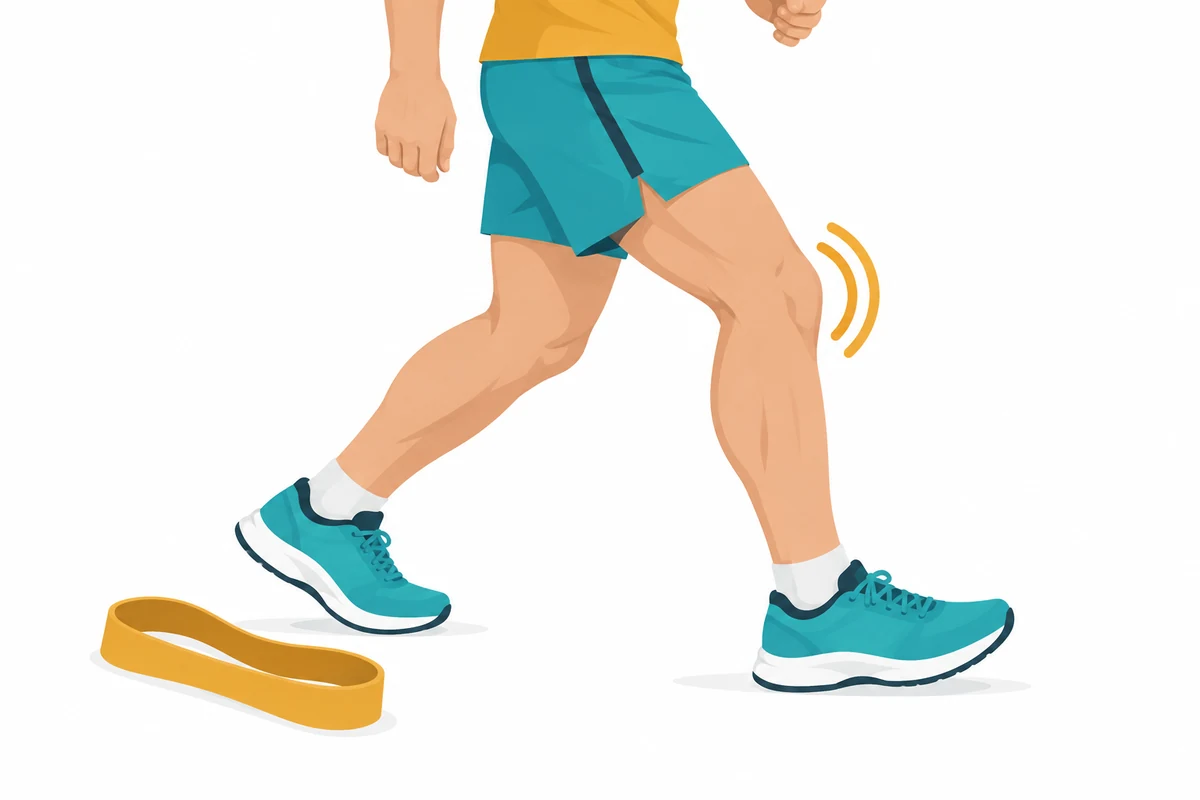
Knee pain does not automatically mean worn cartilage or that you must give up running permanently. Pain at the front, outside or joint line prompts different assessments. Consider provoking activities, swelling, locking and next-day function when deciding what to do.
Three decisions in running-related knee pain
- 01
Identify the activity
Distinguish stairs, running and bending, and check swelling or locking.
- 02
Adjust demand
Modify hills, pace, distance and exercise range.
- 03
Review the response
Use walking, stairs and next-day symptoms to revise the plan.
Three panels show provoking movements, adjusting running and exercise, and assessing next-day function
Understanding anterior knee pain
Pain around or behind the kneecap with stairs, chair rises or running may indicate patellofemoral pain. Pain on the outside of the knee or at a tendon needs different assessment. Using one general label such as runner’s knee can overlook adjustments appropriate to the specific condition.
Your consultation reviews onset, trauma, swelling, locking, recent changes in distance, hills and pace, and previous injuries. Changes in how you step because of pain matter too. MRI is not required first in every case; examination and progress determine whether X-rays or further tests are useful.
Running does not automatically mean cartilage damage
Studies of recreational running do not consistently find more osteoarthritis than in non-running groups. Some analyses observed lower prevalence, but this does not demonstrate that running caused prevention. Previous injuries and differences between participants may influence the association.
Do not apply these findings unchanged to everyone with established arthritis or current running pain. Consider imaging, symptoms, function, age and goals together. Comfortable running and persistent load-related pain are different situations; choose activity type and amount according to the diagnosis and response.
Use exercise and education as the foundation
For patellofemoral pain, knee-targeted strengthening and understanding symptoms and load are central, with hip exercises when indicated. If deep bending hurts, modify range and resistance or begin with another movement. Discuss which activities to maintain, rather than relying only on complete rest.
If stairs and hills provoke symptoms during a Tuesday–Thursday–Saturday schedule, one option is a week without hills or speed work, using shorter outings on level ground. On non-running days, assess function with tolerable movements such as chair rises. This is an individual planning example, not a guaranteed treatment dose.
Choose adjuncts and the timing of assessment
Taping, orthoses and running retraining may be added after examination and response testing. Every runner does not need a forefoot strike or the same stride pattern. A new movement can shift demand to other tissues; change one element at a time and check actual symptoms and function.
Seek same-day assessment for a newly hot, swollen joint, sudden severe pain or a knee locked so that it cannot straighten. Go directly to emergency care if you suddenly cannot bear any weight or the knee swells rapidly after injury. Do not delay care because there is no fever.
Stop and have groin pain assessed
Stop running and seek assessment today if any one occurs: recurring new groin pain, pain with walking, pain at night, or a limp. Keep weight off the painful leg until assessed. Go directly to emergency care if you cannot bear any weight.
Common Questions
Must I stop all running when my knee hurts?
It depends on the diagnosis and symptoms. Assess whether adjusted activity can be maintained without limping or worsening.
Will changing to a forefoot strike help?
Retraining may help selected runners, but it changes calf and Achilles demands too. One foot strike is not recommended for everyone.
Is MRI essential when there is pain?
Examination and progress guide testing. Trauma, locking and suspected additional injury influence the decision.
Evidence and references
01When to seek medical care
Each warning sign is a separate reason to seek care. Follow the action below if any one applies.
Emergency department · call 119 in Korea
- Call 119 for sudden breathlessness or chest pain, severe faintness or loss of consciousness. Do not wait for calf swelling to appear.
- Go to an emergency department if you suddenly cannot bear any weight, or if an injured knee swells rapidly or looks deformed. A cold or numb foot after injury also needs immediate assessment.
- Seek emergency care for a hot, swollen and severely painful joint with high fever, shaking chills, confusion or inability to bear weight.
- With back or leg pain, go immediately to an emergency department for new difficulty passing urine, loss of bladder or bowel control, or numbness around the genitals or anus. Severe or rapidly worsening weakness or numbness in both legs also needs immediate assessment.
Same-day assessment
- Arrange assessment today for a newly hot, swollen joint, sudden severe pain, or a knee locked so that it cannot fully straighten. Joint infection can occur without fever.
- Have new swelling or pain in one calf assessed today for a possible blood clot. Call 119 immediately if breathlessness or chest pain develops.
- Severe knee pain or a new limp in a growing adolescent may come from a hip condition such as slipped capital femoral epiphysis. Stop walking and sport and arrange assessment today. Go directly to emergency care if they cannot bear weight.
- Stop running and seek assessment today for new recurring groin pain, pain with walking or at night, or a limp. A femoral neck stress fracture needs to be considered. Keep weight off the painful leg until assessed. Go to emergency care if you cannot bear weight.
Book an outpatient appointment
- If none of the warning signs above is present, book an appointment for pain lasting a few weeks, repeated swelling or reduced daily activity and exercise.