Injuries, tendons and menisci
Shin pain: distinguish broad discomfort from focal bone pain
Avoid missing bone stress injury when deciding when to stop and restart running.
At a glance
- The label shin splints does not exclude bone stress injury.
- Focal bone pain and symptoms with walking or rest need prompt assessment.
- Individualize return using injury location, walking and function.
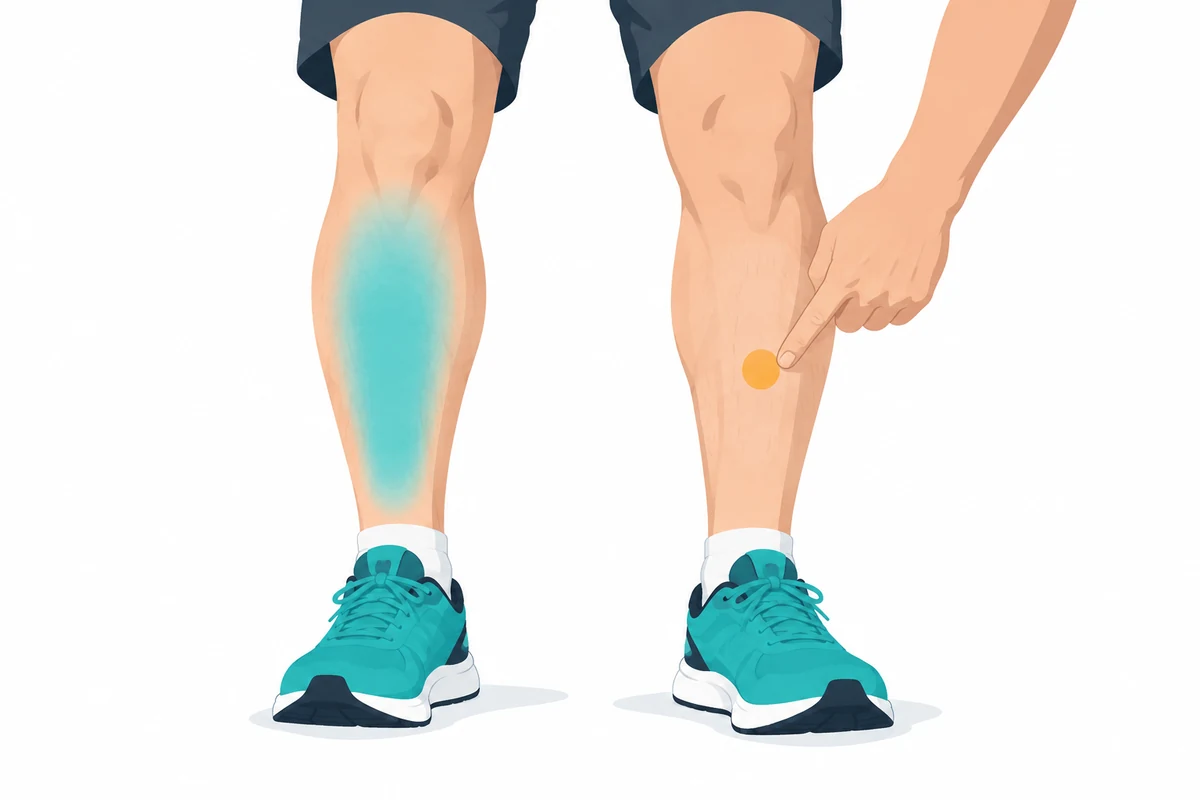
Shin pain after increasing running is often called shin splints, but that term does not explain every case. Distinguish broad discomfort along the inner shin from clearly localized bone pain, and check symptoms during walking and rest.
Three layers to assess in shin pain
Symptoms
Broad pain, focal tenderness, walking and rest pain.
Assessment
Examination, indicated imaging, nutrition and previous injuries.
Return criteria
Comfortable walking, function and healing at high-risk sites.
Three panels show pain distribution and walking, bone assessment, and location-specific return criteria
Similar symptoms can have different causes
Medial tibial stress syndrome causes pain along the inner shin. Bone stress injury includes stress reactions and stress fractures that occur when bone adaptation does not keep pace with repeated loading. The area of pain is a clue, not a diagnosis established by pressing the shin yourself.
Assessment is needed when pain that once appeared only late in a run begins earlier, occurs with walking or persists at night. Normal early X-rays do not exclude bone stress injury. Examination and the level of suspicion determine whether MRI or other tests are appropriate; not everyone needs identical imaging.
Do not run through suspected bone pain
Stop running and jumping and seek prompt care for focal bone tenderness, a limp, or pain with walking or rest. Inability to bear any weight or sudden severe pain needs emergency assessment. Avoid repeated hopping to test pain or using painkillers to continue running.
Check alternative exercise for symptoms too. Cycling or swimming may replace Tuesday–Thursday–Saturday runs during a break, but stop if the same pain occurs. If walking hurts, your clinician should determine whether a brace or crutches are needed. Do not replace running with long painful walks to maintain fitness.
Review nutrition and recovery as well as training
Discuss abrupt distance or hill increases, previous bone stress injury and whether food intake meets training demands. Tell your clinician about restrictive dieting, menstrual changes or recurrent injuries. Bone health is not only a women’s issue; men can also need assessment for low energy availability and bone injury.
A review in female off-road runners reported associations with menstrual disruption, prior injury and low energy intake, among other factors, but participants and available studies were limited. The same figures cannot predict risk in every runner. Decide on supplements from dietary history, clinical context and indicated tests instead of automatically increasing vitamins or calcium.
Return according to walking, function and injury location
Before restarting after bone stress injury, assess daily walking, bone tenderness, strength, function and the location of injury. High-risk sites such as the front of the tibia may need evidence of healing on imaging. Follow the treating clinician’s criteria rather than the number of days away from running.
Once cleared, begin with brief walk–run intervals and review responses on intervening days. One approach progresses distance and time before considering speed or hills. Stop and seek reassessment if the same bone pain returns. Stretching or changing shoes alone should not be expected to solve every shin symptom.
Stop and have groin pain assessed
Stop running and seek assessment today if any one occurs: recurring new groin pain, pain with walking, pain at night, or a limp. Keep weight off the painful leg until assessed. Go directly to emergency care if you cannot bear any weight.
Common Questions
Does a normal X-ray rule out a stress fracture?
Early X-rays may be normal. Suspicious symptoms or examination may require additional testing or follow-up.
Can I stretch and continue running?
Stop running for assessment if bone injury is suspected. Stretching neither establishes the diagnosis nor guarantees bone recovery.
Can I return to my old distance once pain disappears?
No. Confirm walking, function and healing at high-risk sites, then restart gradually.
Evidence and references
01When to seek medical care
Each warning sign is a separate reason to seek care. Follow the action below if any one applies.
Emergency department · call 119 in Korea
- Call 119 for sudden breathlessness or chest pain, severe faintness or loss of consciousness. Do not wait for calf swelling to appear.
- Go to an emergency department if you suddenly cannot bear any weight, or if an injured knee swells rapidly or looks deformed. A cold or numb foot after injury also needs immediate assessment.
- Seek emergency care for a hot, swollen and severely painful joint with high fever, shaking chills, confusion or inability to bear weight.
- With back or leg pain, go immediately to an emergency department for new difficulty passing urine, loss of bladder or bowel control, or numbness around the genitals or anus. Severe or rapidly worsening weakness or numbness in both legs also needs immediate assessment.
Same-day assessment
- Arrange assessment today for a newly hot, swollen joint, sudden severe pain, or a knee locked so that it cannot fully straighten. Joint infection can occur without fever.
- Have new swelling or pain in one calf assessed today for a possible blood clot. Call 119 immediately if breathlessness or chest pain develops.
- Severe knee pain or a new limp in a growing adolescent may come from a hip condition such as slipped capital femoral epiphysis. Stop walking and sport and arrange assessment today. Go directly to emergency care if they cannot bear weight.
- Stop running and seek assessment today for new recurring groin pain, pain with walking or at night, or a limp. A femoral neck stress fracture needs to be considered. Keep weight off the painful leg until assessed. Go to emergency care if you cannot bear weight.
Book an outpatient appointment
- If none of the warning signs above is present, book an appointment for pain lasting a few weeks, repeated swelling or reduced daily activity and exercise.