Injuries, tendons and menisci
Why are meniscal root tears discussed separately?
Loss of the bony attachment changes how the meniscus distributes load.
At a glance
- Roots help the meniscus distribute load.
- Arthritis, alignment and tissue quality guide treatment.
- Root-repair protection may differ from other meniscal procedures.
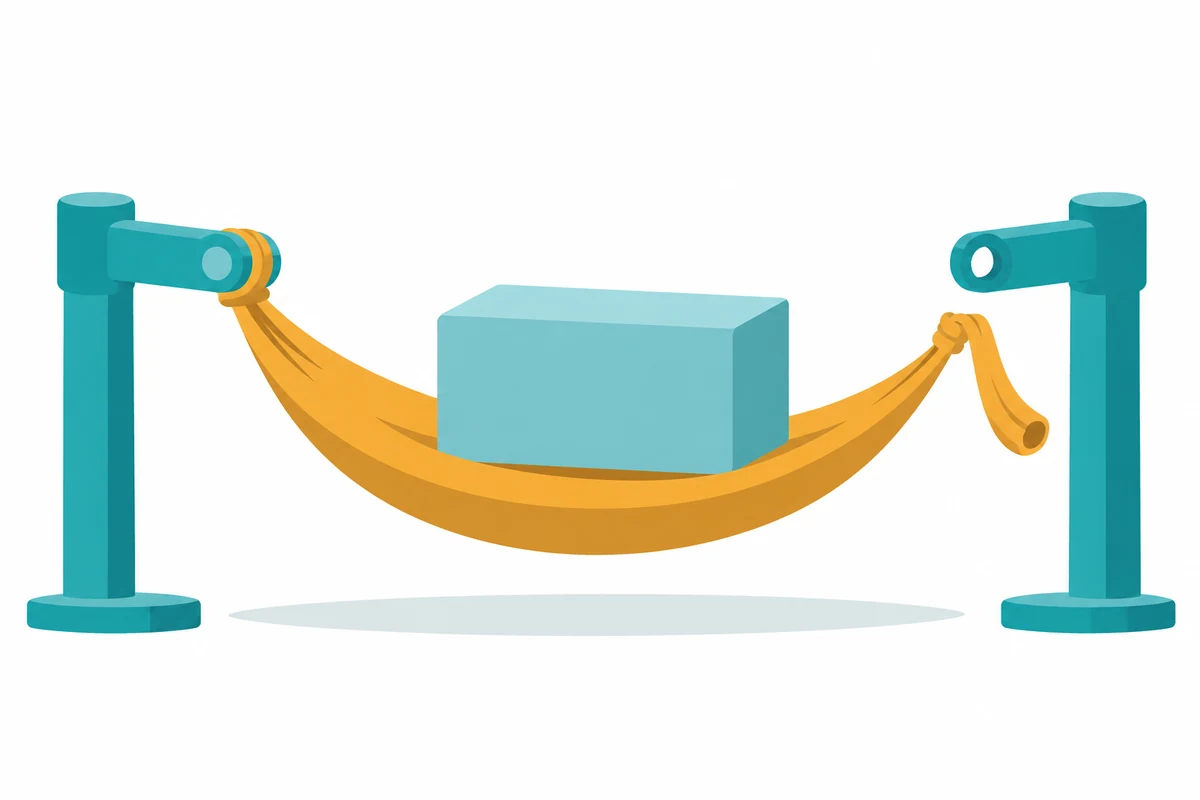
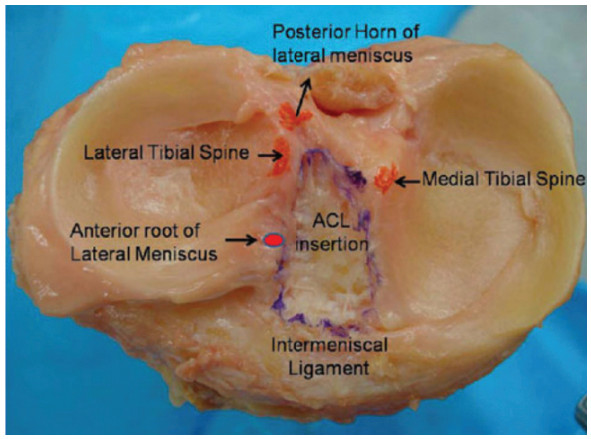
The meniscus is not a free-floating cushion. Its ends attach to bone and help spread weight across the joint. A tear at or near a root may disrupt this function despite a small tear length. Assessment therefore differs from treating all degenerative tears as one condition.
Attachments and load distribution
- 01
Connected
Attachments and fibres share load
- 02
Root injury
Connection and pressure distribution change
- 03
Assessment
Cartilage, alignment, tissue and protection
A comparison of intact root attachment, disrupted connection and treatment assessment
Attachments support load distribution
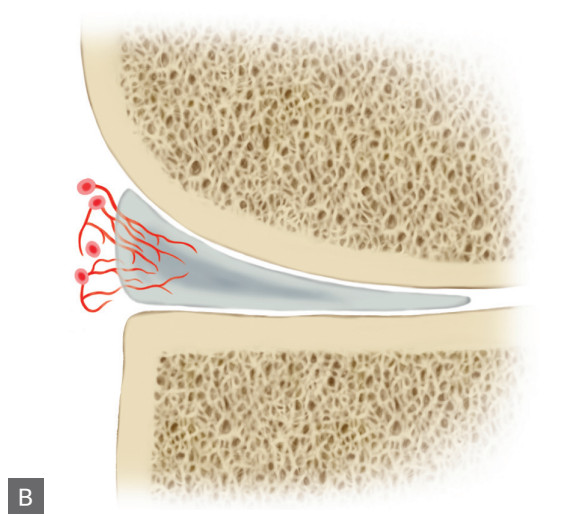
Loading tends to push the meniscus outwards. Continuous fibres and bony attachments resist that force. A damaged root may allow outward displacement and reduce the ability to distribute pressure.
MRI assesses the connection, tear pattern and extrusion. Extrusion does not lead to the same treatment for everyone. Cartilage and underlying bone, standing joint-space images and leg alignment add context.
Check the onset and other possible injuries
Pain may begin suddenly during squatting or stairs, or without a clear injury. Posterior or medial pain alone cannot diagnose a root tear; examination and imaging are needed.
Sudden severe weight-bearing pain also requires consideration of other problems, including injury to the bone beneath the cartilage. Persistent locking or inability to bear weight warrants prompt review. Do not continue deep squats through the pain.
A meniscal root tear needs a different assessment from an ordinary degenerative tear
When the root that anchors the meniscus to bone tears, the meniscus loses much of its ability to distribute weight. If pain suddenly develops on the inner side or at the back of the knee and then keeps recurring, have the tear's location assessed. In one study following untreated medial posterior meniscal root tears for an average of 14 years, 25 of 47 patients—about 53%—underwent total knee replacement.
A separate study compared 15 similar patients in each of three treatment groups. After an average of about 6 years, knee replacement had been performed in 9 patients after partial meniscectomy, 4 after nonoperative treatment, and 0 after root repair. The partial-meniscectomy group had the poorest results in this small observational study. This supports considering whether root repair is feasible before choosing to remove the torn portion.
Treatment decisions take account of cartilage damage, bow-legged alignment, bone injury, and the condition of the tissue available for repair. If arthritis is advanced, root repair alone may not restore function, and another treatment may be needed.
Understand preservation goals and evidence limits
Some comparative studies report less arthritic progression or additional surgery after repair in selected patients than after nonsurgical management or trimming. Observational studies with selected treatment groups cannot guarantee the same benefit for everyone.
Repair requires protection of loading and bending while the tissue-to-bone connection heals. Discuss limits, aids and home assistance before surgery. The goal is longer-lasting joint function, not simply removing a tear description from a report.
Common Questions
Does every root tear need repair?
No. Cartilage, arthritis, alignment, tissue and rehabilitation feasibility guide suitability.
Is a short tear a minor injury?
Not necessarily. Location and interruption of the attachment and load pathway matter.
Will repair stop arthritis progressing?
It cannot guarantee prevention. Outcomes depend on selection and joint condition and need follow-up.
Evidence and references
01When to seek medical care
Each warning sign is a separate reason to seek care. Follow the action below if any one applies.
Emergency department · call 119 in Korea
- Call 119 for sudden breathlessness or chest pain, severe faintness or loss of consciousness. Do not wait for calf swelling to appear.
- Go to an emergency department if you suddenly cannot bear any weight, or if an injured knee swells rapidly or looks deformed. A cold or numb foot after injury also needs immediate assessment.
- Seek emergency care for a hot, swollen and severely painful joint with high fever, shaking chills, confusion or inability to bear weight.
- With back or leg pain, go immediately to an emergency department for new difficulty passing urine, loss of bladder or bowel control, or numbness around the genitals or anus. Severe or rapidly worsening weakness or numbness in both legs also needs immediate assessment.
Same-day assessment
- Arrange assessment today for a newly hot, swollen joint, sudden severe pain, or a knee locked so that it cannot fully straighten. Joint infection can occur without fever.
- Have new swelling or pain in one calf assessed today for a possible blood clot. Call 119 immediately if breathlessness or chest pain develops.
- Severe knee pain or a new limp in a growing adolescent may come from a hip condition such as slipped capital femoral epiphysis. Stop walking and sport and arrange assessment today. Go directly to emergency care if they cannot bear weight.
- Stop running and seek assessment today for new recurring groin pain, pain with walking or at night, or a limp. A femoral neck stress fracture needs to be considered. Keep weight off the painful leg until assessed. Go to emergency care if you cannot bear weight.
Book an outpatient appointment
- If none of the warning signs above is present, book an appointment for pain lasting a few weeks, repeated swelling or reduced daily activity and exercise.