An MRI report of a meniscal tear may suggest the damaged part must quickly be removed. But the meniscus distributes load and contributes to stability. Treatment considers both the cause of pain and preservation of remaining tissue; a visible tear alone does not justify the same surgery for everyone.
How are cartilage and the meniscus different?
Articular cartilage covers bone ends with a smooth, low-friction surface. The two crescent-shaped menisci between femur and tibia distribute load. Similar names refer to different locations and roles. If told “the cartilage is worn,” ask whether this means the joint surface, a torn meniscus, or both; that matters for treatment.
Why preservation matters: hoop stress
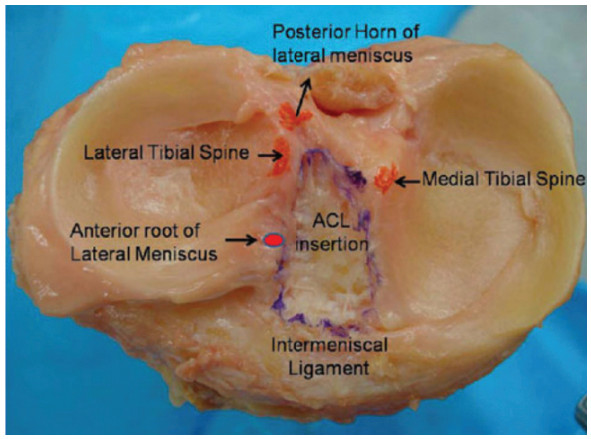
Circumferential fibers and anterior/posterior roots are important in distributing load. Compression creates tensile stress around the meniscus, called hoop stress. Radial or root tears can disrupt this continuity and substantially impair function even when tissue remains.
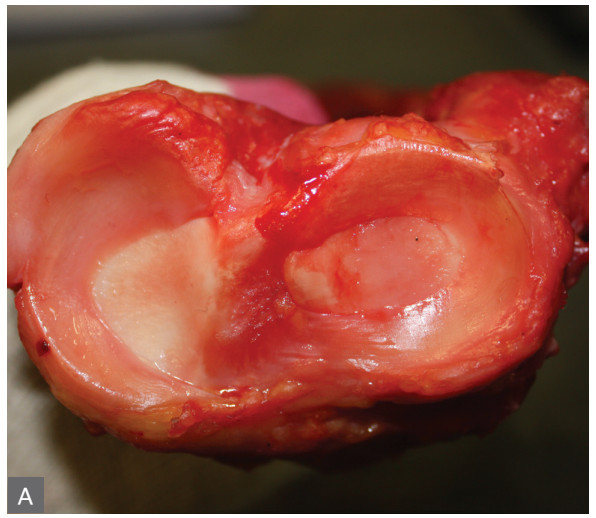
Treatment therefore considers more than the area torn: tear direction, root attachments, blood supply and tissue quality all matter. The diagrams and anatomical photographs show the meniscal shape and attachments.
Circumferential fibers and roots share the load
- Force tending to push outward
- Circumferential tension
- Root attachment to bone
Why can similar tears need different treatments?
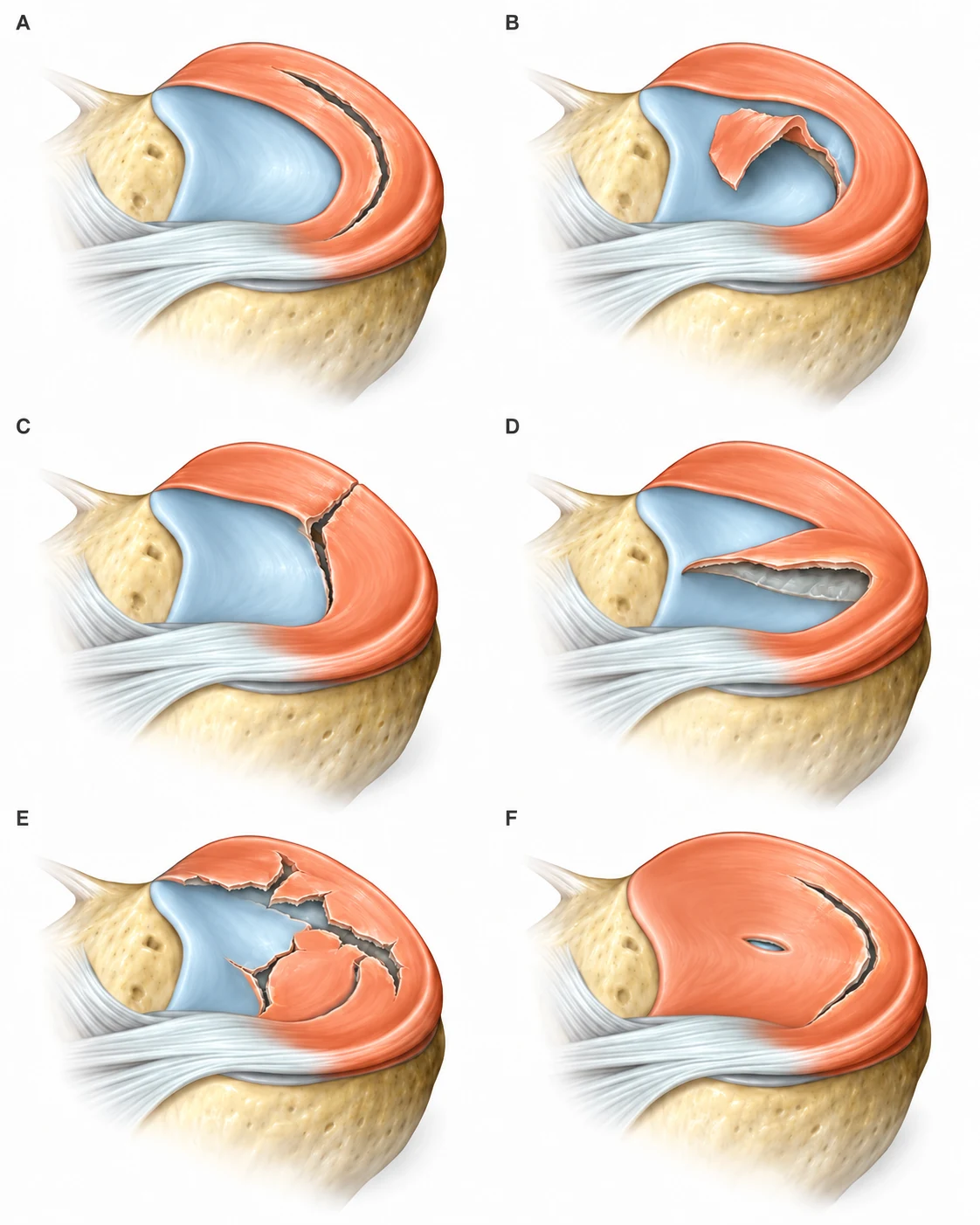
Twisting injuries during sport differ from tears in tissue weakened with age. Evaluate tear location and shape, tissue quality and OA. X-rays assess bone and arthritis; MRI provides more tissue detail. Examination checks whether the image finding explains current pain. The same report term does not mean the same treatment goal.
Why does a locked knee matter?
Pain-limited movement differs from something physically blocking extension. A displaced torn fragment can obstruct motion. Do not postpone assessment of sudden locking or inability to fully extend after injury. Occasional sound is not the same. Describe the angle, actual restriction and accompanying swelling.
How do removal and repair differ?
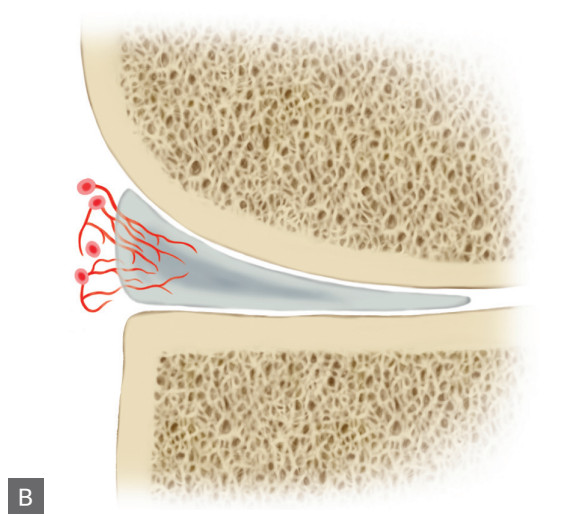
Partial meniscectomy trims unstable tissue; repair holds torn tissue to support healing. Blood supply, tear pattern and tissue quality determine repairability. Not all tears can be repaired, but preservation aims at long-term joint protection. Recovery and protection periods differ; comparing only how soon someone walks misses that purpose.
Will damage keep increasing without surgery?
Not every tear needs immediate surgery. Depending on symptoms, motion and OA, exercise therapy and pain management may come first. These do not promise anatomical healing, but pain and function may improve. Trimming a meniscus does not remove all OA pain. Check which activities improve and reassess the diagnosis and plan if response is insufficient.
What should I clarify in a surgical consultation?
Ask why it hurts, whether repair is possible and how much tissue will be preserved. If repair and trimming are both options, ask what arthroscopy will determine. Loading, bending and sport-return plans depend on the actual procedure, not a friend’s arthroscopy timeline. Treatment should extend to protecting the remaining meniscus and joint long term.
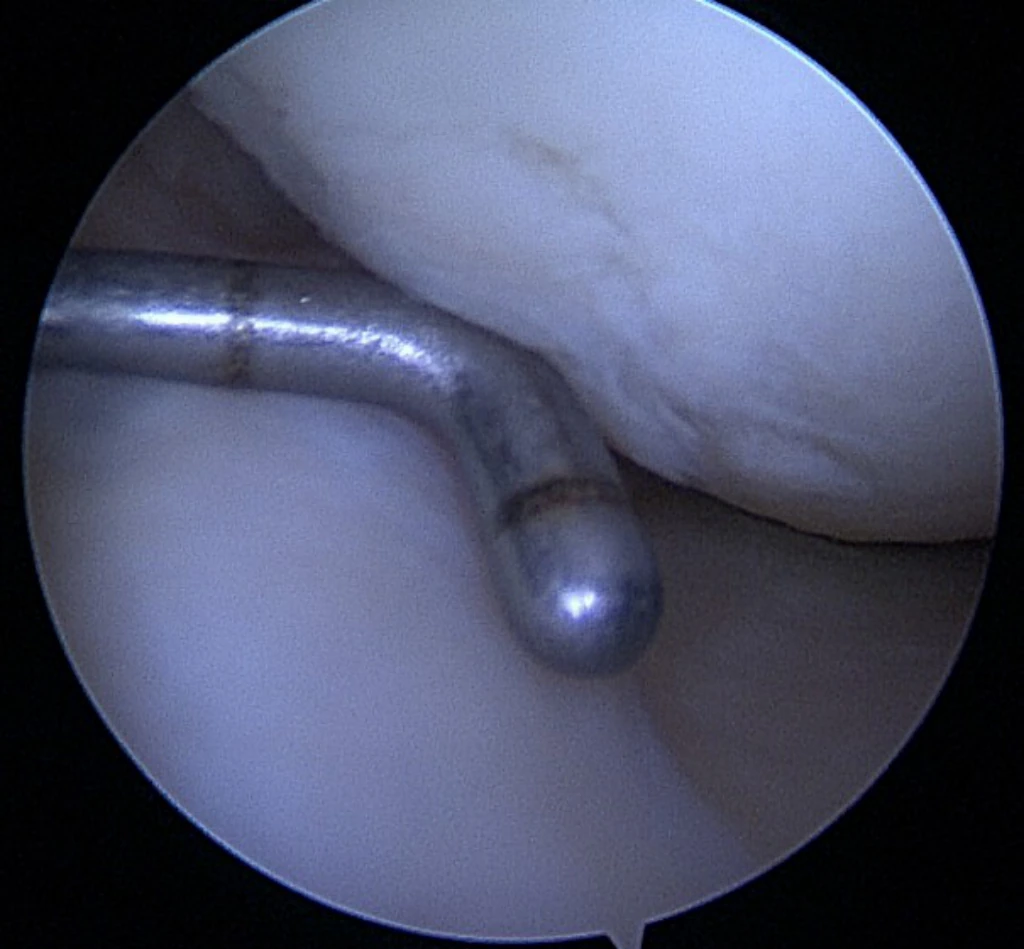
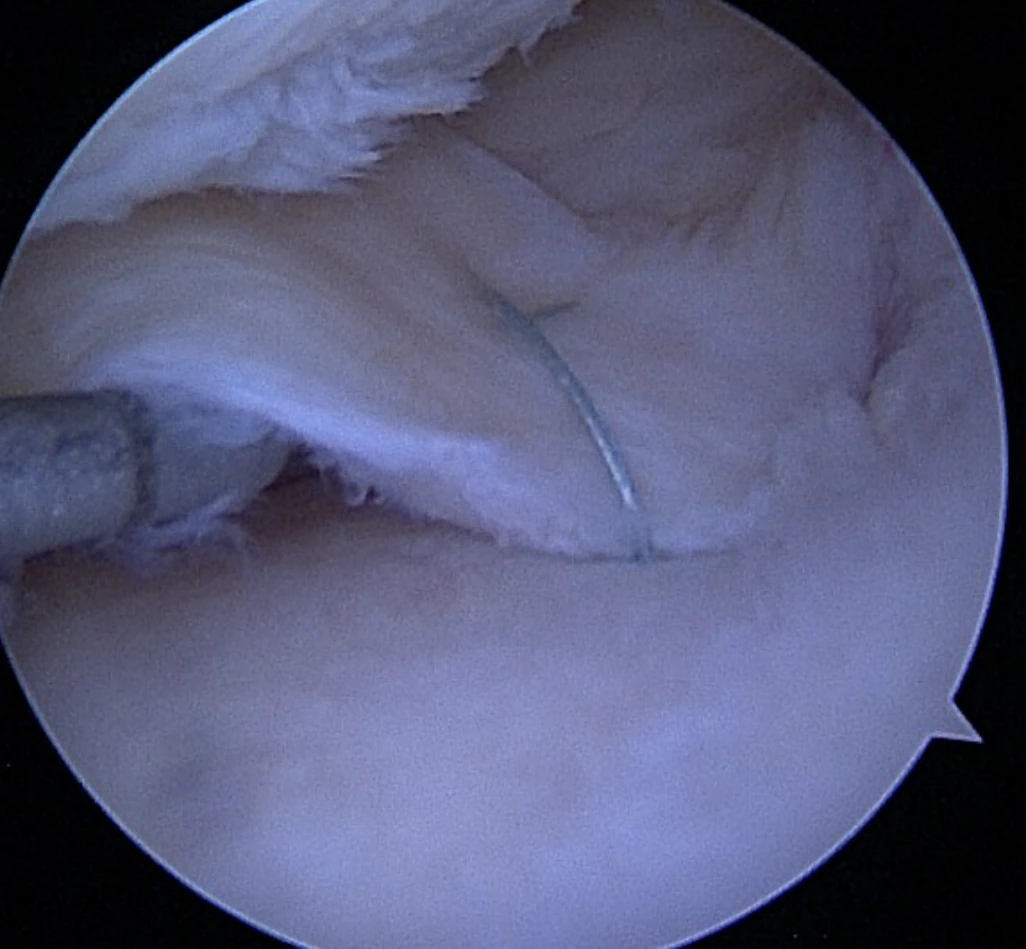
For a degenerative meniscal tear, surgery can be reconsidered after exercise therapy
If the knee is not truly locked and unable to straighten, treatment for a degenerative meniscal tear often starts with exercise therapy. In the ESCAPE study of 321 patients aged 45–70, 52 of the 162 patients who started with exercise therapy—about 32%—underwent partial meniscectomy within 5 years because symptoms persisted.
At 5 years, knee function with the exercise-first strategy was not clinically inferior to that with the initial-surgery strategy. The study's treatment was a progressive exercise programme consisting of 16 sessions over 8 weeks. Decisions should take account of the tear's location and shape, locking, and the extent of arthritis. A meniscal root tear or a repairable tear after injury requires a separate assessment.
A meniscal root tear needs a different assessment from an ordinary degenerative tear
When the root that anchors the meniscus to bone tears, the meniscus loses much of its ability to distribute weight. If pain suddenly develops on the inner side or at the back of the knee and then keeps recurring, have the tear's location assessed. In one study following untreated medial posterior meniscal root tears for an average of 14 years, 25 of 47 patients—about 53%—underwent total knee replacement.
A separate study compared 15 similar patients in each of three treatment groups. After an average of about 6 years, knee replacement had been performed in 9 patients after partial meniscectomy, 4 after nonoperative treatment, and 0 after root repair. The partial-meniscectomy group had the poorest results in this small observational study. This supports considering whether root repair is feasible before choosing to remove the torn portion.
Treatment decisions take account of cartilage damage, bow-legged alignment, bone injury, and the condition of the tissue available for repair. If arthritis is advanced, root repair alone may not restore function, and another treatment may be needed.