Choosing treatment and surgery
What materials are used in a knee replacement?
Understand the roles of metal, polyethylene and bone cement, and what matters when discussing implant materials.
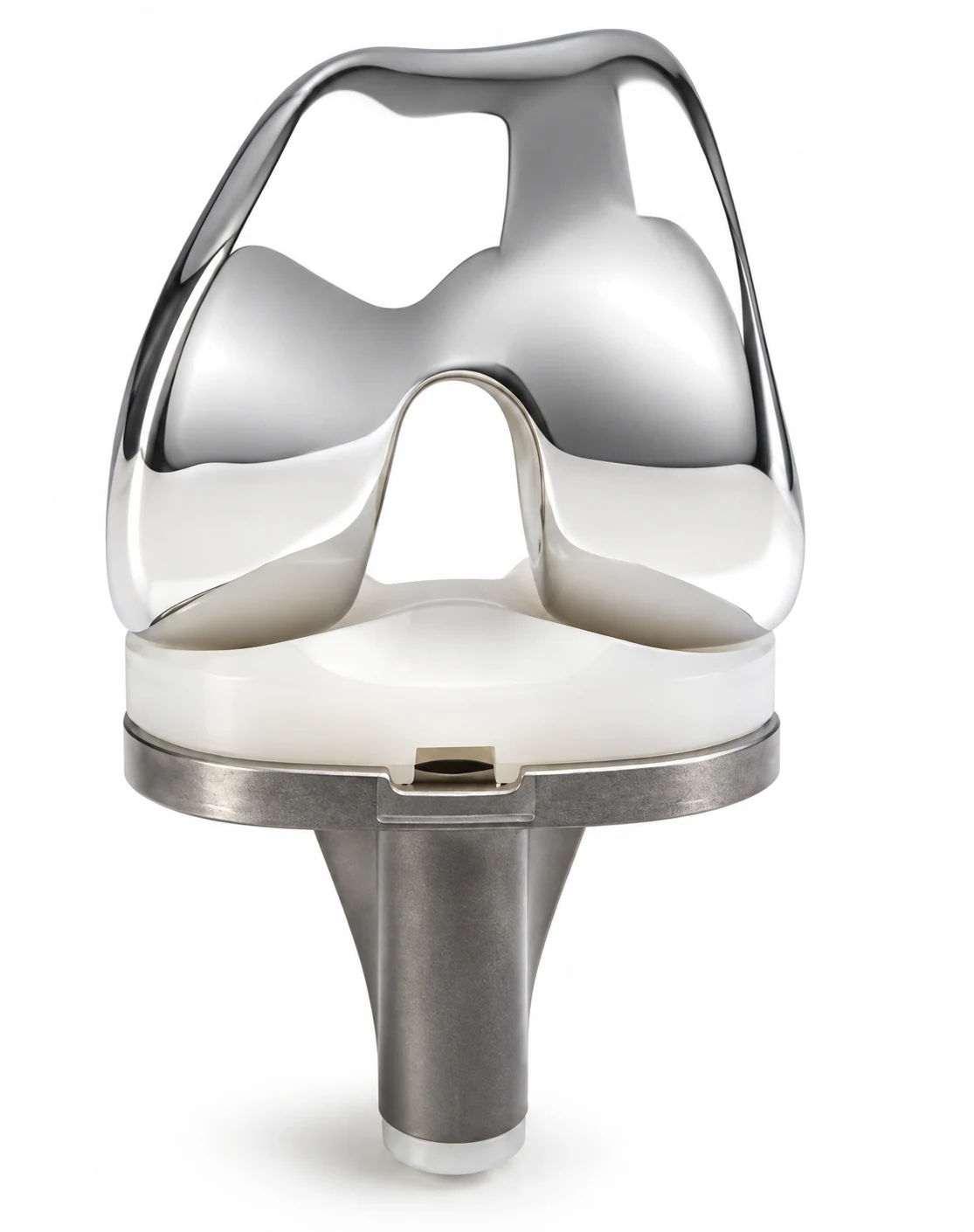
At a glance
- A knee replacement combines metal components with a polyethylene liner.
- Bone cement is a fixation material, separate from the liner.
- Consider implant clinical results, your knee and allergy history alongside the material name.
A knee replacement is not a single piece of metal. Components that cover the bone ends, a surface that allows movement, and the means of fixation each have different roles. Understanding those roles makes a surgical consultation more useful than memorizing material names.
Three roles of knee replacement materials
- 01
Cover the bone ends
Femoral and tibial components bear load. Materials include cobalt-chromium and titanium alloys.
- 02
Allow movement
A polyethylene liner between metal components provides a smooth movement surface.
- 03
Secure to bone
Fixation uses PMMA bone cement or allows bone to grow into the implant surface.
Three panels explain load-bearing metal components, the polyethylene movement surface and fixation to bone
Metal and polyethylene have different roles
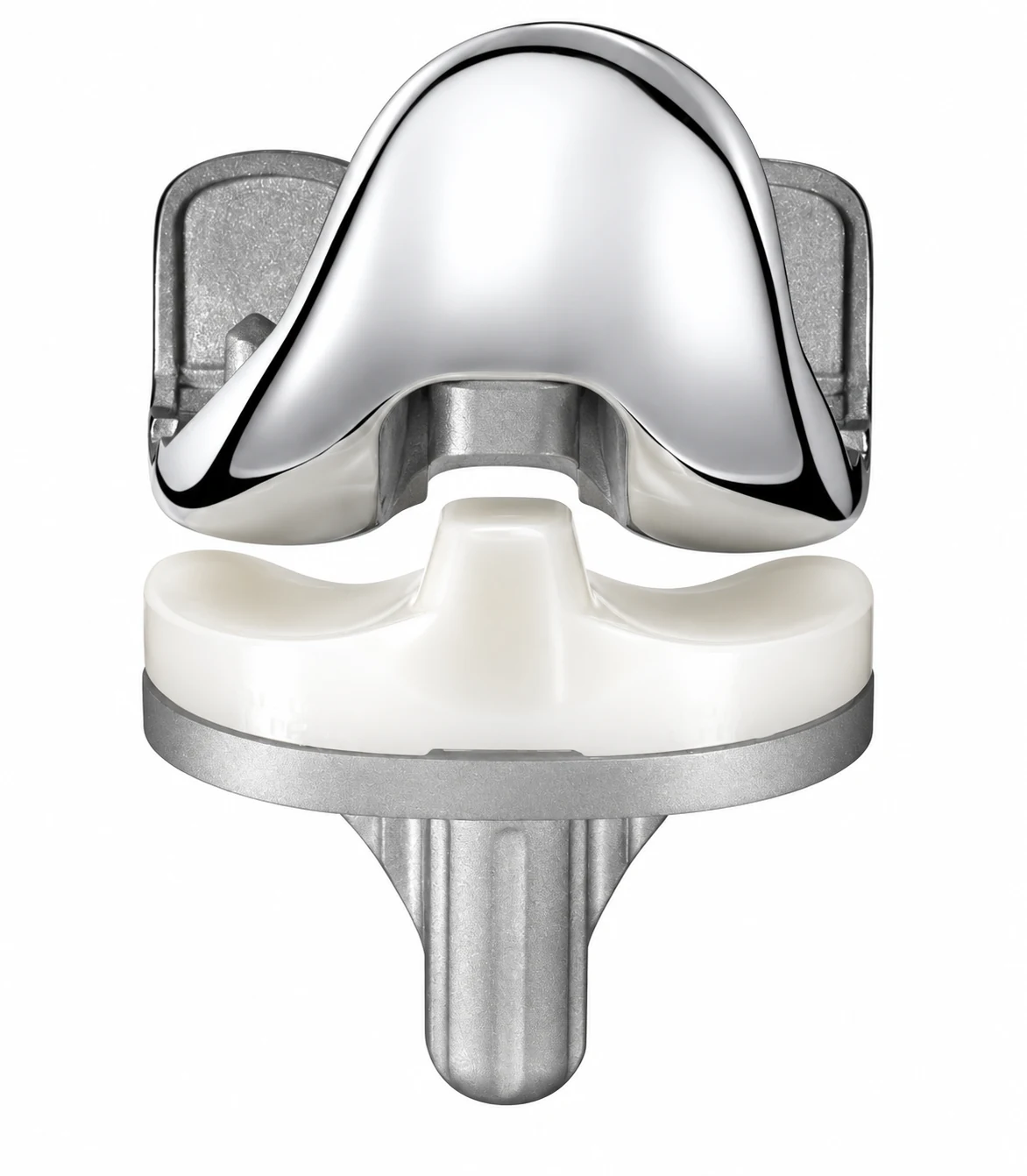
The femoral component covering the thighbone commonly uses a cobalt-chromium alloy. The tibial baseplate on the shinbone often uses titanium or cobalt-chromium alloy. Components experience different loads and contact surfaces, so their materials can differ within the same replacement.
A medical-grade polyethylene liner sits between the metal components. This plastic is designed for joint loading and repeated movement. The femoral component moves across it as the knee bends and straightens. A component used to resurface the back of the kneecap is usually polyethylene too; the kneecap is not resurfaced in every operation.
Bone cement fixes the implant to bone
Bone cement is different from the liner. It is a medical resin, commonly called PMMA, that hardens between bone and implant to secure the component. It is different from construction cement and does not form the moving joint surface.
With cementless fixation, the component initially fits tightly into bone, and bone then grows into its porous surface. Some operations combine cemented and cementless components. Material choice and fixation are related but distinct. Alongside asking which materials are planned, ask how the components will be secured to your bone.
Ceramic or coated implants are not better for everyone
Some implants use ceramic materials or oxidized zirconium, and others add special coatings to metal surfaces. These approaches may aim to reduce wear or metal exposure, but material properties alone cannot establish clinical benefit. A ceramic label does not tell you the composition of every component.
A 2023 U.S. registry study found no clear difference in short- to midterm all-cause revision risk between oxidized zirconium and cobalt-chromium implants. A randomized study published in 2026 found similar 10-year outcomes for one coated system and its standard counterpart. It excluded patients with known material allergy, so it does not settle choices for that group. Consider clinical results and your knee's condition together.
Wear and allergy need separate assessment
Polyethylene can wear over time. In some cases, a reaction to microscopic wear particles weakens the surrounding bone and contributes to loosening. Material improvements have reduced this problem, but a material name cannot guarantee lifelong use. New or worsening pain or swelling needs assessment to identify the cause.
Metal allergy rarely causes knee replacement failure. Tell your surgeon before surgery about reactions to earrings, necklaces or watches, or a diagnosed metal allergy. Pain or swelling after surgery alone does not establish allergy. Other causes, including infection or loosening, need to be assessed first.
How long can a knee replacement last?
Long-term registry data estimated that about 82% of total knee replacements and 70% of partial knee replacements were still in place without revision surgery at 25 years. The precise estimates in the 2019 Lancet review were 82.3% and 69.8%, respectively.
These figures come from historical surgical cohorts in Finland. The life of an individual knee replacement varies with age at surgery, the implant, its fixation, and activity level. Total and partial replacement are also used in different patients and knee conditions, so these percentages alone do not determine which operation to choose. Continue to monitor pain and walking ability. If new pain or swelling persists, seek assessment before your next routine appointment.
Common Questions
Does a plastic liner wear or break easily?
The liner is medical-grade polyethylene made for joints. It can wear over time, but being plastic does not make it inherently weak. Durability also depends on fixation, loading and activity, infection, and other factors.
Do I need metal allergy testing before surgery?
Routine skin or blood testing is not recommended for everyone because results do not reliably predict implant reactions. Discuss previous skin reactions or a diagnosed allergy so your surgeon can consider further assessment or alternative materials individually.
Can I have an MRI after knee replacement?
A replacement does not automatically rule out MRI. Tell the MRI team about it and bring implant identification information if available. They must verify the specific device's MRI labeling and permitted scanning conditions. Metal can also obscure nearby images, so the imaging approach depends on what needs to be assessed.
Evidence and references
01When to seek medical care
Each warning sign is a separate reason to seek care. Follow the action below if any one applies.
Emergency department · call 119 in Korea
- Call 119 for sudden breathlessness or chest pain, severe faintness or loss of consciousness. Do not wait for calf swelling to appear.
- Go to an emergency department if you suddenly cannot bear any weight, or if an injured knee swells rapidly or looks deformed. A cold or numb foot after injury also needs immediate assessment.
- Seek emergency care for a hot, swollen and severely painful joint with high fever, shaking chills, confusion or inability to bear weight.
- With back or leg pain, go immediately to an emergency department for new difficulty passing urine, loss of bladder or bowel control, or numbness around the genitals or anus. Severe or rapidly worsening weakness or numbness in both legs also needs immediate assessment.
Same-day assessment
- Arrange assessment today for a newly hot, swollen joint, sudden severe pain, or a knee locked so that it cannot fully straighten. Joint infection can occur without fever.
- Have new swelling or pain in one calf assessed today for a possible blood clot. Call 119 immediately if breathlessness or chest pain develops.
- Severe knee pain or a new limp in a growing adolescent may come from a hip condition such as slipped capital femoral epiphysis. Stop walking and sport and arrange assessment today. Go directly to emergency care if they cannot bear weight.
- Stop running and seek assessment today for new recurring groin pain, pain with walking or at night, or a limp. A femoral neck stress fracture needs to be considered. Keep weight off the painful leg until assessed. Go to emergency care if you cannot bear weight.
Book an outpatient appointment
- If none of the warning signs above is present, book an appointment for pain lasting a few weeks, repeated swelling or reduced daily activity and exercise.