Preparing for surgery and recovery
Straightening matters as much as bending the knee
Restore extension for walking alongside flexion for sitting.
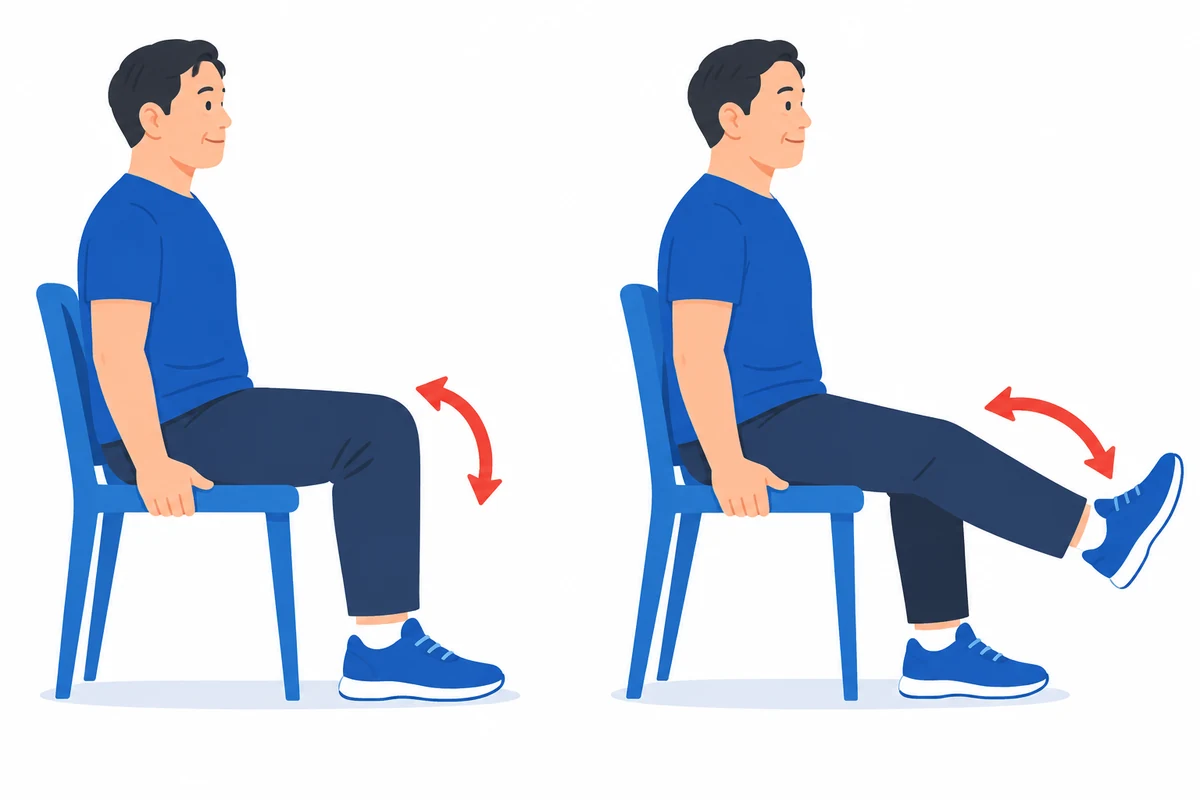
At a glance
- Restore flexion, extension and strength together.
- Practise gently within the permitted range.
- Reassess decreasing movement or new pain.
It is natural to focus on how far the knee bends during rehabilitation. Straightening is also important for walking. Flexion, extension and thigh strength serve different functions. Follow the movement limits for your operation rather than forcing the knee towards another person’s measurements.
Connect movement with everyday function
- 01
Extension
Supports standing and stepping
- 02
Flexion
Supports sitting and daily movements
- 03
Strength
Provides active control of both
A comparison linking extension to standing, flexion to sitting and strength to control
Bending and straightening serve different tasks
Flexion helps with sitting, getting up, stairs and everyday movements. Extension helps support the body in standing and stepping. A persistently bent-knee gait can remain tiring even when the bending angle improves.
Preoperative stiffness, swelling, pain and weakness affect recovery. One angle does not define success or failure. A therapist assesses passive movement, active control and walking together.
Practise small, controlled movements
Learn the prescribed heel slides and thigh contractions. Ask the therapist how to support the heel for extension work and how long to hold it. Associated procedures may impose specific flexion limits.
Avoid having a relative forcefully press or bend the knee. Repetitions and hold times should suit swelling and control. If pain and swelling remain worse afterwards, review the programme rather than automatically pushing harder next time.
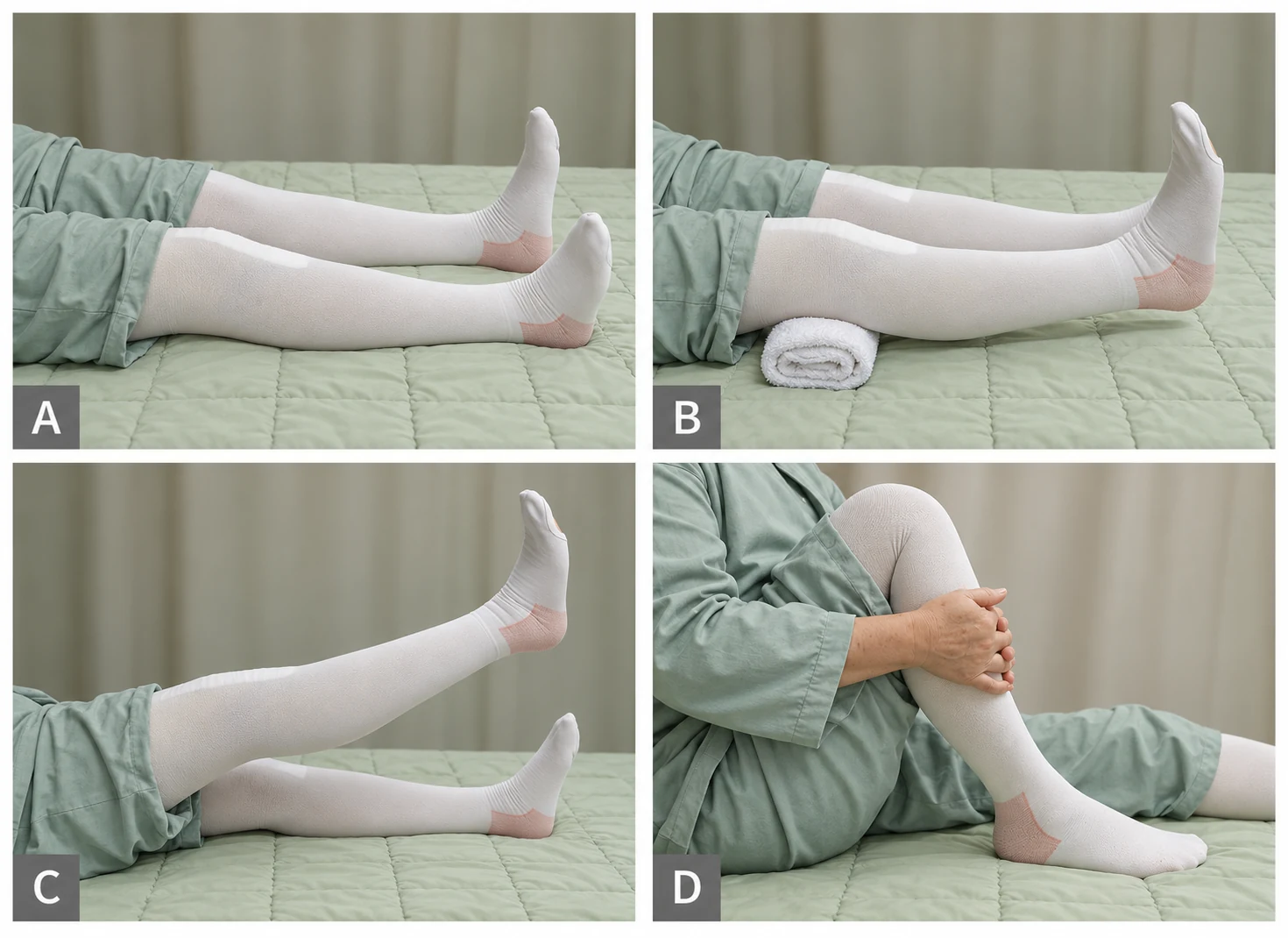
Check resting positions as well
Keeping a high pillow directly under the knee for long periods may maintain a bent position. Ask how an elevation position for swelling differs from extension practice. The wound and type of operation determine the appropriate setup.
Restore chair transfers, short walks and balance as well as bed-based movement. A knee that can be passively straightened may still bend during walking if muscle control is weak. Reducing walking aids is linked to these functional abilities.
Review a decreasing range of movement
Report worsening extension or flexion, a new mechanical block or severe pain. Fever, wound drainage or rapid swelling should not be blamed simply on insufficient exercise.
Describe pain, swelling, the way you exercise and difficulty with daily tasks at follow-up. Treatment depends on the cause and stage. The goal is safe standing, sitting and walking rather than completing a number on a calendar.
Common Questions
Is better bending enough?
No. Extension, thigh strength and walking must also be assessed.
Should a relative push the knee straighter?
Learn safe assistance from the therapist. Forceful pressure can worsen pain and swelling.
What if it stiffens after a rest period?
Report the trend and review the programme rather than rapidly increasing force without knowing the cause.
Evidence and references
01When to seek medical care
Each warning sign is a separate reason to seek care. Follow the action below if any one applies.
Emergency department · call 119 in Korea
- Call 119 for sudden breathlessness or chest pain, severe faintness or loss of consciousness. Do not wait for calf swelling to appear.
- Go to an emergency department if you suddenly cannot bear any weight, or if an injured knee swells rapidly or looks deformed. A cold or numb foot after injury also needs immediate assessment.
- Seek emergency care for a hot, swollen and severely painful joint with high fever, shaking chills, confusion or inability to bear weight.
- With back or leg pain, go immediately to an emergency department for new difficulty passing urine, loss of bladder or bowel control, or numbness around the genitals or anus. Severe or rapidly worsening weakness or numbness in both legs also needs immediate assessment.
Same-day assessment
- Arrange assessment today for a newly hot, swollen joint, sudden severe pain, or a knee locked so that it cannot fully straighten. Joint infection can occur without fever.
- Have new swelling or pain in one calf assessed today for a possible blood clot. Call 119 immediately if breathlessness or chest pain develops.
- Severe knee pain or a new limp in a growing adolescent may come from a hip condition such as slipped capital femoral epiphysis. Stop walking and sport and arrange assessment today. Go directly to emergency care if they cannot bear weight.
- Stop running and seek assessment today for new recurring groin pain, pain with walking or at night, or a limp. A femoral neck stress fracture needs to be considered. Keep weight off the painful leg until assessed. Go to emergency care if you cannot bear weight.
Book an outpatient appointment
- If none of the warning signs above is present, book an appointment for pain lasting a few weeks, repeated swelling or reduced daily activity and exercise.