Injuries, tendons and menisci
Does a degenerative meniscal tear require surgery first?
Start by checking how the MRI finding relates to symptoms.
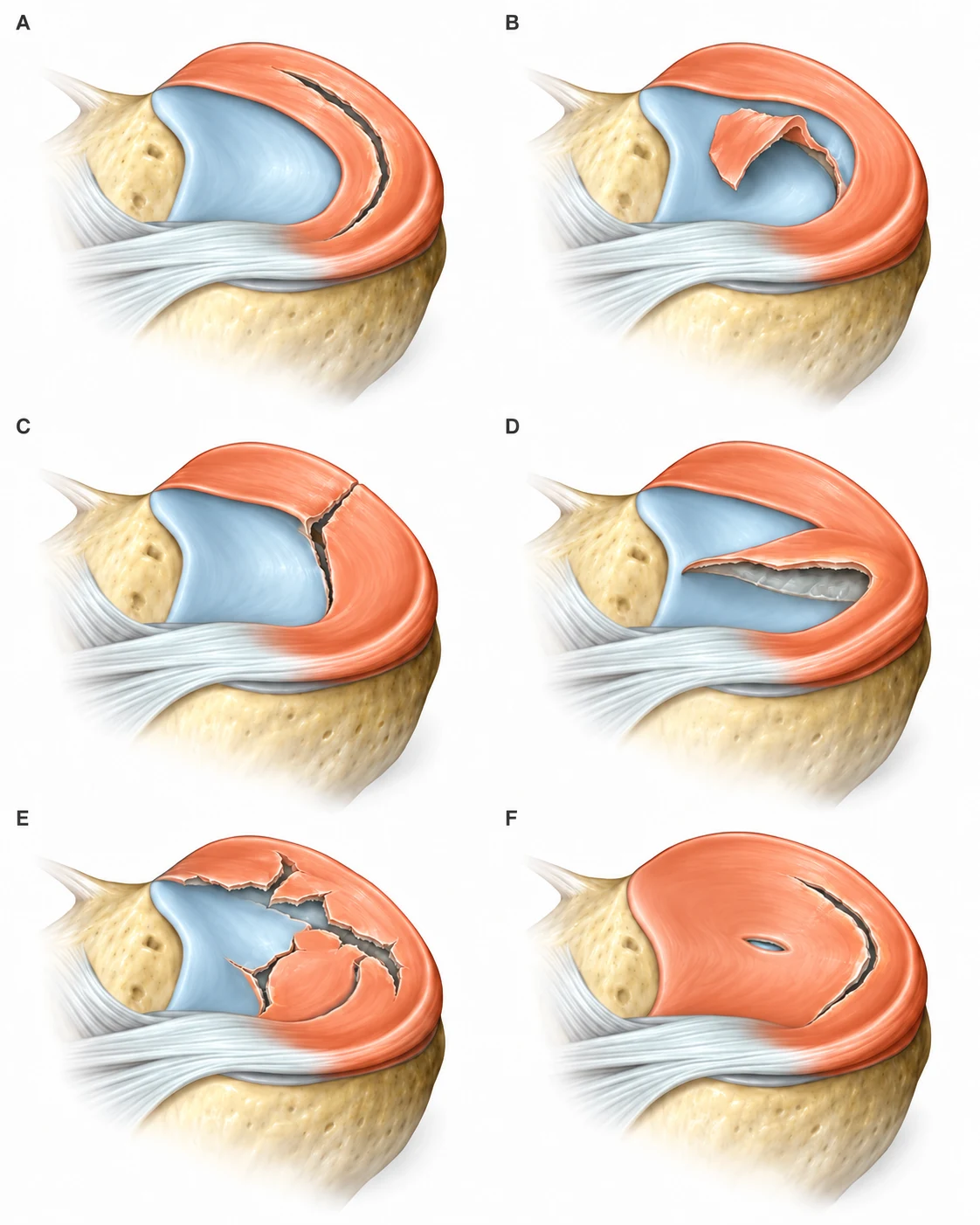
At a glance
- Distinguish degenerative tears from acute injury.
- Exercise-based care may be the first option in suitable patients.
- Persistent true locking warrants prompt assessment.
An MRI may reveal a meniscal tear after pain begins without a major injury. A degenerative tear develops in ageing tissue and differs from an acute sporting injury. Rather than rushing to arthroscopy because a tear appears on the scan, assess symptoms, arthritis and function together.
Separate degenerative findings from acute problems
- 01
Assess first
Link the tear, arthritis, symptoms and function
- 02
Usual pathway
Tailored exercise, symptom control and review
- 03
Separate pathway
Acute injury or persistent true locking
A comparison of symptom assessment, exercise-first care and separately assessed acute or locking problems
The tear may not be the only pain source
A degenerative tear can coexist with osteoarthritis. Cartilage, bone and the joint lining may contribute to pain. X-rays help assess arthritis and alignment; examination checks pain location, movement and swelling.
Not every abnormality seen on MRI needs to be removed surgically. Describe the movements that are uncomfortable and the activities that are limited. Occasional noises or catching sensations need to be distinguished from a knee that remains truly locked and cannot straighten.
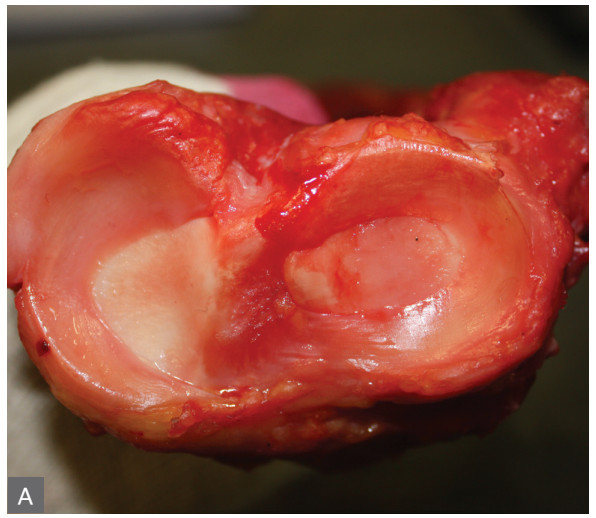
For a degenerative meniscal tear, surgery can be reconsidered after exercise therapy
If the knee is not truly locked and unable to straighten, treatment for a degenerative meniscal tear often starts with exercise therapy. In the ESCAPE study of 321 patients aged 45–70, 52 of the 162 patients who started with exercise therapy—about 32%—underwent partial meniscectomy within 5 years because symptoms persisted.
At 5 years, knee function with the exercise-first strategy was not clinically inferior to that with the initial-surgery strategy. The study's treatment was a progressive exercise programme consisting of 16 sessions over 8 weeks. Decisions should take account of the tear's location and shape, locking, and the extent of arthritis. A meniscal root tear or a repairable tear after injury requires a separate assessment.
Nonsurgical care should be structured
Combine strengthening, movement recovery, activity adjustment and appropriate pain management. Begin with manageable tasks and increase load gradually. Medicines or injections are selected according to health and do not replace exercise.
Track walking, stairs, chair transfers, swelling and pain. Set individual goals and review points rather than completing a generic programme regardless of symptoms. Limited improvement warrants reconsidering the diagnosis and plan.
Assess acute injury and true locking separately
Persistent inability to straighten after injury or suspected displaced tissue warrants prompt assessment. Distinguish pain-limited movement from a mechanical block. Do not try to force the knee open yourself.
NICE does not recommend arthroscopic lavage or debridement for osteoarthritis itself. When discussing a specific meniscal procedure, ask which problem it addresses, likely benefits, tissue preservation and rehabilitation. Match treatment to symptoms and function, not the scan alone.
Interpreting a tear alongside the symptoms
A degenerative meniscal tear can arise as the tissue changes gradually over time. Meniscal changes can also appear in osteoarthritic knees without symptoms, so an MRI finding alone does not establish the cause of pain or the need for surgery. The onset and location of pain, swelling, and examination findings are considered together.
Meniscal injury can cause pain, swelling, catching, or difficulty moving the knee fully. A brief catching sensation should be distinguished from a knee that remains blocked and cannot straighten. Persistent inability to bend or straighten the knee needs prompt medical assessment.
For degenerative tears, nonsurgical care including therapeutic exercise is generally considered first to restore comfort and daily function. After a new injury, a tear that blocks movement requires a separate assessment of the acute injury, and early surgery may help. Treatment is chosen after considering the tear, symptoms, and associated conditions.
Common Questions
Will a tear keep enlarging without surgery?
Not all tears follow the same course. Monitor symptoms and function and reassess treatment response.
Does clicking mean I need arthroscopy?
No. Assess pain, swelling and actual movement restriction together.
Does the trial mean surgery is bad?
It describes average outcomes in that degenerative-tear population, not every acute repairable tear or locked knee.
Evidence and references
01When to seek medical care
Each warning sign is a separate reason to seek care. Follow the action below if any one applies.
Emergency department · call 119 in Korea
- Call 119 for sudden breathlessness or chest pain, severe faintness or loss of consciousness. Do not wait for calf swelling to appear.
- Go to an emergency department if you suddenly cannot bear any weight, or if an injured knee swells rapidly or looks deformed. A cold or numb foot after injury also needs immediate assessment.
- Seek emergency care for a hot, swollen and severely painful joint with high fever, shaking chills, confusion or inability to bear weight.
- With back or leg pain, go immediately to an emergency department for new difficulty passing urine, loss of bladder or bowel control, or numbness around the genitals or anus. Severe or rapidly worsening weakness or numbness in both legs also needs immediate assessment.
Same-day assessment
- Arrange assessment today for a newly hot, swollen joint, sudden severe pain, or a knee locked so that it cannot fully straighten. Joint infection can occur without fever.
- Have new swelling or pain in one calf assessed today for a possible blood clot. Call 119 immediately if breathlessness or chest pain develops.
- Severe knee pain or a new limp in a growing adolescent may come from a hip condition such as slipped capital femoral epiphysis. Stop walking and sport and arrange assessment today. Go directly to emergency care if they cannot bear weight.
- Stop running and seek assessment today for new recurring groin pain, pain with walking or at night, or a limp. A femoral neck stress fracture needs to be considered. Keep weight off the painful leg until assessed. Go to emergency care if you cannot bear weight.
Book an outpatient appointment
- If none of the warning signs above is present, book an appointment for pain lasting a few weeks, repeated swelling or reduced daily activity and exercise.