Preparing for surgery and recovery
How can I reduce blood-clot risk after surgery?
Combine prescribed prevention, safe movement and recognition of warning signs.
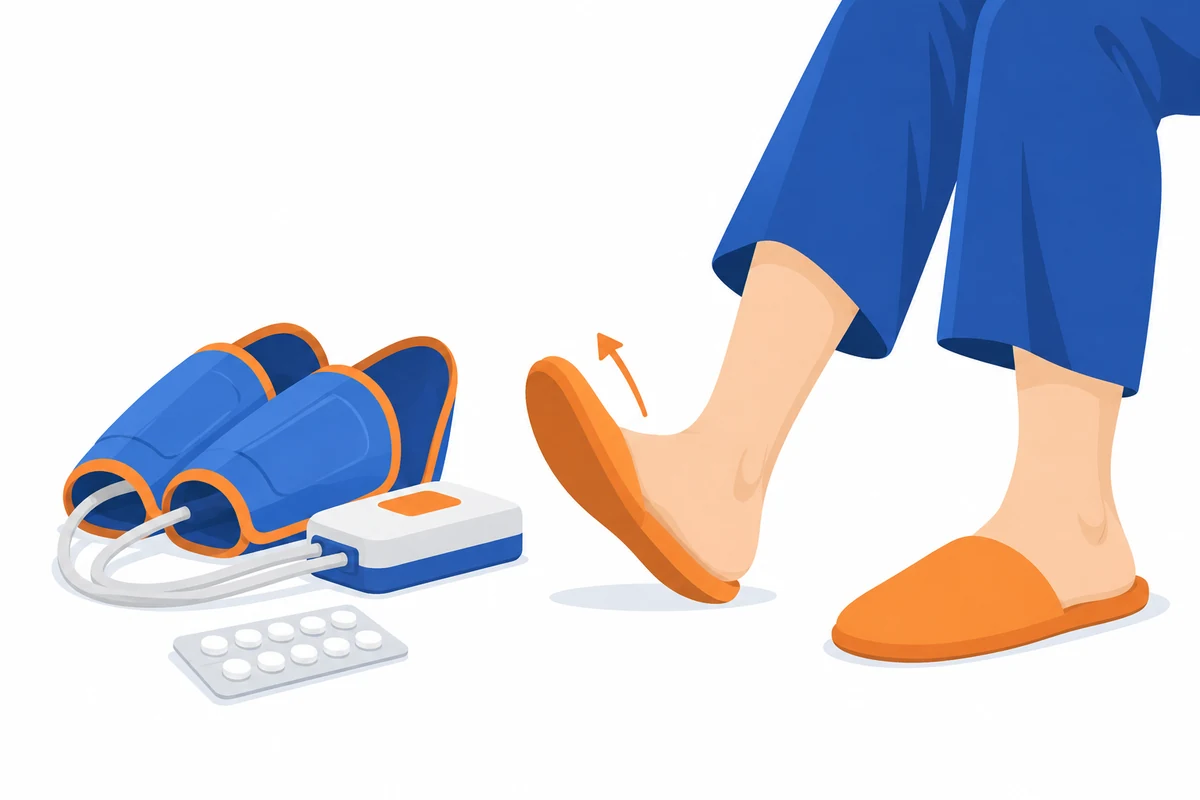
At a glance
- Use preventive medicines and devices as prescribed.
- Move safely within weight-bearing restrictions.
- Get prompt help for new calf symptoms and emergency help for sudden breathlessness.
A blood clot is a mass of coagulated blood inside a vessel. After knee surgery, clotting responses and reduced activity can increase the risk of a clot in a deep leg vein. Medication does not remove every risk; follow your individual prevention plan and keep watching for new symptoms.
Separate prevention from warning signs
Daily prevention
Prescriptions, devices and permitted movement
Prompt assessment
New calf pain or one-sided swelling
Emergency help
Sudden breathlessness, chest pain or fainting
Panels showing daily prevention, urgent leg symptoms and emergency breathing symptoms
Risk and prevention are individual
The team considers previous clots, other illnesses, medicines, the operation and mobility restrictions. Bleeding risk also affects decisions about preventive medicine, compression devices or stockings. Do not copy another patient’s drug or duration.
Do not stop prevention because you fear bleeding, or add aspirin yourself. Report persistent bleeding, troublesome bruising or side effects, including the medicine and dose time. Ask for medicine-specific advice after a missed dose.
Move within the permitted limits
Approved ankle movements and short walks help restore activity. Use the prescribed aid and movement plan rather than remaining in bed continuously. A concurrent meniscal repair or osteotomy may impose weight-bearing restrictions that still apply.
Check the fit and instructions for stockings or compression devices. Report excessive tightness or skin injury. Hydration and ankle exercises are not substitutes for medication when it is prescribed.
New calf symptoms need prompt assessment
New calf pain, increasing one-sided leg swelling, redness or tenderness may indicate a clot, including symptoms away from the incision. It is not always possible to distinguish a clot from postoperative swelling at home.
Contact the team for urgent assessment the same day. Do not vigorously massage the calf or increase exercise to try to solve the problem. Examination and risk assessment determine whether tests are needed.
Sudden breathlessness or chest pain is an emergency
A clot travelling to the lungs can cause pulmonary embolism. Sudden shortness of breath, chest pain, fainting or severe dizziness needs immediate emergency assessment. The absence of leg swelling does not rule it out.
In Korea, call 119 and do not drive yourself. Give the operation date, preventive medicines and symptom onset. Before discharge, know the out-of-hours contact route and where to obtain emergency care.
Common Questions
Does walking well mean I cannot get a clot?
Activity helps but does not eliminate risk. Continue prescribed prevention and symptom monitoring.
Does a sock mark mean I have a clot?
Not by itself. New one-sided swelling, pain or rapid deterioration needs assessment.
What if I suddenly feel breathless without fever?
Seek emergency assessment regardless of fever. In Korea call 119; do not drive yourself.
Evidence and references
01When to seek medical care
Each warning sign is a separate reason to seek care. Follow the action below if any one applies.
Emergency department · call 119 in Korea
- Call 119 for sudden breathlessness or chest pain, severe faintness or loss of consciousness. Do not wait for calf swelling to appear.
- Go to an emergency department if you suddenly cannot bear any weight, or if an injured knee swells rapidly or looks deformed. A cold or numb foot after injury also needs immediate assessment.
- Seek emergency care for a hot, swollen and severely painful joint with high fever, shaking chills, confusion or inability to bear weight.
- With back or leg pain, go immediately to an emergency department for new difficulty passing urine, loss of bladder or bowel control, or numbness around the genitals or anus. Severe or rapidly worsening weakness or numbness in both legs also needs immediate assessment.
Same-day assessment
- Arrange assessment today for a newly hot, swollen joint, sudden severe pain, or a knee locked so that it cannot fully straighten. Joint infection can occur without fever.
- Have new swelling or pain in one calf assessed today for a possible blood clot. Call 119 immediately if breathlessness or chest pain develops.
- Severe knee pain or a new limp in a growing adolescent may come from a hip condition such as slipped capital femoral epiphysis. Stop walking and sport and arrange assessment today. Go directly to emergency care if they cannot bear weight.
- Stop running and seek assessment today for new recurring groin pain, pain with walking or at night, or a limp. A femoral neck stress fracture needs to be considered. Keep weight off the painful leg until assessed. Go to emergency care if you cannot bear weight.
Book an outpatient appointment
- If none of the warning signs above is present, book an appointment for pain lasting a few weeks, repeated swelling or reduced daily activity and exercise.