Find a cure.
How do you determine the treatment?
It reduces pain and combines treatment to make you move around in your daily routine.
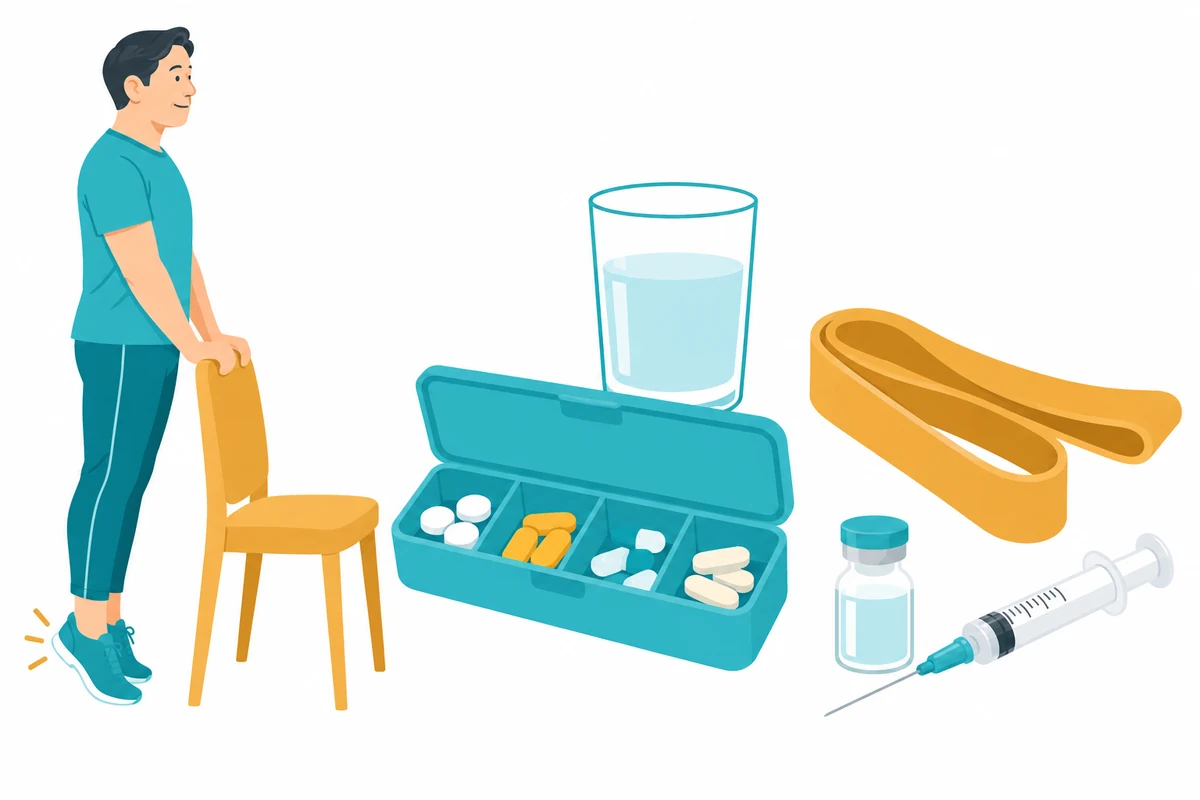
At a glance
- Fitness and lifestyle management are the basics.
- Medication and supportive treatment are determined by your health.
- We're looking at not only pain, but also the changes in walking and sleep.
OA treatment aims to reduce pain and stiffness and maintain joint function and daily life. Several approaches may be combined according to the patient’s condition.
Exercise and lifestyle management are fundamental.
Choose exercise suited to your condition and consider weight management if overweight. For weight-bearing knees and hips, weight management can help reduce load and pain.
Medication and supportive treatment are used as needed.
Pain medicines, braces or walking aids, and exercise therapy are selected according to your needs. Medicines are chosen with your other health conditions, current medicines, and risk of side effects in mind. A treatment that helped someone else may have a different effect for you.
I check the results of the treatment on a daily basis.
We're looking at the distance to walk, the discomfort of climbing stairs, whether you can sleep. Tell your healthcare team about the changes in pain and daily life during treatment. We're evaluating the need for surgery separately.
Tracking recovery through everyday activities
Treatment goals can be made specific through activities that matter to you. Telling us what you would like to do more comfortably—such as walking around the neighbourhood, shopping, or getting up from a chair—helps connect your current function with the treatment plan. Follow-up considers how comfortably you can do those activities as well as your pain.
Therapeutic exercise aims to strengthen the muscles supporting the knee and maintain movement and general fitness. Walking, cycling, and water-based exercise can be adapted to your ability and preferences, with professional guidance when needed. Some mild discomfort can occur initially, so the type and intensity are planned around your response.
When weight management could help, we consider nutrition, other health conditions, and sustainable daily habits together. Symptom-relieving treatments can support continued activity. Exercise, everyday management, and symptom treatment are adjusted together while we assess changes in daily function.
So, what do you think?
NIAMS · Osteoarthritis treatmentNHS · osteoarthritis treatmentNICE NG226 — Osteoarthritis in over 16s: diagnosis and managementAustralian Commission on Safety and Quality in Health Care — Osteoarthritis of the Knee Clinical Care Standard (2024)It's general health information. Please check your symptoms and treatment plan at the clinic.
When to seek medical care
Each warning sign is a separate reason to seek care. Follow the action below if any one applies.
Emergency department · call 119 in Korea
- Call 119 for sudden breathlessness or chest pain, severe faintness or loss of consciousness. Do not wait for calf swelling to appear.
- Go to an emergency department if you suddenly cannot bear any weight, or if an injured knee swells rapidly or looks deformed. A cold or numb foot after injury also needs immediate assessment.
- Seek emergency care for a hot, swollen and severely painful joint with high fever, shaking chills, confusion or inability to bear weight.
- With back or leg pain, go immediately to an emergency department for new difficulty passing urine, loss of bladder or bowel control, or numbness around the genitals or anus. Severe or rapidly worsening weakness or numbness in both legs also needs immediate assessment.
Same-day assessment
- Arrange assessment today for a newly hot, swollen joint, sudden severe pain, or a knee locked so that it cannot fully straighten. Joint infection can occur without fever.
- Have new swelling or pain in one calf assessed today for a possible blood clot. Call 119 immediately if breathlessness or chest pain develops.
- Severe knee pain or a new limp in a growing adolescent may come from a hip condition such as slipped capital femoral epiphysis. Stop walking and sport and arrange assessment today. Go directly to emergency care if they cannot bear weight.
- Stop running and seek assessment today for new recurring groin pain, pain with walking or at night, or a limp. A femoral neck stress fracture needs to be considered. Keep weight off the painful leg until assessed. Go to emergency care if you cannot bear weight.
Book an outpatient appointment
- If none of the warning signs above is present, book an appointment for pain lasting a few weeks, repeated swelling or reduced daily activity and exercise.