AI research workflow ·
AI in Research Workflow: Current Capabilities and Practical Applications
Du Hyun Ro · Orthopedic Surgery, SNUH
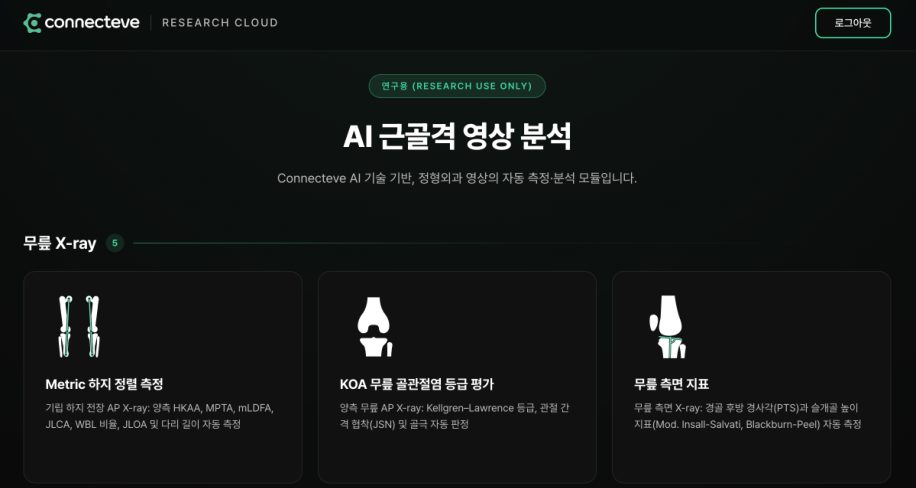
During residency, collecting and formatting data, reading papers, organizing tables, and translating statistics into sentences took substantial time. AI may reduce that work. The lecture and “Integrating AI into the Research Workflow” emphasize the questions researchers should settle first, rather than the number of tools they use.
First, narrow the research question
Write which patient problem you will compare, against what, and using which outcome. AI ideas still need checking against available data. Choosing a plausible result first and fitting the question backwards can distort interpretation. Define hypotheses, outcomes, participants, and exclusions before analysis when possible.
Finding literature and checking the evidence
AI helps find material in long papers and tabulate populations, methods, and results. Verify that titles and DOIs exist and locate each reported number in the original text or table. If only the abstract was read, say so. Agreement between models is not verification; the standard remains the actual source.
Record decisions in design and analysis
Specify selection, missing data, covariates, and correlations when both knees belong to one person. Working code is not necessarily appropriate analysis. Check units, direction, sample size, duplicates, and exclusions. Cross-check main results with other calculations and assess how alternative methods change conclusions.
Keep the question and denominator in the figure
A good figure identifies the comparison, axes, units, sample size, uncertainty, and groups. AI schematics must be labeled separately from original figures; generated pictures must not replace real images or experiments. Means can hide distributions, and accuracy can hide failures. This is why the website pairs original figures with sources and explanations.
Editing the text does not expand the findings
Polished prose can hide claims larger than the results. Check that association has not become causation, internal validation has not become proof at another hospital, and a research model has not become a validated treatment. Use reporting guidance suited to the design and explain methods and limits together. Accurately recording the answered question matters more than drafting quickly.
Human responsibility and protection of data
ICMJE does not list AI as an author: use should be disclosed, and humans remain responsible for accuracy and sources. Removing names alone does not make patient information or confidential drafts safe. Work within institutional rules and suitable data-handling conditions. Use time saved by AI to check evidence and analysis, rather than skipping review.