Preparing for surgery and recovery
When should swelling after knee replacement be checked?
Look at the trend and associated symptoms, not only the number of days since surgery.
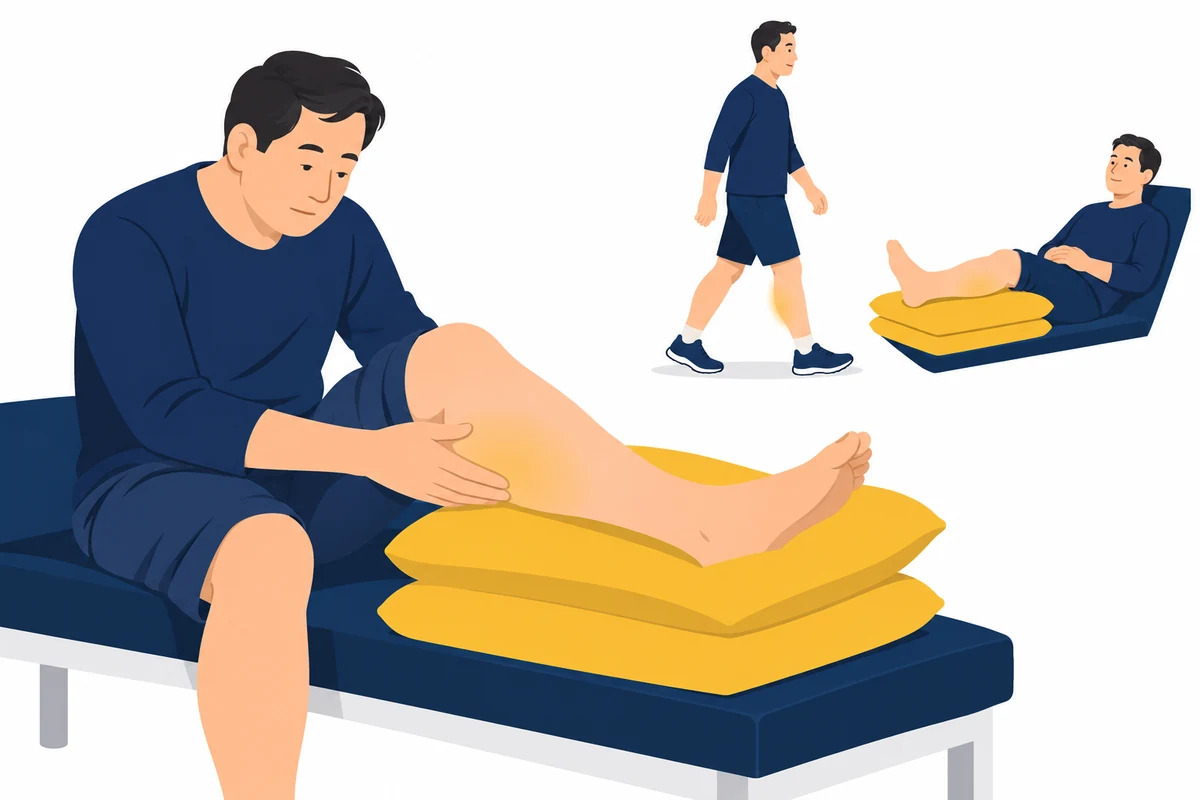
At a glance
- Record how swelling relates to activity and rest.
- Get prompt review for new calf pain or rapid deterioration.
- Treat sudden breathlessness or chest pain as an emergency.
Swelling may extend from the knee into the calf and ankle after replacement. It can increase after activity and decrease with rest. However, not every swollen leg is simply part of recovery. Sudden increases, new one-sided calf pain, wound changes and general illness matter.
Follow the swelling trend and warning signs
- 01
Record
Changes after activity and rest
- 02
Adjust
Short walking bouts and instructed care
- 03
Check
Rapid worsening or new calf pain
A cycle linking swelling records, permitted activity adjustment and assessment of warning symptoms
Watch the pattern over several days
Walking or prolonged sitting may increase swelling. Record which activities worsen it and how it responds to rest; this helps adjust activity. A sock mark or one circumference measurement cannot establish the cause.
Track movement, walking and sleep as well as swelling. Comparisons in the same position and at the same location make the trend easier to describe. Recovery rates differ, but progressive worsening still warrants assessment.
Balance rest with permitted activity
Split approved walking into manageable periods with rests. Ask about leg elevation, cold therapy and compression in relation to the wound, circulation and sensation. Never put ice directly on skin or leave it on a numb area for a prolonged period.
Staying completely still until swelling disappears may be unhelpful, while pushing through swelling with long walks may also be inappropriate. Increased pain and swelling with reduced movement the following day can signal a need to adjust the rehabilitation plan.
Assess new calf pain or rapid change promptly
New one-sided calf pain or tenderness, rapidly increasing swelling and redness need assessment for causes including a clot. Drainage, spreading wound redness, fever or chills also raise concern about infection. Do not wait while trying to distinguish these at home.
A suddenly cold, pale or blue foot, particularly with new loss of sensation or strength, needs immediate emergency assessment for possible circulation or nerve problems. Severe pain and inability to bear weight after a fall also require prompt care. For sudden breathlessness, chest pain or fainting in Korea, call 119 immediately and do not drive yourself.
Describe the change clearly
Give the operation date, onset or change in swelling, whether the calf hurts, recent activity and current medicines. Photos and records can support assessment. Ask before opening a dressing just to take a photograph.
Do not increase preventive medicines or take diuretics yourself because swelling persists. Heart or kidney disease and other medicines may also contribute. Appropriate examination comes before a cause-specific adjustment.
Common Questions
Does ankle swelling always mean a clot?
No. Several causes are possible, but new pain or rapid one-sided worsening needs assessment that considers a clot.
Should I stop all walking when swollen?
Adjust activity to the cause and permitted rehabilitation. Warning signs need assessment before exercise is used to manage them.
Can I use heat or massage?
Do not vigorously massage or heat new calf pain and swelling of uncertain cause. Ask the clinical team.
Evidence and references
01When to seek medical care
Each warning sign is a separate reason to seek care. Follow the action below if any one applies.
Emergency department · call 119 in Korea
- Call 119 for sudden breathlessness or chest pain, severe faintness or loss of consciousness. Do not wait for calf swelling to appear.
- Go to an emergency department if you suddenly cannot bear any weight, or if an injured knee swells rapidly or looks deformed. A cold or numb foot after injury also needs immediate assessment.
- Seek emergency care for a hot, swollen and severely painful joint with high fever, shaking chills, confusion or inability to bear weight.
- With back or leg pain, go immediately to an emergency department for new difficulty passing urine, loss of bladder or bowel control, or numbness around the genitals or anus. Severe or rapidly worsening weakness or numbness in both legs also needs immediate assessment.
Same-day assessment
- Arrange assessment today for a newly hot, swollen joint, sudden severe pain, or a knee locked so that it cannot fully straighten. Joint infection can occur without fever.
- Have new swelling or pain in one calf assessed today for a possible blood clot. Call 119 immediately if breathlessness or chest pain develops.
- Severe knee pain or a new limp in a growing adolescent may come from a hip condition such as slipped capital femoral epiphysis. Stop walking and sport and arrange assessment today. Go directly to emergency care if they cannot bear weight.
- Stop running and seek assessment today for new recurring groin pain, pain with walking or at night, or a limp. A femoral neck stress fracture needs to be considered. Keep weight off the painful leg until assessed. Go to emergency care if you cannot bear weight.
Book an outpatient appointment
- If none of the warning signs above is present, book an appointment for pain lasting a few weeks, repeated swelling or reduced daily activity and exercise.