Injuries, tendons and menisci
Returning after injury: use function and the next-day response
Check walking, strength and short runs before progressing toward your usual training.
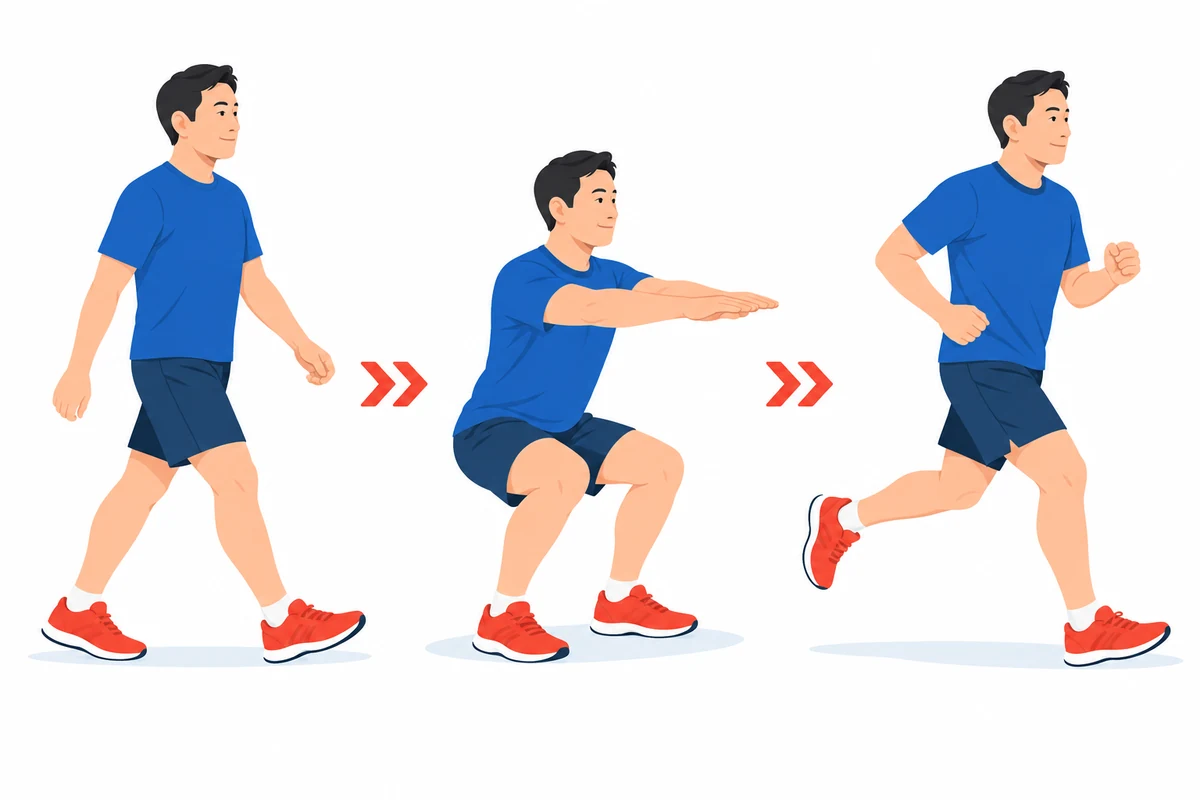
At a glance
- Confirm injury-specific restrictions and functional criteria before restarting.
- Repeat brief walk–run sessions and adjust using the next-day response.
- Progress distance, speed and hills separately; step back if symptoms worsen.
After several weeks of rest, many people ask whether they can return to their usual distance. Less pain and remaining fitness do not necessarily mean injured tissue can tolerate the same load. Begin with short, easy runs and progress gradually while checking next-day symptoms and everyday movement.
Three gates in the return process
- 01
Daily function
Check restrictions, comfortable walking and required strength.
- 02
Repeated loading
Repeat brief running and assess the next-day response.
- 03
Target activity
Reassess distance, speed, hills and racing separately.
Three panels show daily function criteria, repeated short loading and preparation for target activity
Clarify injury-specific restrictions
Bone stress injury, Achilles tendinopathy and rehabilitation after ligament surgery have different return criteria. Ask your treating clinician which walking and exercises are allowed and which movements remain restricted. High-risk bone sites and postoperative conditions may require evidence of healing and specific rehabilitation criteria that a generic running table cannot replace.
Pain-free daily walking is an important starting condition after bone injury. For tendon problems, walking, calf strength and the response to loading are considered together, and acceptable symptoms may be individualized. A single pain score or rest period is not a universal clearance criterion for every injury.
Confirm function, then start briefly
Check ordinary walking, stairs and the necessary strength and balance tasks. A professional selects heel raises or single-leg tests according to the injury. Do not perform your own jump tests with suspected bone injury or ongoing restrictions. Continue addressing contributing training and nutrition issues.
If your clinician permits it and you have recovered the required function, one way to start is to alternate walking and short running intervals on level ground. For example, repeat one minute of easy running and two minutes of walking a few times, then assess the response. Repetitions and speed are set individually. This example has not been validated as a safe return plan for every injury.
Repeat a successful level during the week
An initial return week might use Tuesday, Thursday and Saturday with observation days between. A comfortable Tuesday does not justify immediately doubling Thursday’s run. Assess evening and next-morning walking, stiffness and swelling, as well as the session itself, before deciding to repeat or reduce.
After stable repetitions, increase one aspect of running time or distance before separately considering speed, hills and consecutive running days. Review whether an individual outing is abruptly longer than recent runs. An increase of 10% or less, or a watch’s recovery score, does not guarantee protection from reinjury.
Step back when symptoms worsen
Stop and reassess if pain causes a limp or movement change, next-day daily function declines or the same bone pain returns. This is not simply failure or delay. Repeated symptoms are an opportunity to review diagnosis, exercise dose, recovery and everyday demands.
Returning to comfortable running and being ready to race are different stages. Check whether you can tolerate your target distance, speed and repeated sessions, and avoid rushing recovery to match a race date. Seek same-day assessment for a newly hot, swollen joint, sudden severe pain or a knee locked so that it cannot straighten. Go directly to emergency care if you suddenly cannot bear any weight or the knee swells rapidly after injury. Do not delay care because there is no fever.
Stop and have groin pain assessed
Stop running and seek assessment today if any one occurs: recurring new groin pain, pain with walking, pain at night, or a limp. Keep weight off the painful leg until assessed. Go directly to emergency care if you cannot bear any weight.
Common Questions
Can I return once resting pain has gone?
That alone is insufficient. Check walking, required strength and loading function, and injury-specific healing criteria.
Can I resume my old training after one comfortable run?
First assess next-day response and repeatability. Fitness and tissue load tolerance do not necessarily recover at the same pace.
Can I increase speed first for an approaching race?
Do not omit rehabilitation stages to meet a date. Assess racing separately using easy-running time and distance tolerance and injury-specific function.
Evidence and references
01When to seek medical care
Each warning sign is a separate reason to seek care. Follow the action below if any one applies.
Emergency department · call 119 in Korea
- Call 119 for sudden breathlessness or chest pain, severe faintness or loss of consciousness. Do not wait for calf swelling to appear.
- Go to an emergency department if you suddenly cannot bear any weight, or if an injured knee swells rapidly or looks deformed. A cold or numb foot after injury also needs immediate assessment.
- Seek emergency care for a hot, swollen and severely painful joint with high fever, shaking chills, confusion or inability to bear weight.
- With back or leg pain, go immediately to an emergency department for new difficulty passing urine, loss of bladder or bowel control, or numbness around the genitals or anus. Severe or rapidly worsening weakness or numbness in both legs also needs immediate assessment.
Same-day assessment
- Arrange assessment today for a newly hot, swollen joint, sudden severe pain, or a knee locked so that it cannot fully straighten. Joint infection can occur without fever.
- Have new swelling or pain in one calf assessed today for a possible blood clot. Call 119 immediately if breathlessness or chest pain develops.
- Severe knee pain or a new limp in a growing adolescent may come from a hip condition such as slipped capital femoral epiphysis. Stop walking and sport and arrange assessment today. Go directly to emergency care if they cannot bear weight.
- Stop running and seek assessment today for new recurring groin pain, pain with walking or at night, or a limp. A femoral neck stress fracture needs to be considered. Keep weight off the painful leg until assessed. Go to emergency care if you cannot bear weight.
Book an outpatient appointment
- If none of the warning signs above is present, book an appointment for pain lasting a few weeks, repeated swelling or reduced daily activity and exercise.