Injuries, tendons and menisci
Achilles and calf pain in runners: distribute load during recovery
Use morning steps, heel raises and the next-day response to adjust activity.
At a glance
- Distinguish mid-tendon, heel-attachment and calf muscle pain.
- Individualize progressive loading using location and next-day response.
- A sudden snap with lost push-off strength warrants prompt rupture assessment.
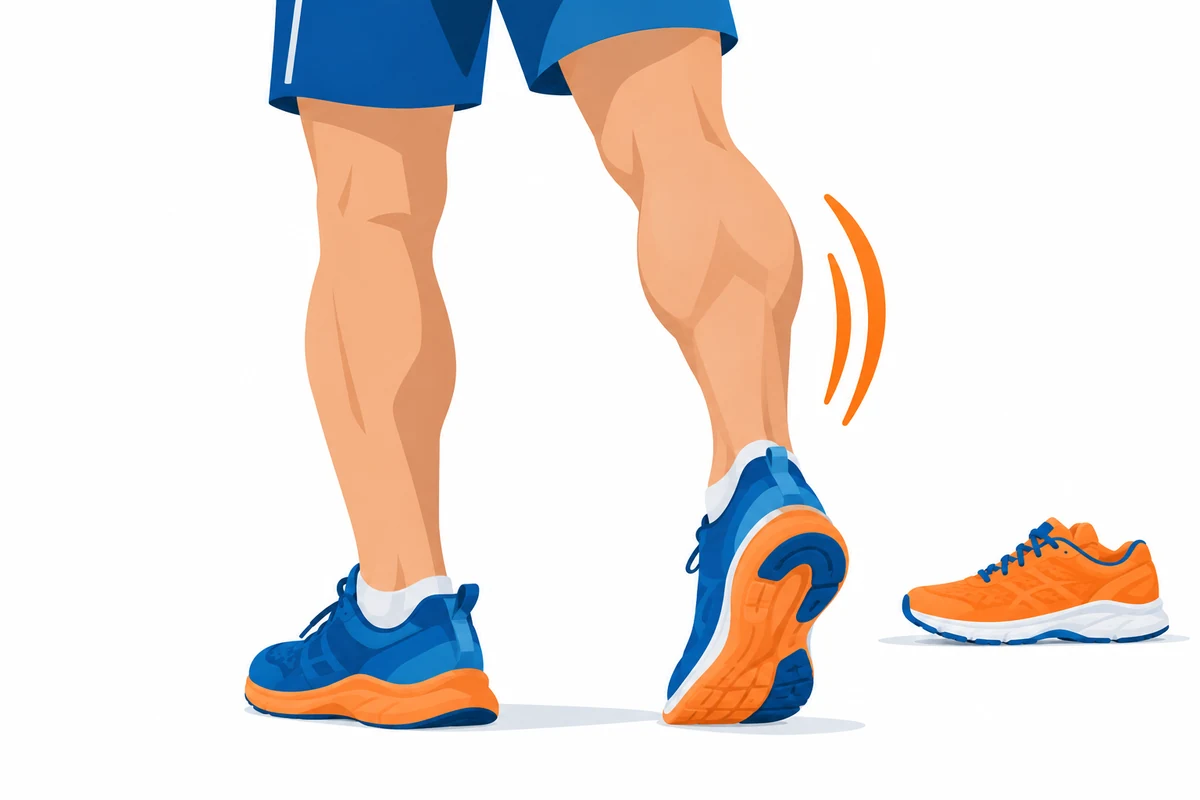
Hills and faster running can precede discomfort near the heel or in the calf. Calf muscle pain, pain in the middle of the Achilles tendon and pain at its heel attachment are not identical conditions. First distinguish gradual symptoms from a sudden snapping injury.
Three observation windows for Achilles recovery
- 01
Morning steps
Check for stiffness or pain above your usual level.
- 02
Controlled loading
Use heel raises and comfortable activity suited to the location.
- 03
Next-day walking
Maintain or reduce demand based on the accumulated response.
Three panels connect morning steps, controlled heel raises and next-day walking
Check the location and morning symptoms
Achilles tendinopathy may hurt with running or push-off and feel stiff on the first morning steps. Symptoms can ease during activity and return afterward. Record location, the persistence of morning stiffness, and recent changes in hills, speed and shoes for your consultation.
The tendon’s heel attachment and its middle portion may need different exercise ranges and treatments. Not all calf pain comes from the Achilles tendon. Tendon thickness or ultrasound findings alone should not determine readiness to run; examination, function and the symptom course also matter.
Combine reduced demand with progressive loading
For diagnosed Achilles tendinopathy, exercise that progressively adjusts calf and tendon loading is an important treatment component. Studies comparing slow heel-lowering exercises with other resistance approaches have not established one method as best in all circumstances. Performance, consistency and load adjustment all matter.
Do not prescribe deep heel drops off a step for every painful tendon. They may increase compression at a painful heel attachment, requiring range modification. Choose position, resistance, repetitions and frequency from symptoms and function; completing a fixed internet routine is not the goal.
A weekly example combining running and calf work
If symptoms worsen after hills in a Tuesday–Thursday–Saturday running week, consider first removing hills and speed sessions and choosing tolerable shorter activity on level ground. Count calf exercises as additional demand alongside running. Allow space in the schedule to observe the following day.
For example, try a small amount of supported two-leg heel raises on level ground, then check whether next-morning steps and walking worsen. Agree on the amount and acceptable symptom response with your clinician. This is not a validated universal treatment dose; do not try it first if rupture is suspected.
Use strength, function and warning signs
Assess whether morning symptoms are stable, ordinary walking is comfortable and heel raises and repeated push-off can be controlled. Start with brief easy running and assess the response before increasing distance and speed separately. One less painful day is not proof of recovery; review the next-day response repeatedly.
Stop running and stretching and seek same-day assessment for a sudden snap near the heel with lost push-off strength. Go directly to emergency care if you suddenly cannot bear any weight. Have any new swelling, pain or skin-colour change in one calf assessed today for a possible blood clot or another cause. Call 119 immediately in Korea for breathlessness or chest pain.
Common Questions
Can I keep running if warming up eases the pain?
Temporary improvement does not prove tolerance. Check symptoms afterward and on the next morning’s steps and walking.
Are heel drops the only treatment exercise?
Several loading approaches can be used; none is superior for everyone. Choose according to location and ability.
How many weeks should I rest before returning?
Assess walking, calf strength and repeated-load response rather than a fixed date. Rupture and surgery require separate rehabilitation plans.
Evidence and references
01When to seek medical care
Each warning sign is a separate reason to seek care. Follow the action below if any one applies.
Emergency department · call 119 in Korea
- Call 119 for sudden breathlessness or chest pain, severe faintness or loss of consciousness. Do not wait for calf swelling to appear.
- Go to an emergency department if you suddenly cannot bear any weight, or if an injured knee swells rapidly or looks deformed. A cold or numb foot after injury also needs immediate assessment.
- Seek emergency care for a hot, swollen and severely painful joint with high fever, shaking chills, confusion or inability to bear weight.
- With back or leg pain, go immediately to an emergency department for new difficulty passing urine, loss of bladder or bowel control, or numbness around the genitals or anus. Severe or rapidly worsening weakness or numbness in both legs also needs immediate assessment.
Same-day assessment
- Arrange assessment today for a newly hot, swollen joint, sudden severe pain, or a knee locked so that it cannot fully straighten. Joint infection can occur without fever.
- Have new swelling or pain in one calf assessed today for a possible blood clot. Call 119 immediately if breathlessness or chest pain develops.
- Severe knee pain or a new limp in a growing adolescent may come from a hip condition such as slipped capital femoral epiphysis. Stop walking and sport and arrange assessment today. Go directly to emergency care if they cannot bear weight.
- Stop running and seek assessment today for new recurring groin pain, pain with walking or at night, or a limp. A femoral neck stress fracture needs to be considered. Keep weight off the painful leg until assessed. Go to emergency care if you cannot bear weight.
Book an outpatient appointment
- If none of the warning signs above is present, book an appointment for pain lasting a few weeks, repeated swelling or reduced daily activity and exercise.