Daily life and exercise
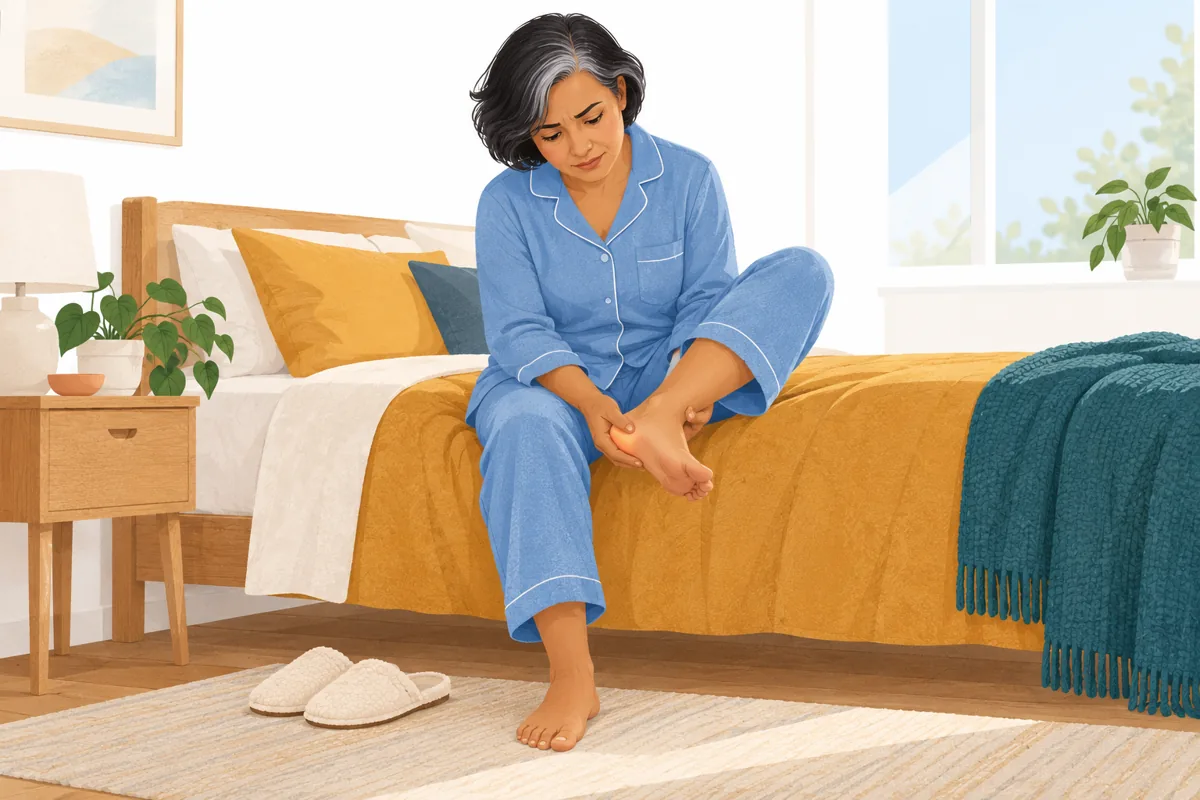
Heel pain with your first steps in the morning: could it be plantar fasciitis?
Check the location and daily pattern of pain, then adjust footwear, activity, and stretching.
At a glance
- Pain under the heel with the first steps of the day is a common pattern in plantar fasciitis.
- Use cushioned, supportive shoes and adjust the amount of impact-loading exercise.
- Stretch the calf and the sole gently, without sharp pain.
If the underside of your heel hurts with your first steps in the morning, note the exact location and adjust how much you walk and run. Plantar fasciitis is a common cause, but not all heel pain comes from the same problem.
Daily adjustments for heel pain
- 01
Locate the pain
Check whether pain is under or behind the heel and whether the first steps hurt.
- 02
Adjust the load
Reduce walking or running volume and wear cushioned, supportive shoes.
- 03
Stretch gently
Stretch the calf and the sole comfortably, without bouncing.
- 04
Monitor changes
Check whether first-step pain and your comfortable walking distance improve.
Steps explaining first-step pain in plantar fasciitis, shoe selection, and calf and plantar fascia stretching
Pain may ease after the first steps, then return with prolonged walking
The plantar fascia is tissue running from the heel toward the toes that supports the arch of the foot. Excess load on this area may cause pain under the heel and along the inner side of the sole. Pain is often greatest with the first steps after getting out of bed or standing up after a long period of sitting. It may ease with some movement, then return after prolonged walking or standing. Consider whether your walking or running volume has recently increased.
Pain at the back of the heel may involve the Achilles tendon. Severe pain immediately after an injury, or difficulty bearing weight, calls for assessment of injuries such as a fracture. Tingling or reduced sensation also warrants consideration of a nerve problem. The starting point for diagnosis is precisely where and when the pain occurs, rather than the label of plantar fasciitis. If you have diabetes and develop foot pain, have your foot assessed.
Adjust footwear and the load on your feet during the day
Reduce prolonged walking, running, or jumping that triggers pain and allow the foot time to recover. Rather than stopping all exercise, you can switch to lower-impact activities such as swimming or cycling. Shorten walks or divide them into several sessions. Monitoring pain that evening and with the first steps the following morning can help you adjust your activity level.
Choose shoes with heel cushioning and stable support. Avoid prolonged barefoot walking on hard floors and continuous use of backless slippers. Insoles or heel pads may help relieve symptoms, but not everyone needs the same product. After changing shoes, check whether the location of pain and discomfort while walking improve.
Stretch the calf and the sole gently
For a calf stretch, place your hands on a wall with the affected leg behind you. Keep that heel on the floor and slowly lean forward. Stretch within a range that creates a comfortable pulling sensation in the calf, without bouncing. Lifting the heel or forcing your body forward may fail to stretch the intended area adequately or increase pain.
To stretch the plantar fascia, sit with the affected foot resting over the opposite knee and slowly pull the toes toward you to stretch the sole. Doing this before your first steps in the morning may help. The hold time and number of repetitions should suit your current pain and movement. Stop and check the technique if you develop sharp pain or tingling. Do not use stretching as a way to compensate for excessive activity.
Focus on changes in pain and function rather than a heel spur
A heel spur on an X-ray is not necessarily the cause of pain. Many people with heel spurs have no pain, and removing a spur is not always necessary to treat plantar fasciitis. Examination is important when symptoms are typical. Imaging is selected when another cause, such as a fracture, is suspected or when recovery does not follow the expected course.
If pain continues to interfere with daily life despite changing footwear, adjusting activity, and stretching, discuss treatment again. The NHS advises seeking assessment if symptoms do not improve after 2 weeks of self-care. This is a time to review the cause and treatment plan, not a promise of complete recovery within 2 weeks. Recovery can take several months, and exercise therapy or other treatment may be considered when needed. Monitor first-step pain and the distance you can walk comfortably. When adjusting activity, change one factor first, such as walking time or running distance, rather than several factors at once. After trying new shoes or insoles, check for discomfort in other parts of the foot as well as the heel. The aim is to maintain activities you can do comfortably rather than suddenly returning to your previous activity level on a good day.
Common Questions
Do I need to have a heel spur removed?
A heel spur on an X-ray is not necessarily the cause of pain. Plantar fasciitis can be treated without removing the spur, and symptoms and examination findings guide treatment.
How many stretches should I do?
Adjust the hold time and number of repetitions to your pain and movement. First learn the technique correctly. If pain or tingling increases afterward, reduce the range and intensity and review the movement.
Should it be better after 2 weeks?
Complete recovery may take longer. If there is no improvement after 2 weeks of self-care, it is a reason to review the cause and treatment plan.
Evidence and references
01When to seek medical care
Each warning sign is a separate reason to seek care. Follow the action below if any one applies.
Emergency department · call 119 in Korea
- Call 119 for sudden breathlessness or chest pain, severe faintness or loss of consciousness. Do not wait for calf swelling to appear.
- Go to an emergency department if you suddenly cannot bear any weight, or if an injured knee swells rapidly or looks deformed. A cold or numb foot after injury also needs immediate assessment.
- Seek emergency care for a hot, swollen and severely painful joint with high fever, shaking chills, confusion or inability to bear weight.
- With back or leg pain, go immediately to an emergency department for new difficulty passing urine, loss of bladder or bowel control, or numbness around the genitals or anus. Severe or rapidly worsening weakness or numbness in both legs also needs immediate assessment.
Same-day assessment
- Arrange assessment today for a newly hot, swollen joint, sudden severe pain, or a knee locked so that it cannot fully straighten. Joint infection can occur without fever.
- Have new swelling or pain in one calf assessed today for a possible blood clot. Call 119 immediately if breathlessness or chest pain develops.
- Severe knee pain or a new limp in a growing adolescent may come from a hip condition such as slipped capital femoral epiphysis. Stop walking and sport and arrange assessment today. Go directly to emergency care if they cannot bear weight.
- Stop running and seek assessment today for new recurring groin pain, pain with walking or at night, or a limp. A femoral neck stress fracture needs to be considered. Keep weight off the painful leg until assessed. Go to emergency care if you cannot bear weight.
Book an outpatient appointment
- If none of the warning signs above is present, book an appointment for pain lasting a few weeks, repeated swelling or reduced daily activity and exercise.