Daily life and exercise
Should I use cold or warmth for my knee?
Use either as an aid while checking symptoms and skin.
At a glance
- Protect the skin during cold therapy and do not leave it on too long.
- Use comfortable warmth and do not sleep with a hot pack.
- Do not delay care for new red, hot swelling or fever.
There is no single temperature that is right for every painful knee. Swelling, warmth, stiffness and normal skin sensation influence the choice. Treat it as a way to improve comfort and monitor the response, rather than as a complete treatment.
Choose a pack and protect the skin
- 01
Swelling and warmth
Use a wrapped cold pack briefly and check the response.
- 02
Stiffness
Comfortable warmth may help prepare for movement.
- 03
New redness or fever
Seek assessment of the cause before relying on packs.
Three panels compare cold, warmth and new symptoms needing assessment
Consider cold for swelling and warmth
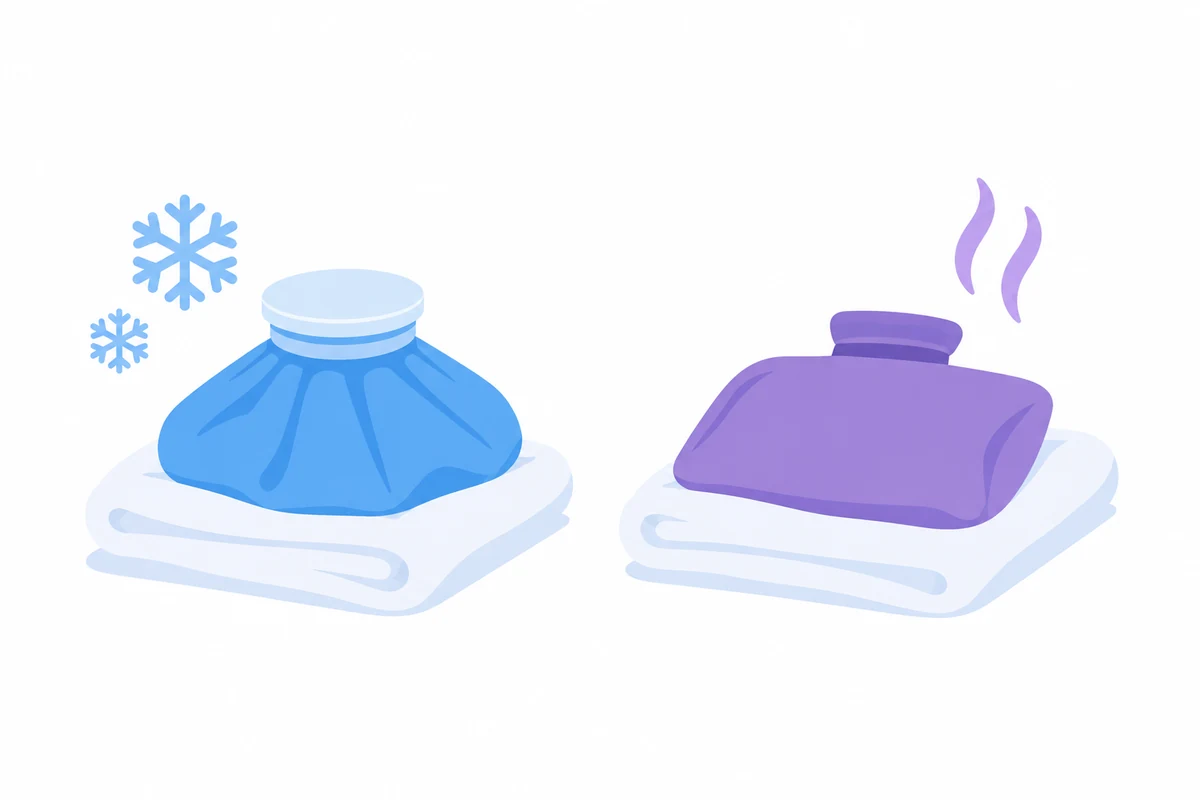
A cold pack may help discomfort in a swollen warm knee after activity. Wrap it in a towel rather than placing ice directly on skin. NHS general knee advice describes up to 20 minutes at a time; longer is not better.
Stop if skin becomes excessively pale, painful or numb. If sensation or circulation is reduced, check use with a clinician rather than deciding the duration alone. Relief from cooling should not replace assessment of a new injury or substantial swelling.
Warmth may be comfortable for stiffness
When the knee is not hot and swollen, warmth may ease muscle discomfort and a stiff feeling. Use a comfortably warm rather than hot pack with a protective layer, and check the skin. Gentle movement may follow, but temporary comfort does not justify forceful stretching.
Sleeping on a hot pack or leaving it compressed against the skin can cause burns. Reduced sensation or inability to remove it independently requires assistance and guidance. Follow wound-care instructions before using packs around skin wounds or a surgical incision.
Separate comfort from treatment of the cause
Packs are aids for symptoms; they do not regrow cartilage or treat every cause of arthritis. If the same activity repeatedly triggers pain after temporary relief, review exercise dose, movement, medication and other possible causes.
Rather than making each pack colder or hotter, check the knee and skin response. Do not jump into strenuous activity after cooling or suddenly increase activity because warmth helped. Use packs alongside a continuing strength, aerobic and treatment plan.
New redness and heat need assessment
Seek same-day assessment for a newly hot, swollen joint, sudden severe pain or a knee locked so that it cannot straighten. Go directly to emergency care if you suddenly cannot bear any weight or the knee swells rapidly after injury. Do not delay care because there is no fever.
Remember the duration of use, skin changes and the response in pain and swelling. These observations help identify what provides comfort. If it does not help or new symptoms occur, reconsider the cause rather than repeatedly applying packs.
Common Questions
How long should I use a cold pack?
NHS general advice gives up to 20 minutes. Skin response and sensation or circulation problems may require shorter use or specific guidance.
Does hotter heat work better?
No. Comfortable temperature and protection matter because burns are possible.
Does alternating hot and cold help cartilage regrow?
A cartilage regeneration benefit is not established. Choose them as symptom aids according to the response.
Evidence and references
01When to seek medical care
Each warning sign is a separate reason to seek care. Follow the action below if any one applies.
Emergency department · call 119 in Korea
- Call 119 for sudden breathlessness or chest pain, severe faintness or loss of consciousness. Do not wait for calf swelling to appear.
- Go to an emergency department if you suddenly cannot bear any weight, or if an injured knee swells rapidly or looks deformed. A cold or numb foot after injury also needs immediate assessment.
- Seek emergency care for a hot, swollen and severely painful joint with high fever, shaking chills, confusion or inability to bear weight.
- With back or leg pain, go immediately to an emergency department for new difficulty passing urine, loss of bladder or bowel control, or numbness around the genitals or anus. Severe or rapidly worsening weakness or numbness in both legs also needs immediate assessment.
Same-day assessment
- Arrange assessment today for a newly hot, swollen joint, sudden severe pain, or a knee locked so that it cannot fully straighten. Joint infection can occur without fever.
- Have new swelling or pain in one calf assessed today for a possible blood clot. Call 119 immediately if breathlessness or chest pain develops.
- Severe knee pain or a new limp in a growing adolescent may come from a hip condition such as slipped capital femoral epiphysis. Stop walking and sport and arrange assessment today. Go directly to emergency care if they cannot bear weight.
- Stop running and seek assessment today for new recurring groin pain, pain with walking or at night, or a limp. A femoral neck stress fracture needs to be considered. Keep weight off the painful leg until assessed. Go to emergency care if you cannot bear weight.
Book an outpatient appointment
- If none of the warning signs above is present, book an appointment for pain lasting a few weeks, repeated swelling or reduced daily activity and exercise.