Daily life and exercise
Adjust exercise using the next-day response
Consider pain location, swelling, walking and recovery rather than time alone.
At a glance
- Check swelling, walking and sleep as well as next-day pain.
- Neither 24 hours nor one pain score establishes exercise safety for everyone.
- Adjust one demand at a time and review recurring deterioration.
Next-day soreness can make you wonder whether exercise helped or harmed the knee. Unfamiliar exercise may fatigue muscles, while excessive joint demand can increase pain and swelling. The next-day response is useful, but a 24-hour rule alone cannot establish safety.
Use the response to plan the next session
- 01
Activity
Record exercise, outings, stairs and housework.
- 02
Response
Separate muscle soreness from joint pain, swelling and walking changes.
- 03
Adjustment
Change duration, resistance, repetitions or range one at a time.
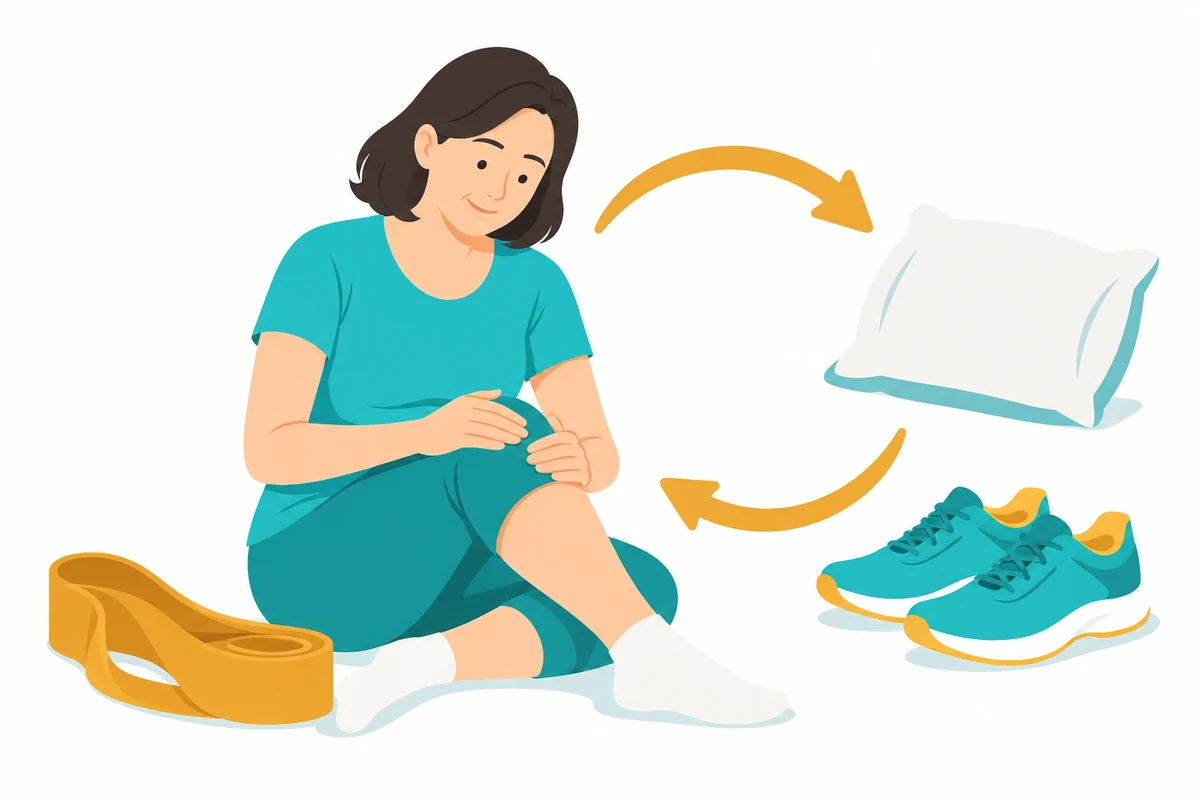
Three panels cycle through activity record, next-day response and one adjustment
Separate muscle soreness from joint symptoms
Check for broad soreness in the thigh or hip versus movement-specific pain at the front or inner knee. New swelling, warmth, limited movement and buckling provide additional information. Location cannot distinguish everything perfectly, so recurring symptoms warrant a technique review.
NICE explains that starting exercise may initially cause discomfort while recommending regular activity tailored to the person. Not every discomfort indicates damage, but this is not advice to push through sharp pain or deteriorating function to meet a target.
Review the entire day’s activity
Record changes in exercise type, duration, resistance or repetitions. Consider long outings, stairs or housework on the same day. Changes in sleep and recovery also help determine an appropriate next dose.
Comfort at the end of a session does not exclude a delayed response. One sore day does not require banning the activity forever either. Compare walking, rising from a chair and sleep with your usual baseline.
Reduce one source of demand next time
If walking and function are clearly worse, adjust a suspected contributor such as duration, resistance, repetitions or bending range rather than repeating the same amount. A familiar less provoking activity may be suitable. Balance rest and movement for the situation.
When symptoms settle, restart at a manageable amount and progress one feature at a time. No single pain score or next-day time applies absolutely to everyone. Recurrent swelling and pain are reasons to review technique and the treatment plan with a clinician or physiotherapist.
Distinguish fatigue from a change needing assessment
Seek same-day assessment for a newly hot, swollen joint, sudden severe pain or a knee locked so that it cannot straighten. Go directly to emergency care if you suddenly cannot bear any weight or the knee swells rapidly after injury. Do not delay care because there is no fever.
If daily function or sleep keeps declining despite repeated adjustments, revisit the plan. The aim is neither waiting for perfect pain-free days nor tolerating every pain. It is finding a sustainable method and dose while maintaining daily life.
Common Questions
Is it safe if symptoms settle within 24 hours?
That timing alone is insufficient. New swelling, functional loss, injury and the pattern of pain also matter.
Must there be muscle soreness for exercise to work?
No. Soreness is not a requirement for benefit; function and sustained participation matter.
Should I stop forever if it hurts the next day?
Distinguish familiar mild responses from warning signs. Adjust type and dose, and seek review if problems recur.
Evidence and references
01When to seek medical care
Each warning sign is a separate reason to seek care. Follow the action below if any one applies.
Emergency department · call 119 in Korea
- Call 119 for sudden breathlessness or chest pain, severe faintness or loss of consciousness. Do not wait for calf swelling to appear.
- Go to an emergency department if you suddenly cannot bear any weight, or if an injured knee swells rapidly or looks deformed. A cold or numb foot after injury also needs immediate assessment.
- Seek emergency care for a hot, swollen and severely painful joint with high fever, shaking chills, confusion or inability to bear weight.
- With back or leg pain, go immediately to an emergency department for new difficulty passing urine, loss of bladder or bowel control, or numbness around the genitals or anus. Severe or rapidly worsening weakness or numbness in both legs also needs immediate assessment.
Same-day assessment
- Arrange assessment today for a newly hot, swollen joint, sudden severe pain, or a knee locked so that it cannot fully straighten. Joint infection can occur without fever.
- Have new swelling or pain in one calf assessed today for a possible blood clot. Call 119 immediately if breathlessness or chest pain develops.
- Severe knee pain or a new limp in a growing adolescent may come from a hip condition such as slipped capital femoral epiphysis. Stop walking and sport and arrange assessment today. Go directly to emergency care if they cannot bear weight.
- Stop running and seek assessment today for new recurring groin pain, pain with walking or at night, or a limp. A femoral neck stress fracture needs to be considered. Keep weight off the painful leg until assessed. Go to emergency care if you cannot bear weight.
Book an outpatient appointment
- If none of the warning signs above is present, book an appointment for pain lasting a few weeks, repeated swelling or reduced daily activity and exercise.