Symptoms and tests
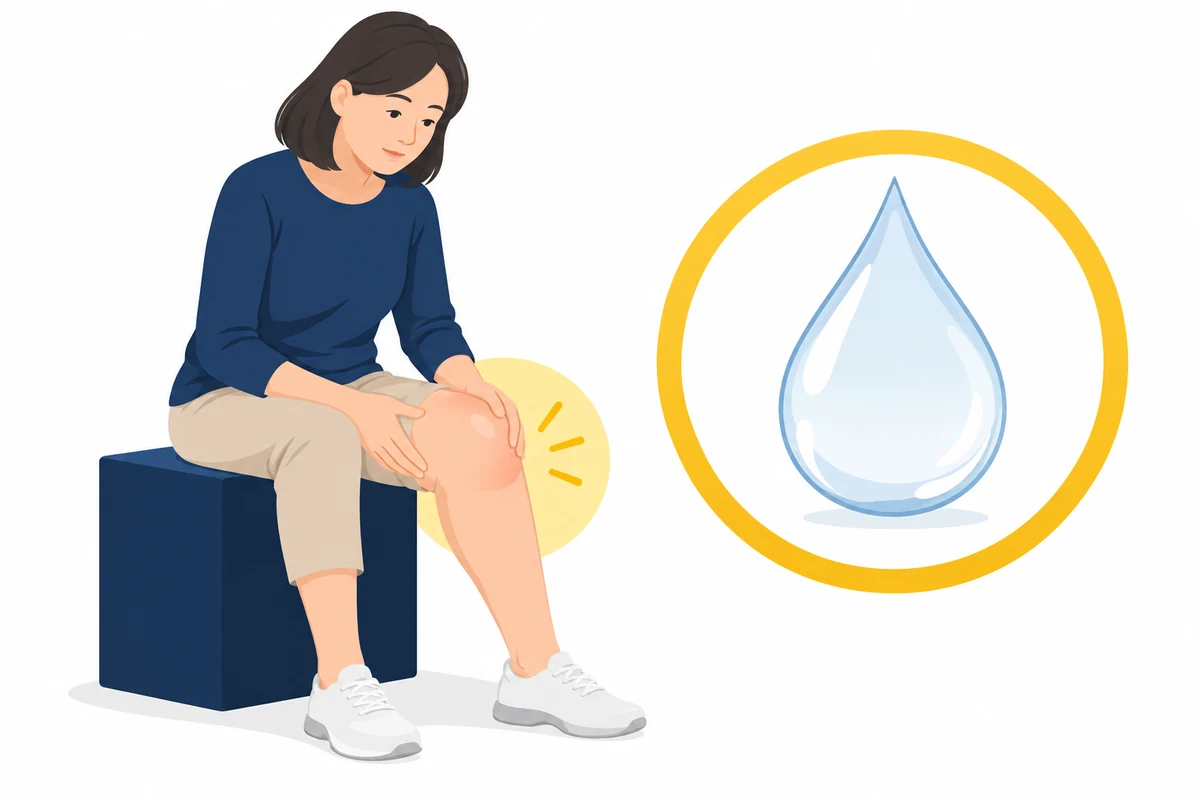
What does fluid in the knee mean?
Identify why fluid has increased before deciding whether it should be removed.
At a glance
- An effusion means increased joint fluid and can have several causes.
- Aspiration may be used for relief or for diagnostic testing.
- A hot red knee with fever or severe pain needs prompt assessment.
Fluid in the knee usually means more fluid than usual inside the joint. Not every swollen area around the knee is a joint effusion. Arthritis, injury, crystal-related arthritis and infection can cause different problems and need different treatment.
A sequence for assessing a swollen knee
- 01
Onset
Check injury, activity, sudden heat and recent procedures.
- 02
Assessment
Examination and selected tests identify why fluid increased.
- 03
Treatment purpose
Separate symptom relief, fluid testing and treatment of the cause.
Three panels show the onset, assessment of the cause and treatment purpose
Some joint fluid is normal
A healthy joint contains fluid that supports movement. A synovial reaction or injury can increase it, making the knee feel tight and difficult to bend. Pain can interfere with thigh muscle activation and walking, so swelling is assessed alongside function.
Bursae outside the joint or tissues beneath the skin can also swell. An examination checks the location, warmth, movement and tenderness. Swelling at the front alone does not confirm extra fluid inside the joint; further testing is used when needed.
The onset and pattern matter
Explain whether swelling appeared quickly after injury, recurs after activity, or suddenly became hot without an obvious trigger. Previous injections or surgery, gout and anticoagulant medication also help the assessment. New swelling needs consideration even when arthritis is already known.
Mention whether other joints hurt and whether there is fever or general illness. An arthritis flare and an infected joint require different treatment. A hot, red, very painful knee should not simply be attributed to extra walking.
Aspiration has two main purposes
Removing joint fluid may relieve a tense uncomfortable knee or provide fluid for testing to identify the cause. Tests may examine cells, crystals or bacteria as appropriate. Not every effusion must be aspirated; the diagnostic purpose and symptoms guide the decision.
Fluid may return if its underlying cause continues. Repeated removal alone does not necessarily treat that cause. If an injection is being considered, infection risk and the purpose of the medication need to be assessed first.
Adjust activity while monitoring swelling
When swelling is substantial, reduce irritating activities and adjust movement within a manageable range. A protected cold pack may help symptoms but cannot diagnose the cause or treat an infection. Record changes in swelling alongside walking and bending.
Seek same-day assessment for a newly hot, swollen joint, sudden severe pain or a knee locked so that it cannot straighten. Go directly to emergency care if you suddenly cannot bear any weight or the knee swells rapidly after injury. Do not delay care because there is no fever.
Common Questions
Does joint aspiration make fluid keep returning?
Fluid can return after aspiration. The cause of swelling, such as infection, gout or arthritis, still needs assessment and treatment. Testing the fluid helps identify the cause, and draining a large effusion may relieve pain and pressure. Symptoms and test results guide whether aspiration needs repeating.
Does returning fluid mean the procedure failed?
Fluid can increase again when the cause remains. Symptom relief and treatment of the cause are separate issues.
Can I manage it with compresses alone?
Familiar mild swelling differs from new severe swelling. Do not delay assessment for heat, fever or major pain.
Evidence and references
01When to seek medical care
Each warning sign is a separate reason to seek care. Follow the action below if any one applies.
Emergency department · call 119 in Korea
- Call 119 for sudden breathlessness or chest pain, severe faintness or loss of consciousness. Do not wait for calf swelling to appear.
- Go to an emergency department if you suddenly cannot bear any weight, or if an injured knee swells rapidly or looks deformed. A cold or numb foot after injury also needs immediate assessment.
- Seek emergency care for a hot, swollen and severely painful joint with high fever, shaking chills, confusion or inability to bear weight.
- With back or leg pain, go immediately to an emergency department for new difficulty passing urine, loss of bladder or bowel control, or numbness around the genitals or anus. Severe or rapidly worsening weakness or numbness in both legs also needs immediate assessment.
Same-day assessment
- Arrange assessment today for a newly hot, swollen joint, sudden severe pain, or a knee locked so that it cannot fully straighten. Joint infection can occur without fever.
- Have new swelling or pain in one calf assessed today for a possible blood clot. Call 119 immediately if breathlessness or chest pain develops.
- Severe knee pain or a new limp in a growing adolescent may come from a hip condition such as slipped capital femoral epiphysis. Stop walking and sport and arrange assessment today. Go directly to emergency care if they cannot bear weight.
- Stop running and seek assessment today for new recurring groin pain, pain with walking or at night, or a limp. A femoral neck stress fracture needs to be considered. Keep weight off the painful leg until assessed. Go to emergency care if you cannot bear weight.
Book an outpatient appointment
- If none of the warning signs above is present, book an appointment for pain lasting a few weeks, repeated swelling or reduced daily activity and exercise.