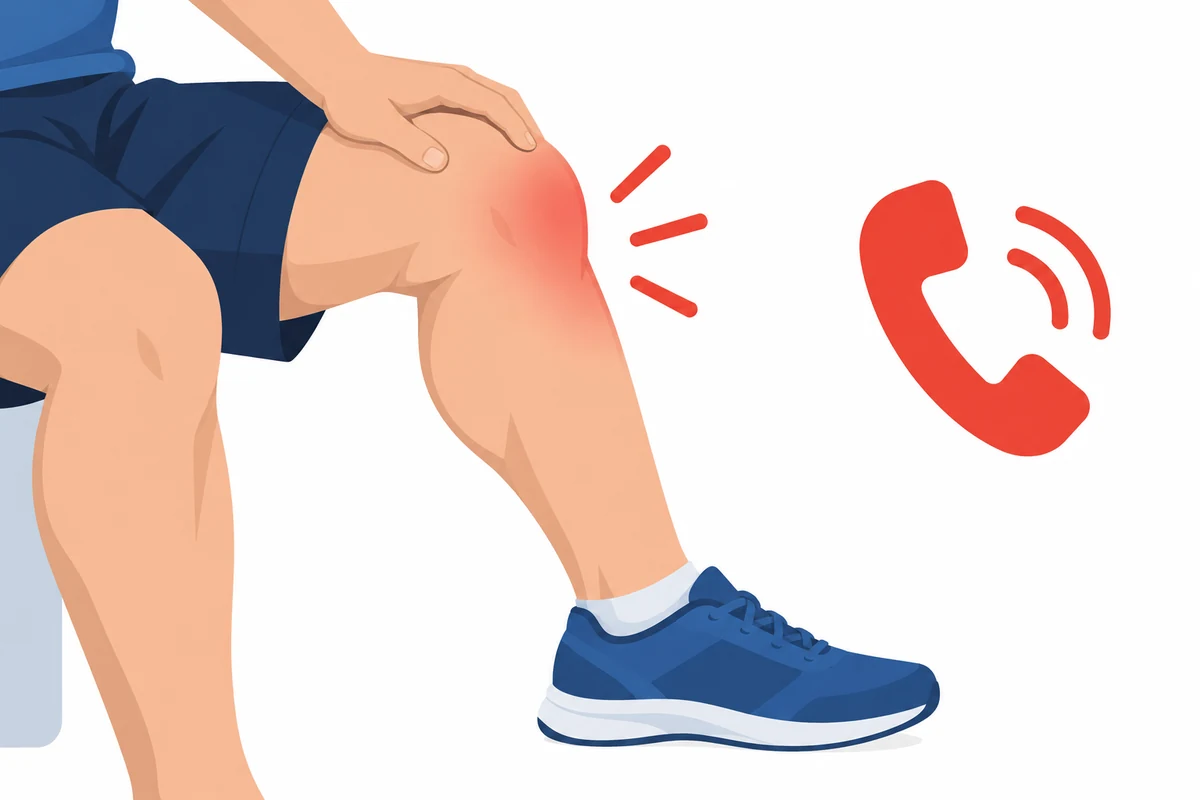
An arthritic knee suddenly becomes very swollen and hot. It is easy to assume this is the usual arthritis, but rapidly changing severe pain must be distinguished from its familiar course. Infection may require prompt treatment; longstanding pain does not remove a new risk.
How do I recognize a change from usual symptoms?
Rapidly worsening pain and swelling over a day or two, a hot joint, or new difficulty bearing weight need assessment. Notice feeling generally unwell, recent injury, and recent joint procedures. A shift from stair-only pain to severe rest pain is important to report. One symptom cannot diagnose the cause, but rapid change itself is a reason to seek care promptly.
Why is joint infection a concern?
Infectious arthritis needs prompt assessment and treatment to protect the joint. Waiting several days with usual heat treatment or painkillers may be inappropriate. Fluid drainage and antibiotics may be needed, sometimes surgical washout. Admission and the approach depend on the cause, general condition, and joint findings.
Does the absence of fever rule out infection?
Checking temperature helps, but absence of high fever does not rule out infection; swelling and warmth do not always mean bacteria either. Crystal arthritis such as gout and other inflammatory disease can cause sudden pain. History, examination, blood tests and sometimes joint-fluid analysis are needed. Symptom comparison at home or repeating a previous injection cannot replace assessment.
Why aspirate fluid from a joint?
Joint-fluid sampling helps assess inflammation and causes such as bacteria or crystals; it is not merely to reduce swelling. Tests depend on clinical suspicion. Treatment may need to start before results according to general condition and infection concern, with clinicians deciding the sequence. Do not self-start leftover antibiotics, and report recently taken medicines.
Is reducing pain with arthritis medicine enough?
Anti-inflammatory pain medicines control symptoms but do not remove every cause. With new symptoms suggesting infection, do not postpone assessment while taking more medicine. For OA they support exercise and daily management. Gastrointestinal, kidney, and cardiovascular conditions and other drugs affect safe choices; check before combining them. Temporary relief does not exclude a dangerous cause.
What information should I bring for prompt medical care?
Record when symptoms began, how rapidly they worsened, ability to bear weight, fever, and general illness. Report recent injections, procedures, wounds, other infections, medicines, and existing conditions. Sudden pain, swelling, and heat warrant same-day assessment. Marked weakness, confusion, or poor general condition require emergency evaluation. Distinguish chronic-arthritis management from checking a new acute problem; a dated symptom record is more useful than memorizing one test value.