Daily life and exercise
When can a knee brace help?
Compression, stability and unloading are different purposes.
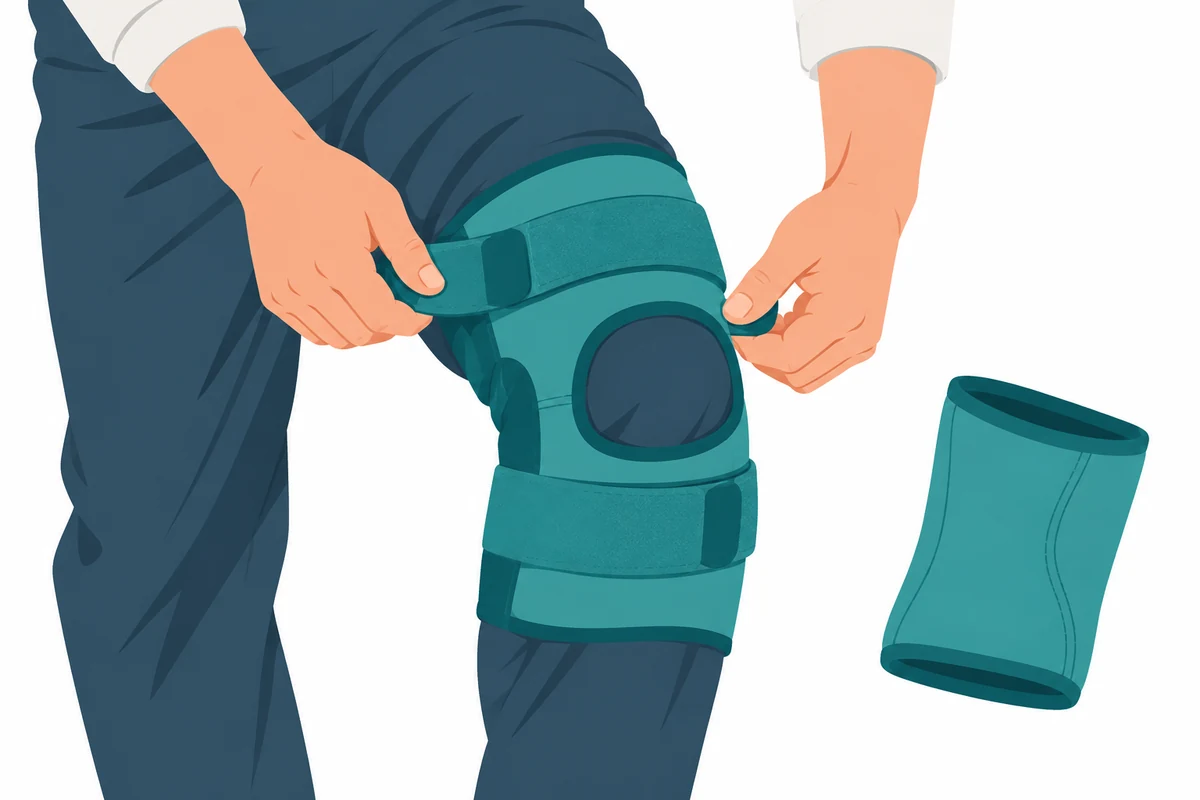
At a glance
- Distinguish compression, stabilization and unloading.
- A brace is not routinely necessary for every person with arthritis.
- Check skin and actual activity when assessing its use.
A brace can feel reassuring, but not all braces do the same job. A soft sleeve, a stabilizing brace and a device designed to unload one compartment have different purposes. Identify the difficulty you want to address before choosing a product.
Three checks when choosing a brace
Purpose
Is it for compression, stability or compartment unloading?
Fit
Is there pressure, tingling or slipping?
Benefit
Are pain, walking and activity actually better?
Three panels assess purpose, fit and functional benefit
Separate the expected benefits
A soft sleeve may feel comfortable through compression and contact. A brace supporting ligament instability or changing compartment load has a different design and purpose. Greater thickness does not prove better treatment or protection against every injury.
Pain, actual buckling and arthritis concentrated in one compartment raise different questions. An MRI finding or arthritis grade alone should not decide the device. Leg shape, skin and the activity environment matter too.
Not every person with arthritis needs a brace
NICE does not recommend routinely providing braces or insoles to everyone with osteoarthritis. They may be considered when instability or abnormal loading is present, exercise is unsuitable or ineffective without support, and a device is likely to improve function.
Other guidance and individual practice can differ with circumstances. Going without a brace does not mean missing treatment, and wearing one does not remove the need for strength work. Define its role as support for useful daily activity.
Check fit, skin and circulation
A tight or slipping device can create painful pressure and skin damage. Remove it and check if it causes tingling, foot color change, persistent marks or blisters. Assess size and straps during actual walking and sitting.
Reduced skin sensation, wounds or skin disease require extra care. Longer wear is not automatically better. Postoperative braces have specific angle and wearing instructions that differ from ordinary supports; follow the surgical and rehabilitation plan.
Compare the effect during activity
Compare a short walk with and without the device for pain, confidence and mobility. Ask whether it helps actual daily activity, not only whether it feels reassuring. New pain elsewhere from a changed gait requires adjustment.
New instability, repeated near-falls or major swelling need assessment rather than simply tighter support. Do not keep buying devices to solve ineffective treatment or skin problems. Reconsider the aid together with exercise and the treatment plan.
Common Questions
Can I exercise more because I wear a brace?
Pain relief does not automatically establish a higher safe exercise dose. Assess symptoms and function too.
Should I wear it all day?
That depends on purpose, skin and instructions. A postoperative brace follows a separate plan.
Is a costly brace more effective?
The problem being addressed, fit and real functional improvement matter more than price.
Evidence and references
01When to seek medical care
Each warning sign is a separate reason to seek care. Follow the action below if any one applies.
Emergency department · call 119 in Korea
- Call 119 for sudden breathlessness or chest pain, severe faintness or loss of consciousness. Do not wait for calf swelling to appear.
- Go to an emergency department if you suddenly cannot bear any weight, or if an injured knee swells rapidly or looks deformed. A cold or numb foot after injury also needs immediate assessment.
- Seek emergency care for a hot, swollen and severely painful joint with high fever, shaking chills, confusion or inability to bear weight.
- With back or leg pain, go immediately to an emergency department for new difficulty passing urine, loss of bladder or bowel control, or numbness around the genitals or anus. Severe or rapidly worsening weakness or numbness in both legs also needs immediate assessment.
Same-day assessment
- Arrange assessment today for a newly hot, swollen joint, sudden severe pain, or a knee locked so that it cannot fully straighten. Joint infection can occur without fever.
- Have new swelling or pain in one calf assessed today for a possible blood clot. Call 119 immediately if breathlessness or chest pain develops.
- Severe knee pain or a new limp in a growing adolescent may come from a hip condition such as slipped capital femoral epiphysis. Stop walking and sport and arrange assessment today. Go directly to emergency care if they cannot bear weight.
- Stop running and seek assessment today for new recurring groin pain, pain with walking or at night, or a limp. A femoral neck stress fracture needs to be considered. Keep weight off the painful leg until assessed. Go to emergency care if you cannot bear weight.
Book an outpatient appointment
- If none of the warning signs above is present, book an appointment for pain lasting a few weeks, repeated swelling or reduced daily activity and exercise.