Injuries, tendons and menisci
Bone healing and weight bearing after osteotomy
Metal fixation and biological bone healing have different roles.
At a glance
- Fixation and union are different processes.
- Follow individual loading and aid instructions.
- Assess bone and function before demanding activities.
An osteotomy changes bone alignment to redirect load through the knee. Seeing a plate and screws on an X-ray may make the bone seem immediately strong. The metal holds the correction while the bone heals. Progression of weight bearing depends on assessment of both processes.
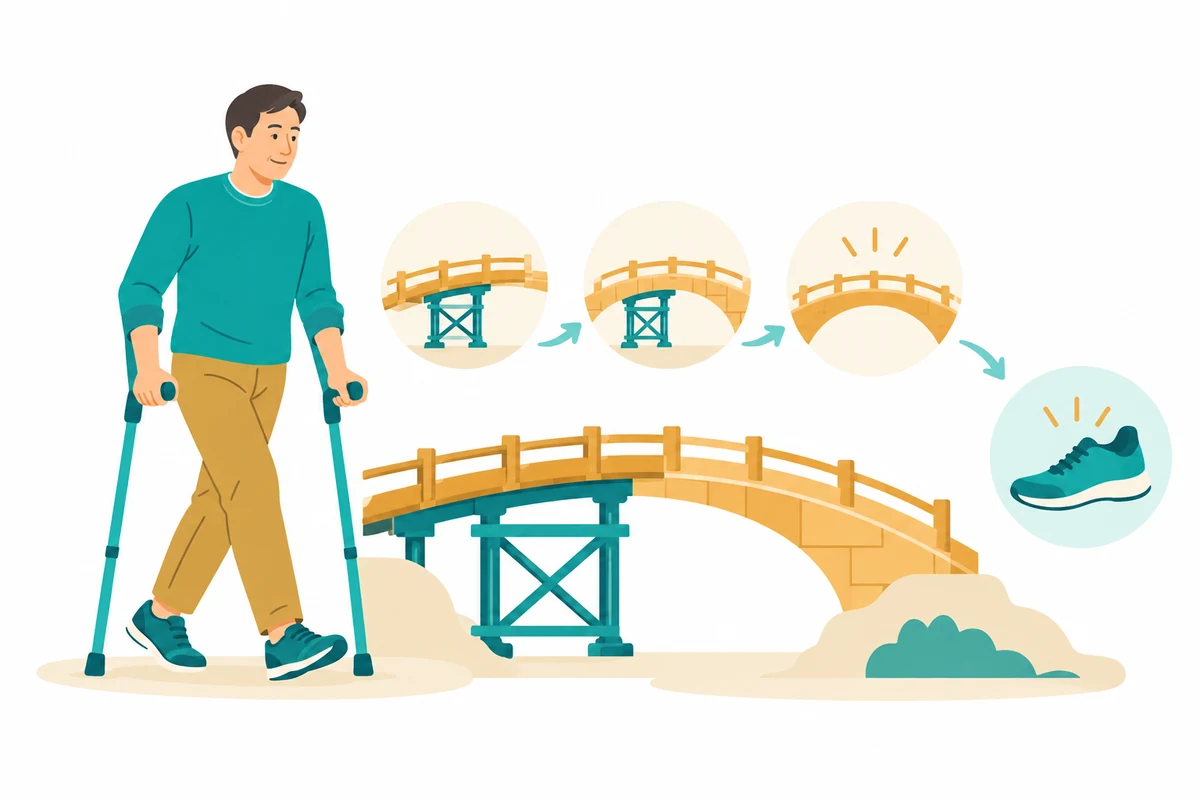
From fixation to healing and function
- 01
Fixation
Hold the corrected alignment
- 02
Healing
Review union, images and symptoms
- 03
Return
Assess strength, balance and movement
A sequence showing maintained correction, union assessment and functional loading progression
Correction must be followed by bone union
The bone is opened or closed to alter alignment. Technique, correction size and fixation affect the healing environment. A plate is not permission for unrestricted running or twisting.
At follow-up, X-rays are used to review alignment, fixation and progress toward bone union, while pain, swelling and walking are also assessed. One X-ray cannot determine how much force the bone can withstand. Time since surgery is considered alongside the actual progress of healing.
Follow the loading plan for your operation
Touch-down, partial and fuller weight bearing are distinct stages. Clarify the permitted stage and how to use crutches or a brace before discharge. Opening-wedge or closing-wedge technique and associated procedures affect the plan.
Do not advance because another patient walked sooner. Less pain does not necessarily establish sufficient healing. Avoiding all approved exercise can also reduce movement and strength, so learn the permitted range specifically.
Support bone healing and functional recovery
Practise approved movement, thigh activation and safe mobility. Smoking and nicotine can impair bone healing; discuss cessation support. Adequate nutrition and management of conditions such as diabetes also belong in the recovery plan.
No single supplement or food guarantees faster union. Use medicines as prescribed and check before adding new treatments or supplements. Arrange help so you can follow restrictions on stairs and in the bathroom.
Review renewed pain or a change
Marked pain after increasing load, or new pain, deformity or walking difficulty after a fall needs assessment before further progression. Pain near metal does not automatically require removal; fixation, position and union must be reviewed.
Sport and demanding work require muscle strength, balance and task-specific function as well as bone union. “The bone has healed” is not immediate clearance for every activity. Confirm criteria for the next step and track pain and function.
Common Questions
Can I fully load the leg because it has a plate?
The plate supports healing but does not prove union. Follow instructions based on technique and healing.
Can I run once pain is gone?
Pain alone cannot establish union or readiness. Imaging and functional assessment matter.
Must the plate be removed?
Not always. Symptoms, position, healing and future plans guide that discussion.
Evidence and references
01When to seek medical care
Each warning sign is a separate reason to seek care. Follow the action below if any one applies.
Emergency department · call 119 in Korea
- Call 119 for sudden breathlessness or chest pain, severe faintness or loss of consciousness. Do not wait for calf swelling to appear.
- Go to an emergency department if you suddenly cannot bear any weight, or if an injured knee swells rapidly or looks deformed. A cold or numb foot after injury also needs immediate assessment.
- Seek emergency care for a hot, swollen and severely painful joint with high fever, shaking chills, confusion or inability to bear weight.
- With back or leg pain, go immediately to an emergency department for new difficulty passing urine, loss of bladder or bowel control, or numbness around the genitals or anus. Severe or rapidly worsening weakness or numbness in both legs also needs immediate assessment.
Same-day assessment
- Arrange assessment today for a newly hot, swollen joint, sudden severe pain, or a knee locked so that it cannot fully straighten. Joint infection can occur without fever.
- Have new swelling or pain in one calf assessed today for a possible blood clot. Call 119 immediately if breathlessness or chest pain develops.
- Severe knee pain or a new limp in a growing adolescent may come from a hip condition such as slipped capital femoral epiphysis. Stop walking and sport and arrange assessment today. Go directly to emergency care if they cannot bear weight.
- Stop running and seek assessment today for new recurring groin pain, pain with walking or at night, or a limp. A femoral neck stress fracture needs to be considered. Keep weight off the painful leg until assessed. Go to emergency care if you cannot bear weight.
Book an outpatient appointment
- If none of the warning signs above is present, book an appointment for pain lasting a few weeks, repeated swelling or reduced daily activity and exercise.