Preparing for surgery and recovery
What should I prepare at home before discharge?
Check movement routes, daily support and contact plans before buying equipment.
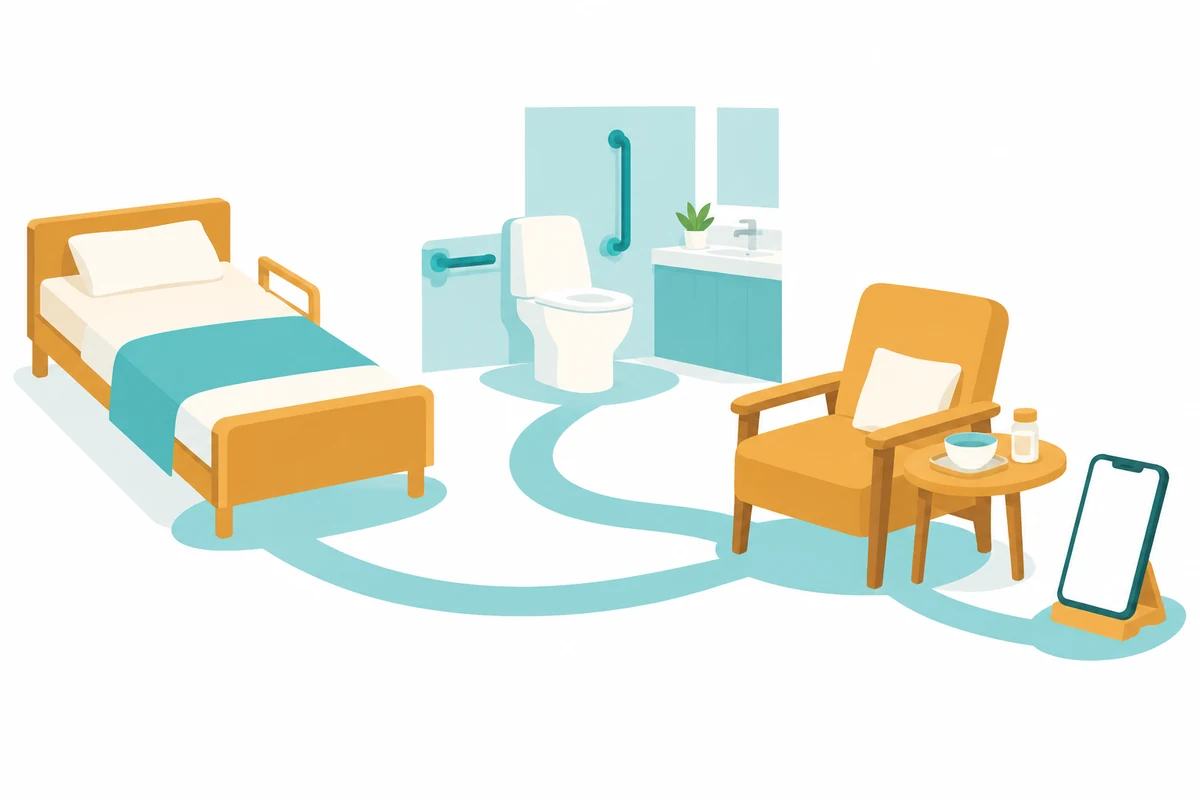
At a glance
- Check the bed–chair–bathroom route first.
- Allocate practical help with food, transport and medicines.
- Keep discharge instructions and contacts easy to find.
Recovery at home requires planning, even for the short route from bed to bathroom. A walking aid occupies your hands, and some pain medicines can cause dizziness. Organising the environment and practical help before discharge makes it easier to continue rehabilitation in daily life.
Three areas of discharge preparation
Movement
Walker space, lighting, thresholds and bathroom
Daily life
Chair, meals, help and transport
Instructions
Medicines, wound care and contacts
A checklist separating movement routes, practical support and instructions
Clear the routes you use most
Remove cables, small furniture and loose rugs between the bed, chair and bathroom. Check space for the walker and for turning. Arrange lighting so floors and thresholds are visible during night-time trips.
Put frequently used items within reach without deep bending or overhead stretching. Plan meals so you do not carry hot food or heavy loads while moving. Think through tasks with both hands needed on an aid.
Make sitting and washing safer
Choose a stable seat you can rise from instead of a very low or deep chair. Check toilet height, secure supports and slipping risks in the shower. Discuss a toilet aid or shower chair with the rehabilitation or occupational-therapy team if needed.
Do not use a towel rail or movable furniture as a weight-bearing handle. Practise stairs and the required assistance. Consider whether essential activities can take place on one level early in recovery.
Assign specific support roles
Arrange meal preparation, shopping, transport, medication checks and exercise supervision separately. If you live alone, discuss care and transport before discharge. What helpers can actually do matters as much as whether someone is present.
Helpful support does not mean forcing the knee to bend or doing rehabilitation for you. Assist safe practice and record changes in symptoms. Taking over every activity may reduce the practice needed for recovery.
Keep medicines and contacts together
Record discharge medicine purposes, doses and durations, alongside restarting instructions for usual medicines. Keep surgical-team contacts, out-of-hours care and follow-up dates accessible. Use a paper version if phone access is difficult.
Check wound care, showering, weight bearing and aid instructions separately. New calf pain or worsening wounds need prompt contact; sudden breathlessness or chest pain needs emergency care. The aim is a safe, workable environment rather than expensive equipment.
Common Questions
Must I buy a rehabilitation machine?
Not everyone needs one. First clarify approved exercise and home safety, then discuss any necessary equipment.
Does someone need to stay with me constantly?
It depends on mobility and care needs. Discuss time alone and available practical help before discharge.
Can a bathroom rail go anywhere?
It must safely support body weight and fit the task. Check suitable installation and technique.
Evidence and references
01When to seek medical care
Each warning sign is a separate reason to seek care. Follow the action below if any one applies.
Emergency department · call 119 in Korea
- Call 119 for sudden breathlessness or chest pain, severe faintness or loss of consciousness. Do not wait for calf swelling to appear.
- Go to an emergency department if you suddenly cannot bear any weight, or if an injured knee swells rapidly or looks deformed. A cold or numb foot after injury also needs immediate assessment.
- Seek emergency care for a hot, swollen and severely painful joint with high fever, shaking chills, confusion or inability to bear weight.
- With back or leg pain, go immediately to an emergency department for new difficulty passing urine, loss of bladder or bowel control, or numbness around the genitals or anus. Severe or rapidly worsening weakness or numbness in both legs also needs immediate assessment.
Same-day assessment
- Arrange assessment today for a newly hot, swollen joint, sudden severe pain, or a knee locked so that it cannot fully straighten. Joint infection can occur without fever.
- Have new swelling or pain in one calf assessed today for a possible blood clot. Call 119 immediately if breathlessness or chest pain develops.
- Severe knee pain or a new limp in a growing adolescent may come from a hip condition such as slipped capital femoral epiphysis. Stop walking and sport and arrange assessment today. Go directly to emergency care if they cannot bear weight.
- Stop running and seek assessment today for new recurring groin pain, pain with walking or at night, or a limp. A femoral neck stress fracture needs to be considered. Keep weight off the painful leg until assessed. Go to emergency care if you cannot bear weight.
Book an outpatient appointment
- If none of the warning signs above is present, book an appointment for pain lasting a few weeks, repeated swelling or reduced daily activity and exercise.