Choosing treatment and surgery
Both knees: one operation or staged surgery?
Compare each knee’s need, overall health and support for recovery.
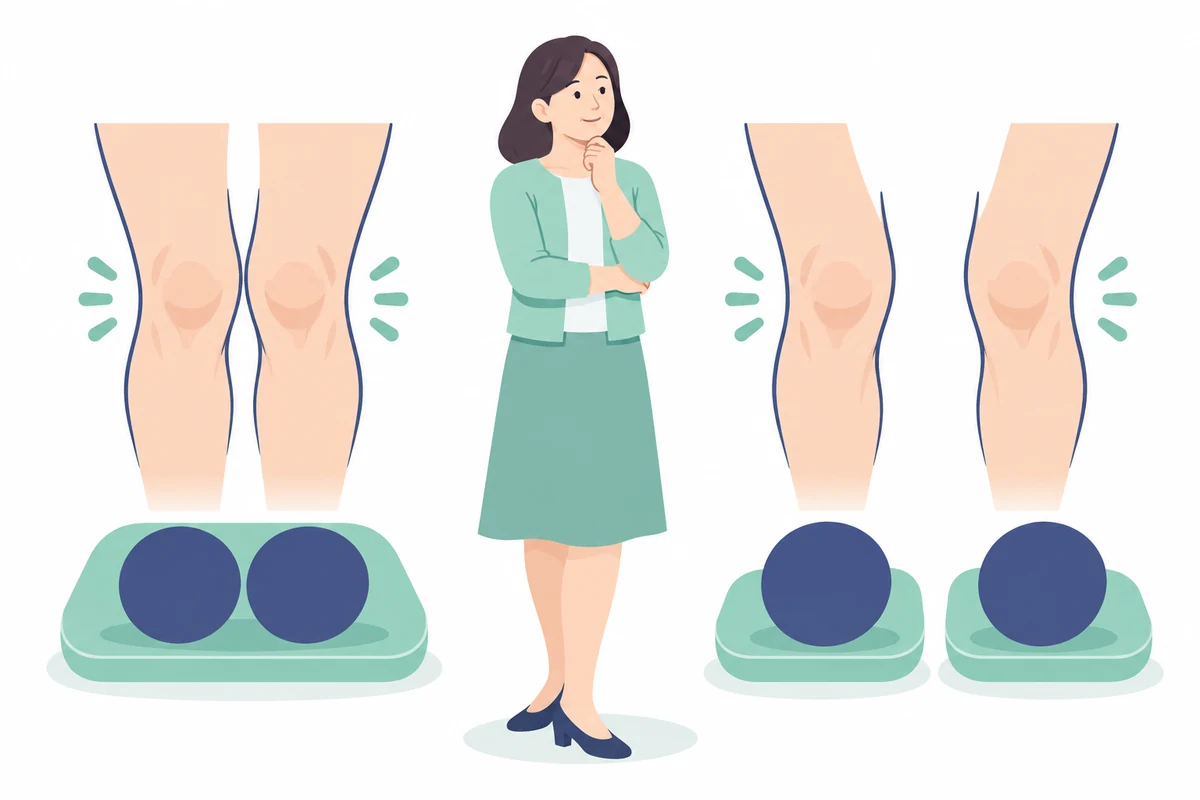
At a glance
- Assess the indication for each knee.
- Compare convenience with physical burden.
- Individualize staging and recovery support.
When both knees hurt, one operation may seem a simpler way to complete recovery. Convenience and lower physical burden are not the same. Assess the indication for each knee, then compare simultaneous and staged surgery in your circumstances.
Compare bilateral schedules
- 01
Simultaneous
One schedule; both legs recovering together
- 02
Staged
Review first recovery; two schedules
- 03
Personal
Heart and lung health, anemia, gait and support
Simultaneous surgery, staged surgery and individual conditions
Assess the knees separately
Similar images can accompany different pain, function and deformity. Identify which side limits life most and whether suitable nonsurgical care has been insufficient for both.
Operating on one knee does not automatically require surgery on the other at the same time. Consider how the untreated knee might affect walking and rehabilitation.
Simultaneous surgery concentrates recovery demands
One surgical schedule treats both sides, but both legs recover together, so early transfers and walking may require more help. Blood loss, transfusion and systemic complications need assessment.
AAOS advises cautious consideration in appropriately selected patients and avoidance in those at high cardiopulmonary risk. The evidence is limited, not proof of superiority for everyone.
Staged surgery allows review of the first recovery
The first knee’s recovery and general health can be assessed before the second operation. However, this requires two surgical and recovery schedules, with pain in the other knee during the interval.
The interval is not one universal number. Wound healing, walking, strength, anemia, medical stability and support should guide timing with the team.
Include practical support
Report heart, lung and kidney disease, clot history, medicines and anemia. Living alone, bathroom and stair assistance, rehabilitation and transport also matter.
Discuss benefit, risk, hospital and rehabilitation schedules and cost. Base the choice on both knees and recovery capacity rather than one age threshold or another person’s experience.
Common Questions
Does severe arthritis in both knees mean simultaneous surgery?
Imaging is only part of the assessment; symptoms, function and general health matter.
Is simultaneous surgery always more dangerous?
Risk depends on selection and health. Cardiopulmonary risk warrants particular caution and individualized comparison.
What interval is best for staged operations?
It depends on wound, gait, strength and systemic recovery, not one interval for everyone.
Evidence and references
01When to seek medical care
Each warning sign is a separate reason to seek care. Follow the action below if any one applies.
Emergency department · call 119 in Korea
- Call 119 for sudden breathlessness or chest pain, severe faintness or loss of consciousness. Do not wait for calf swelling to appear.
- Go to an emergency department if you suddenly cannot bear any weight, or if an injured knee swells rapidly or looks deformed. A cold or numb foot after injury also needs immediate assessment.
- Seek emergency care for a hot, swollen and severely painful joint with high fever, shaking chills, confusion or inability to bear weight.
- With back or leg pain, go immediately to an emergency department for new difficulty passing urine, loss of bladder or bowel control, or numbness around the genitals or anus. Severe or rapidly worsening weakness or numbness in both legs also needs immediate assessment.
Same-day assessment
- Arrange assessment today for a newly hot, swollen joint, sudden severe pain, or a knee locked so that it cannot fully straighten. Joint infection can occur without fever.
- Have new swelling or pain in one calf assessed today for a possible blood clot. Call 119 immediately if breathlessness or chest pain develops.
- Severe knee pain or a new limp in a growing adolescent may come from a hip condition such as slipped capital femoral epiphysis. Stop walking and sport and arrange assessment today. Go directly to emergency care if they cannot bear weight.
- Stop running and seek assessment today for new recurring groin pain, pain with walking or at night, or a limp. A femoral neck stress fracture needs to be considered. Keep weight off the painful leg until assessed. Go to emergency care if you cannot bear weight.
Book an outpatient appointment
- If none of the warning signs above is present, book an appointment for pain lasting a few weeks, repeated swelling or reduced daily activity and exercise.