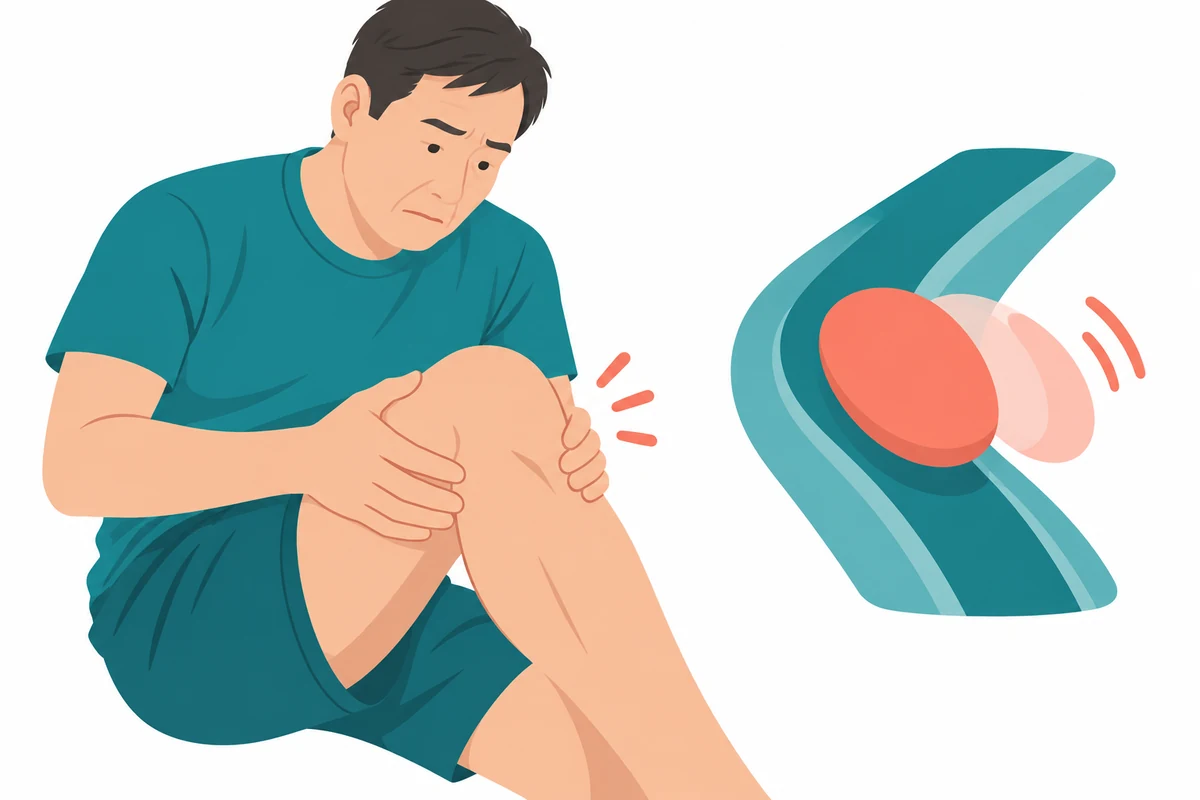
With bending and straightening, the patella may seem to move sideways or slip, and a past dislocation can make movements frightening. Calling every such symptom chondromalacia or weakness may miss the cause. Assess the patella’s path and the structures guiding it.
What path does the patella follow?
The patella is the kneecap at the front of the knee. It helps transmit force from the thigh muscles and moves along the femoral groove as the knee bends and straightens. Groove shape, ligaments, and muscles work together to guide it. The knee is more than a simple hinge; bone rotation and leg alignment also affect the patella’s path.
Are pain and dislocation the same problem?
Anterior pain on stairs does not always mean dislocation. Patellofemoral pain may follow increased activity or tissue loading. Patellar instability involves actual sideways displacement, fear of slipping and recurrent giving way. Describe when it slipped, whether it reduced itself and which movements you avoid, not only pain location.
What should be checked after a first dislocation?
Even after a dislocated patella returns, medial ligaments and cartilage may be injured, and loose bone or cartilage fragments may remain. X-rays and sometimes MRI assess this. Do not forcefully push it or repeat painful movement. Persistent dislocation, major swelling, or inability to move require prompt assessment. Reduction alone does not automatically remove the need for examination.
Can stronger muscles solve every case?
After a first patellar dislocation, bracing and rehabilitation may be considered according to damage and recurrence risk. Strength and movement control around the thigh and hip can help, but a shallow groove, major alignment/rotation differences or ligament damage cannot be explained by weakness alone. Identify your important factors before choosing exercises.
What is MPFL reconstruction intended to do?
The MPFL limits excessive lateral patellar displacement. Surgery to restore its function may be considered for recurrent dislocation, but ligament surgery alone is not enough for everyone; bone shape and alignment may need correction. Ask why your patella dislocates and how the proposed procedure addresses that cause.
What should rehabilitation restore?
Beyond pain relief and bending, regain movements avoided for fear of dislocation. Walking, stairs and single-leg support impose different demands and should be assessed in sequence. Sport return depends on strength, movement and apprehension as well as time. Report renewed slipping, sudden swelling or locking. Recording the first dislocation, recurrence count, injury circumstances and brace duration helps distinguish anterior pain from recurrent dislocation and avoids missing changes.