Himchan Hospital Symposium
Cementless Robotic TKA
I review the evidence and limitations of contemporary cementless implants, explain planning and operative steps using robotics and functional alignment, and discuss principles of patient selection.
Select an image to view it at a larger size.
The return of cementless TKA: design and initial stability
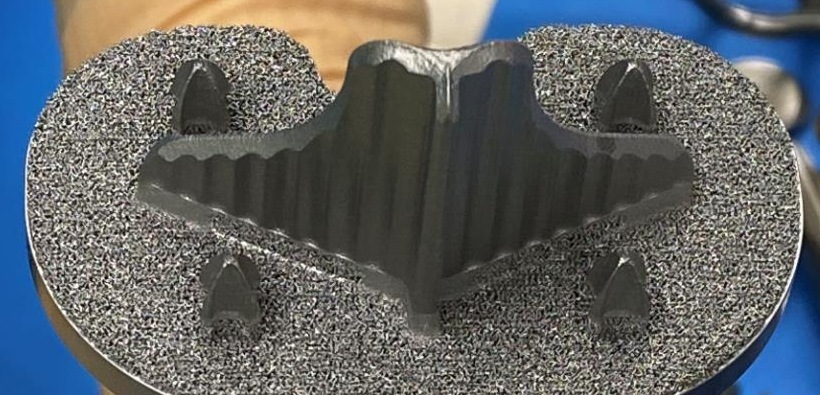
Cemented TKA has long been a dependable standard of care. As more patients are younger and active, and implants are expected to remain in service longer, we are revisiting the potential of biological fixation through direct bone–implant integration. In this lecture, I focused on the implant designs and operative conditions that support good results, rather than considering cementless fixation as a single category.
Early cementless TKA failures involved several factors: inadequate porous coating and initial fixation, tibial component subsidence, polyethylene locking mechanisms, and metal-backed patellar components. Modern highly porous metals and three-dimensional printing have evolved to address these weaknesses. However, an ingrowth surface alone cannot ensure successful biological fixation without stable bone contact and initial press-fit fixation.
Registry evidence requires attention to design, patients, and endpoints
The AJRR analysis by Nam and colleagues compared 28,631 three-dimensional printed cementless tibial components, 7,577 other cementless components, and 550,133 cemented components in primary TKA patients aged 65 years or older. Patient-time-based annual revision rates were 0.31%, 0.40%, and 0.34%, respectively. These findings support favorable mid-term performance of a specific contemporary design, but this observational registry comparison cannot establish superiority for every cementless implant.
In contrast, the propensity-score-matched National Joint Registry study by Mohammad and colleagues compared a total of 44,954 knees. Ten-year survival with revision as the endpoint was 96.0% for cemented and 95.5% for cementless TKA. Both groups had high survival, but the cementless group had a slightly higher revision risk. Registry findings therefore need to be interpreted by design generation, patient selection, follow-up duration, and whether the endpoint is revision, reoperation, or aseptic loosening.
Robotics and functional alignment: tools for implementing the plan precisely
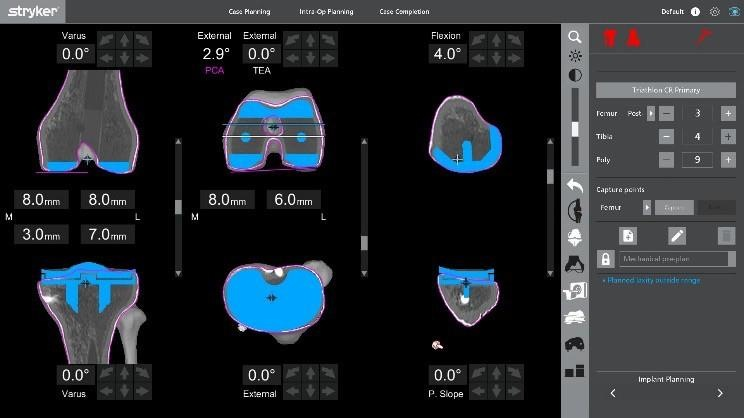
With cementless fixation, congruent bone cuts and initial stability are particularly important. Robotic platforms help surgeons review implant size, position, rotation, posterior slope, and resection depth before cutting bone, and incorporate intraoperative gap information into the plan. I see the value of robotics in checking and reducing the difference between the plan and the actual procedure.
Functional alignment seeks stability throughout the range of motion while considering the patient’s constitutional alignment, joint line, and soft-tissue characteristics. The goal is to adjust bone resections and implant positions to reduce unnecessary soft-tissue releases. Combining this approach with cementless fixation is appealing because it considers bone contact and load transfer together. However, I do not assume that functional alignment or a cruciate-retaining design improves long-term survival in every patient.
Operative workflow: tracking, registration, gap assessment, and implantation
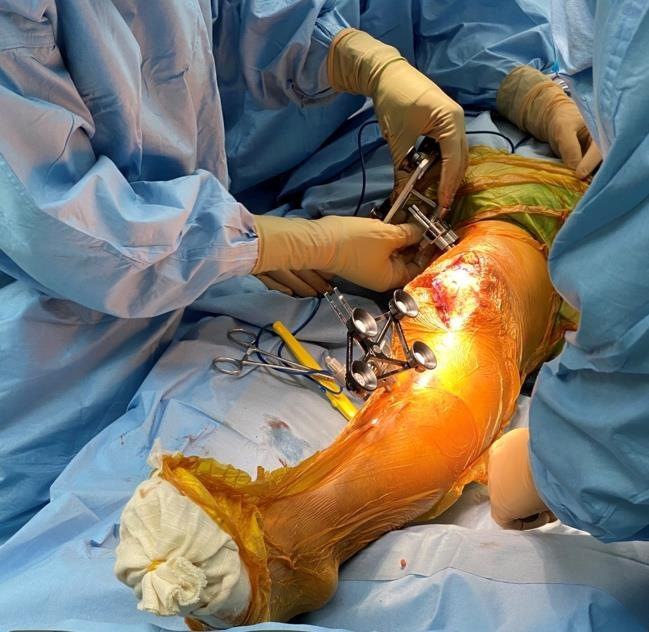
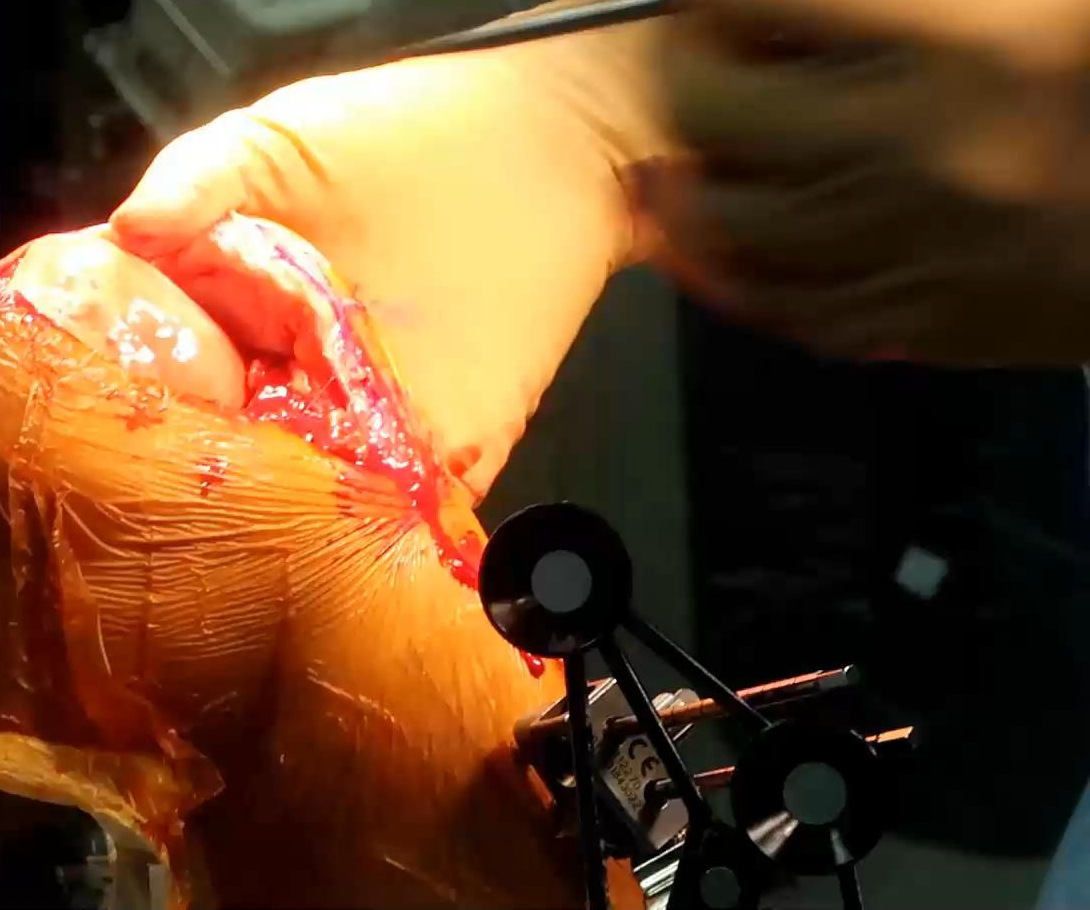
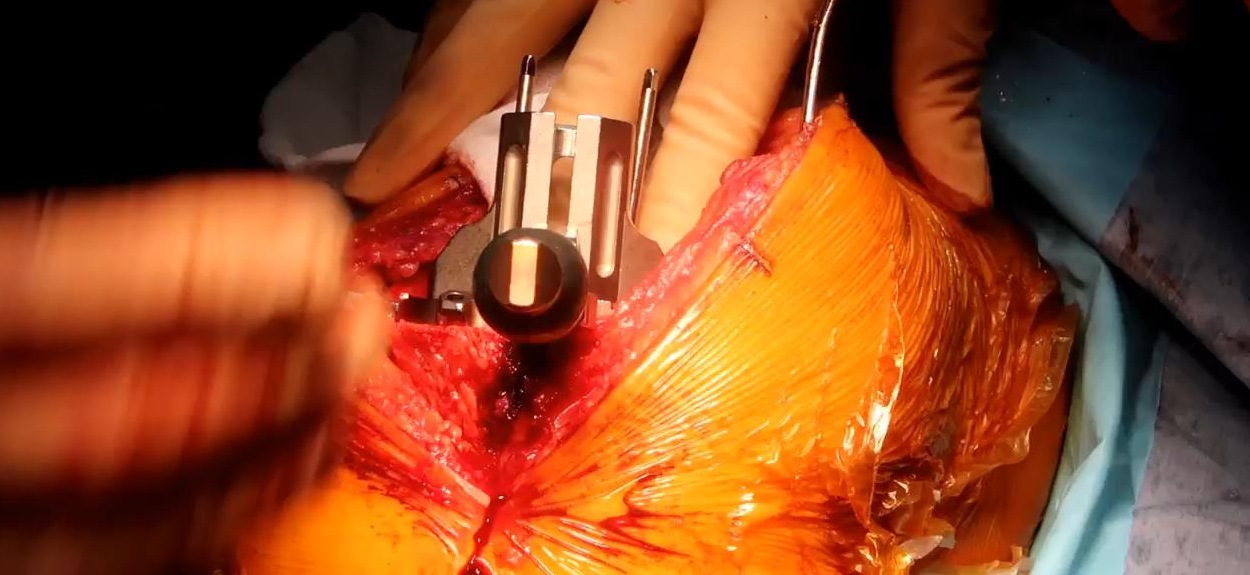
I first check the plan, begin the operation through a routine approach, and install bone pins and tracking arrays. I then register the bone surfaces and verify that the virtual plan corresponds to the actual anatomy. These steps establish the reference for subsequent resections and implant positioning. Verifying the accuracy of registration matters more than simply completing registration.
After removing osteophytes, I measure the initial gaps and adjust bone resections and balance. When inserting the tibial and femoral components, I assess the actual contact with the resected bone, seating, and initial stability as well as the onscreen plan. Sclerotic and weak bone can present different problems, so fixation decisions also require an assessment of bone quality during the operation.
Patient selection and long-term follow-up guide the final decision
Some reports suggest advantages for cementless fixation in younger, active patients, men, and patients with higher BMI. However, I do not choose fixation based on a single age, sex, or BMI criterion. Bone quality, deformity, the initial fixation achievable during surgery, implant design, and the patient’s activity goals must be considered together. When osteoporosis or inadequate press-fit fixation is a concern, the advantages of cemented fixation also deserve careful consideration.
Robotic precision and clinical implant survival are separate outcomes. The retrospective AJRR study by Kirchner and colleagues analyzed 9,220 cementless TKAs in osteoarthritis patients aged 65 years or older and found no evidence that robotic assistance reduced revision within two years. Contemporary cementless TKA has encouraging short- and mid-term results, but further long-term data are needed. I emphasize both improving the quality of initial fixation and maintaining follow-up.
Related papers
- Nam et al., 2023: AJRR mid-term outcomes of three-dimensional printed cementless tibial components
- Mohammad et al., 2021: matched National Joint Registry comparison of cemented and cementless TKA
- Kirchner et al., 2025: robotic assistance and two-year revision in cementless TKA
- Oussedik et al., 2020: concepts of TKA alignment and functional alignment
- AJRR 2025 Annual Report
- AOANJRR 2025 Annual Report