Medicines and injections
Topical anti-inflammatory medicines: how do they differ from tablets?
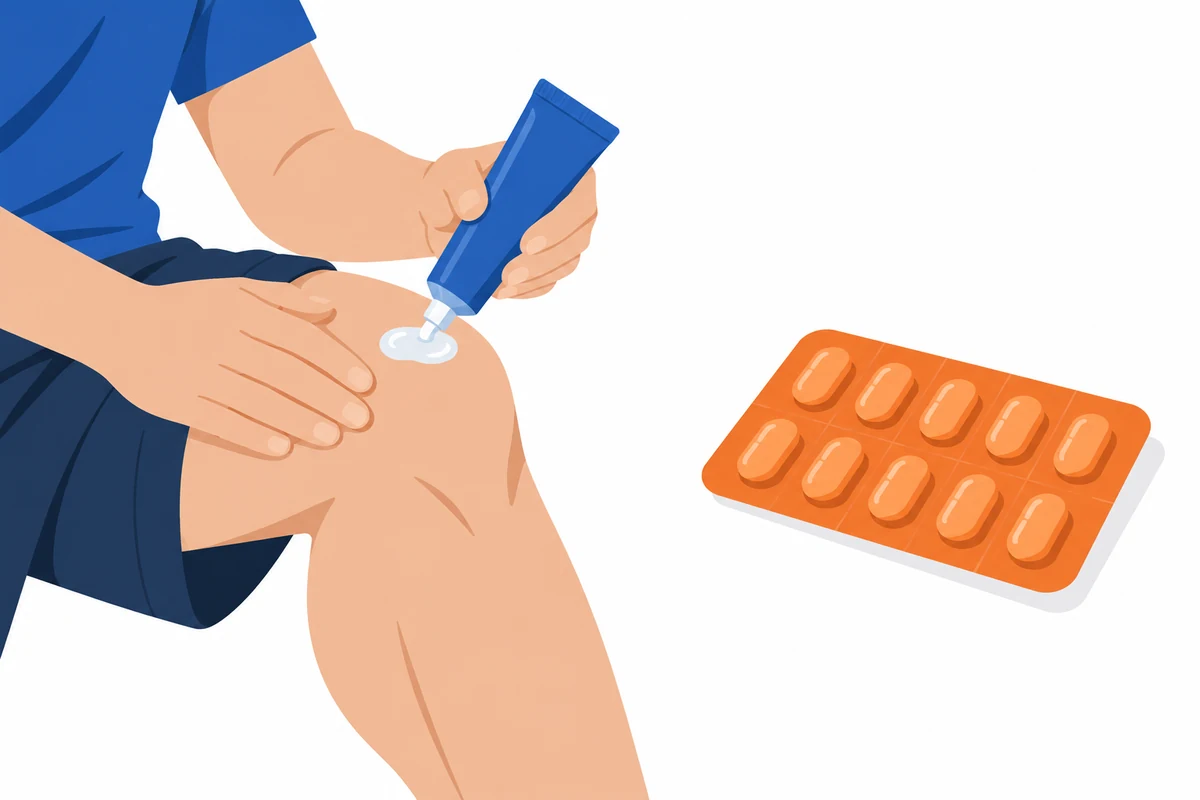
Check the ingredient and instructions, even when the medicine is applied to the knee.
At a glance
- Check the active ingredient.
- Check for overlap with tablets and other topical products.
- Track pain together with walking and exercise.
When medicine is needed for knee osteoarthritis pain, NICE recommends a topical non-steroidal anti-inflammatory drug (NSAID) as a first option. It helps relieve pain so that you can continue therapeutic exercise. If topical treatment is ineffective or unsuitable, an oral NSAID may be considered after checking gastrointestinal, kidney and cardiovascular risks and your other medicines.
Three checks before topical treatment
Ingredient
Anti-inflammatory drug or another ingredient?
Overlap
Any tablets or other products with the same drug?
Skin
Broken skin, rash or irritation after use?
Three checks: ingredient, overlapping medicines and skin reaction
Topical anti-inflammatory medicine is a first option for knee osteoarthritis
When medicine is needed for knee osteoarthritis pain, NICE recommends a topical non-steroidal anti-inflammatory drug (NSAID) as a first option. It helps relieve pain so that you can continue therapeutic exercise. If topical treatment is ineffective or unsuitable, an oral NSAID may be considered after checking gastrointestinal, kidney and cardiovascular risks and your other medicines.
Topical medicines can still cause allergy or skin reactions. Do not apply them to broken skin, and follow the product instructions. Ketoprofen patches require additional precautions against sunlight.
Lower exposure does not mean no risk
Topical products generally deliver less medicine to the whole body than tablets. This does not make them automatically safe for everyone with kidney disease, heart disease or a medicine allergy.
Tell your clinician if you also take an oral anti-inflammatory drug. Skin irritation, rash or itching can occur. Applying more product over a larger area does not necessarily provide greater benefit.
Follow the product instructions
Do not apply a product to broken skin unless specifically instructed. Amount and frequency vary by product. Follow the prescription or label, and wash your hands afterwards to avoid contact with the eyes or mouth.
Heat or a tight covering over the treated area may change absorption. Check before layering other creams. Stop and seek advice if the skin becomes red, sore or irritated.
Judge benefit by daily function
Less pain may help you continue walking or strengthening exercises. This treatment is not expected to regrow cartilage or reliably prevent osteoarthritis progression.
Record which activities become easier. Reassess treatment if adequate use does not help. A suddenly hot, swollen knee or inability to bear weight needs assessment rather than simply more gel.
Protect skin treated with ketoprofen patches from sunlight
Ketoprofen patches, including Ketotop, can cause a photosensitivity reaction when exposed to sunlight or ultraviolet light. Protect the treated area from UV throughout treatment and for two weeks after stopping. Take care even on cloudy days, and cover the area outdoors with clothing that does not readily transmit UV.
Stop using the patch and speak to your doctor or pharmacist if redness, itching or blisters appear. Do not use it in children younger than 15 years. Different patches contain different ingredients, so check the product name.
Common Questions
Are stomach side effects impossible with a gel?
Whole-body exposure is usually lower than with tablets, but adverse effects remain possible. Other medicines and health conditions still matter.
Can I use a hot pack over it?
Check the product instructions or ask a clinician first; heat may alter absorption.
Should I keep applying it when pain has settled?
Duration depends on the product and treatment goal. Review the need and response rather than continuing indefinitely without benefit.
Evidence and references
01When to seek medical care
Each warning sign is a separate reason to seek care. Follow the action below if any one applies.
Emergency department · call 119 in Korea
- Call 119 for sudden breathlessness or chest pain, severe faintness or loss of consciousness. Do not wait for calf swelling to appear.
- Go to an emergency department if you suddenly cannot bear any weight, or if an injured knee swells rapidly or looks deformed. A cold or numb foot after injury also needs immediate assessment.
- Seek emergency care for a hot, swollen and severely painful joint with high fever, shaking chills, confusion or inability to bear weight.
- With back or leg pain, go immediately to an emergency department for new difficulty passing urine, loss of bladder or bowel control, or numbness around the genitals or anus. Severe or rapidly worsening weakness or numbness in both legs also needs immediate assessment.
Same-day assessment
- Arrange assessment today for a newly hot, swollen joint, sudden severe pain, or a knee locked so that it cannot fully straighten. Joint infection can occur without fever.
- Have new swelling or pain in one calf assessed today for a possible blood clot. Call 119 immediately if breathlessness or chest pain develops.
- Severe knee pain or a new limp in a growing adolescent may come from a hip condition such as slipped capital femoral epiphysis. Stop walking and sport and arrange assessment today. Go directly to emergency care if they cannot bear weight.
- Stop running and seek assessment today for new recurring groin pain, pain with walking or at night, or a limp. A femoral neck stress fracture needs to be considered. Keep weight off the painful leg until assessed. Go to emergency care if you cannot bear weight.
Book an outpatient appointment
- If none of the warning signs above is present, book an appointment for pain lasting a few weeks, repeated swelling or reduced daily activity and exercise.