Daily life and exercise
What should I check when choosing shoes or insoles?
Fit and stable walking come first.
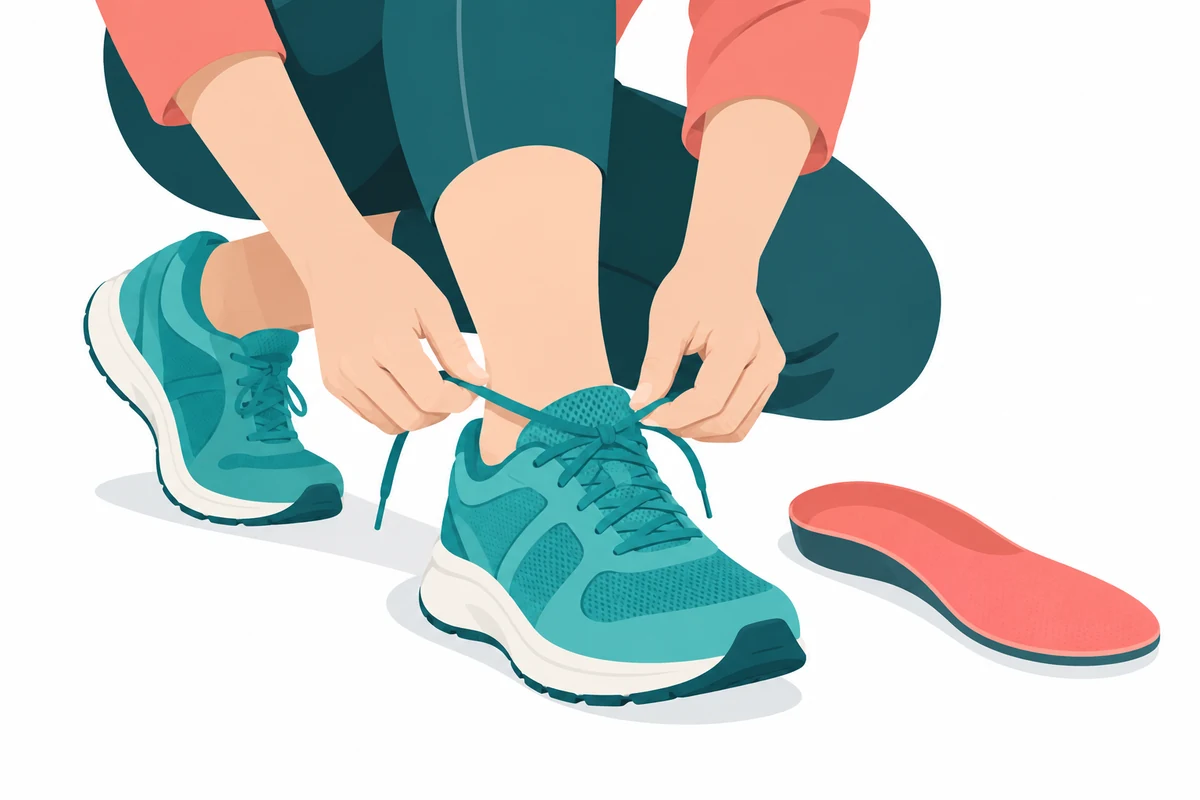
At a glance
- Check size, fit and secure fastening first.
- Distinguish an insole’s purpose from its effect on the whole gait.
- Symptom relief does not establish restoration of joint structure.
A painful knee can make shock-absorbing shoes or corrective insoles attractive. Footwear may support comfortable walking, but that does not prove every product treats arthritis or protects cartilage. Consider your feet, gait and the particular problem a product addresses.
Three footwear checks
Fit
Check toes, heel security and pressure over the foot.
Stability
Check grip, wobbling and putting the shoe on.
Response
Use a short walk to assess the foot, knee and back.
Three panels compare fit, stability and the response
Check size and secure fit first
Check toe room, whether the heel slips and whether the upper presses on the foot. Walk and turn in the shoes. Comfort while standing briefly in a shop may differ from stability during an outing.
Weight, grip and how you put them on also matter. If bending to tie laces is difficult, look for another secure fastening method. Loose or backless shoes may reduce stability depending on balance and the environment.
Cushioning alone is not a selection rule
Softness can feel comfortable, but a very unstable sole is not suitable for everyone. Consider balance, sensation, walking speed and usual surfaces. Assess the source of knee pain separately from any foot pain or deformity.
Be cautious with claims that a shoe corrects alignment or stops arthritis progression. Symptom relief and structural recovery are different claims. Compare reliable comfort and stability in daily use rather than price or branding alone.
Identify the purpose of an insole
Insoles may support the foot, adjust height or alter loading. A unilateral lift or wedge can affect the whole gait. Do not attempt to correct limb length or alignment yourself from a single image.
NICE does not recommend routinely offering insoles to every person with osteoarthritis. Instability or abnormal loading, support for exercise and the prospect of functional benefit guide selection. A prescription for a separate foot condition is a different question from a knee arthritis aid.
Trial new products over a short familiar activity
Starting a long outing or new exercise alongside new footwear makes changes hard to interpret. Try a short familiar activity and check pressure, blisters and symptoms in the knee or back. Persistent discomfort requires review of fit and purpose.
Reduced sensation, diabetic foot problems or skin wounds require particular care with pressure. Do not let footwear shopping delay strengthening or assessment of pain. Shoes are one part of supporting daily life, not a substitute for the overall treatment plan.
Common Questions
Is a thicker cushioned sole always better?
Comfort and stability vary. Check actual walking, balance and foot pressure.
Can an insole straighten bowlegs?
It cannot be assumed to reverse adult bone deformity. Alignment and loading require assessment.
What if an insole causes pain elsewhere?
Review its fit and use. Do not automatically endure a new pain as necessary adaptation.
Evidence and references
01When to seek medical care
Each warning sign is a separate reason to seek care. Follow the action below if any one applies.
Emergency department · call 119 in Korea
- Call 119 for sudden breathlessness or chest pain, severe faintness or loss of consciousness. Do not wait for calf swelling to appear.
- Go to an emergency department if you suddenly cannot bear any weight, or if an injured knee swells rapidly or looks deformed. A cold or numb foot after injury also needs immediate assessment.
- Seek emergency care for a hot, swollen and severely painful joint with high fever, shaking chills, confusion or inability to bear weight.
- With back or leg pain, go immediately to an emergency department for new difficulty passing urine, loss of bladder or bowel control, or numbness around the genitals or anus. Severe or rapidly worsening weakness or numbness in both legs also needs immediate assessment.
Same-day assessment
- Arrange assessment today for a newly hot, swollen joint, sudden severe pain, or a knee locked so that it cannot fully straighten. Joint infection can occur without fever.
- Have new swelling or pain in one calf assessed today for a possible blood clot. Call 119 immediately if breathlessness or chest pain develops.
- Severe knee pain or a new limp in a growing adolescent may come from a hip condition such as slipped capital femoral epiphysis. Stop walking and sport and arrange assessment today. Go directly to emergency care if they cannot bear weight.
- Stop running and seek assessment today for new recurring groin pain, pain with walking or at night, or a limp. A femoral neck stress fracture needs to be considered. Keep weight off the painful leg until assessed. Go to emergency care if you cannot bear weight.
Book an outpatient appointment
- If none of the warning signs above is present, book an appointment for pain lasting a few weeks, repeated swelling or reduced daily activity and exercise.