Daily life and exercise
Record changes in daily life as well as pain
Add walking, sleep and rising from a chair to a pain score.
At a glance
- Compare one or two activities that matter to your life.
- Record activity, swelling, sleep and treatment changes alongside pain.
- A diary helps discuss benefits and burdens together.
Saying that pain is severe matters, but it can be difficult to compare treatment with that statement alone. Recording what you can no longer do alongside pain makes goals clearer. A diary is a tool for describing your life, not an assignment to complete.
A short daily-life record for a consultation
Activity
Record walking time, stops and help with chairs or stairs.
Response
Include pain, swelling, stiffness and sleep.
Treatment
Record exercise, medicine or injections and their benefits or difficulties.
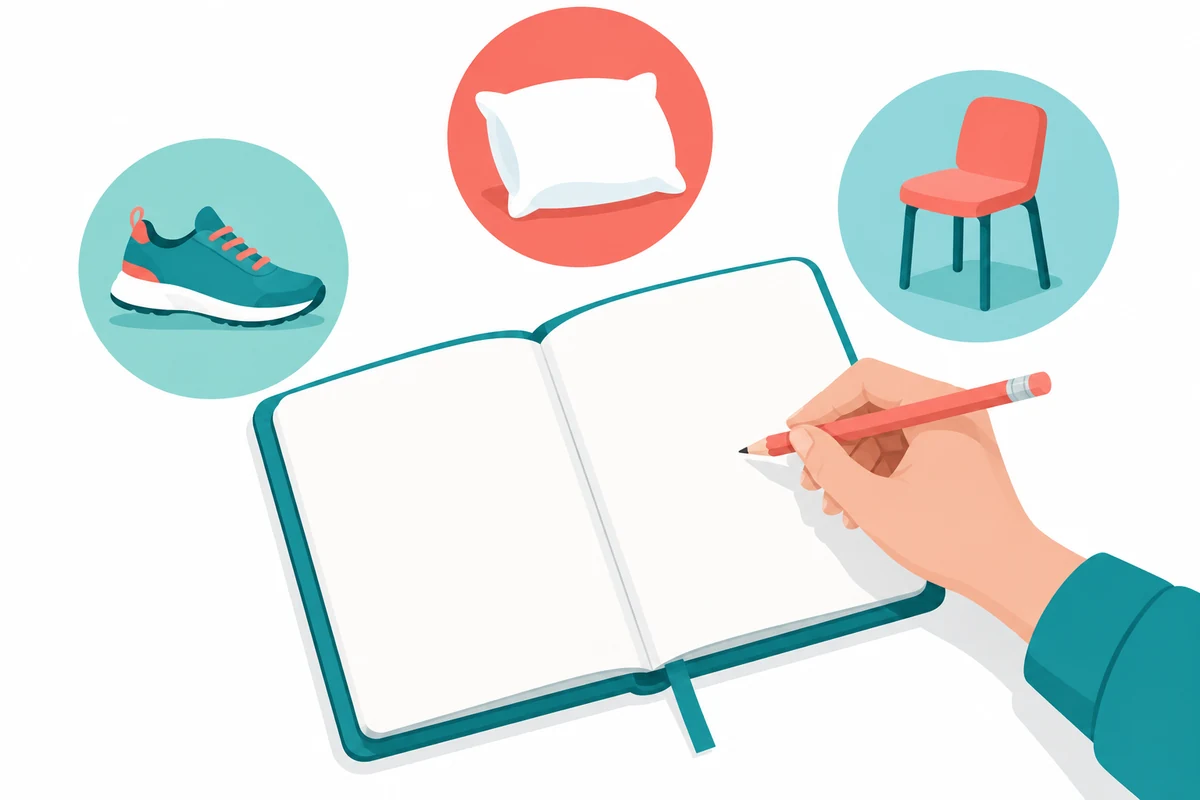
Three panels show activity goals, the response and treatment changes
Choose one or two activities to compare
Pick familiar activities such as walking to a shop, using the stairs at home or rising from a chair. This makes better and worse days easier to compare. What your daily life needs matters more than another person’s step count or an athlete’s standard.
Record observable details: walking time, stops, or help from hands and rails. A zero-to-ten pain score can be useful but remains a personal report. Use it to follow your own course rather than to rank one person’s experience against another’s.
Include the conditions around pain
Note whether pain occurs during activity, immediately afterwards or at rest, and where it occurs. Swelling, stiffness and waking at night also help. Mark unusually long outings or housework as well as exercise to explain fluctuations.
Briefly record medication, injections, new exercises and side effects. A prescription or product photo can be easier than memorizing every name. Linking treatment changes to daily function helps compare both benefits and burdens.
Do not rush to conclusions from one day
Less sleep or extra activity can change a score. One difficult day does not prove that exercise failed; look at the pattern over several days. You do not need identical conditions each day, but noting differences helps interpretation.
If keeping a diary makes you check pain repeatedly and worry more, reduce the number of items or how often you record them. A short note when needed can still help at a consultation. The record is a way to explain what has changed and what you want treatment to improve.
Compare goals and response at the next visit
If the goal was reaching the shop without a rest, describe what you now manage. Easier activity can be a treatment result even if the imaging grade is unchanged. If pain improves but dizziness or stomach symptoms appear, discuss those burdens as well.
New major swelling, fever or inability to bear weight after injury should not wait for the next appointment while you keep a diary. Seek prompt assessment. Separate ordinary monitoring from new symptoms, then agree what to maintain or adjust next.
Common Questions
Must I write a long entry every day?
No. Brief notes on familiar activities and important changes can be enough.
Is a pain score objective?
It records your experience consistently. It differs from an imaging measurement and is useful for following your own course.
Can I record only good days?
Including the conditions on good and difficult days helps explain fluctuation and suitable activity levels.
Evidence and references
01When to seek medical care
Each warning sign is a separate reason to seek care. Follow the action below if any one applies.
Emergency department · call 119 in Korea
- Call 119 for sudden breathlessness or chest pain, severe faintness or loss of consciousness. Do not wait for calf swelling to appear.
- Go to an emergency department if you suddenly cannot bear any weight, or if an injured knee swells rapidly or looks deformed. A cold or numb foot after injury also needs immediate assessment.
- Seek emergency care for a hot, swollen and severely painful joint with high fever, shaking chills, confusion or inability to bear weight.
- With back or leg pain, go immediately to an emergency department for new difficulty passing urine, loss of bladder or bowel control, or numbness around the genitals or anus. Severe or rapidly worsening weakness or numbness in both legs also needs immediate assessment.
Same-day assessment
- Arrange assessment today for a newly hot, swollen joint, sudden severe pain, or a knee locked so that it cannot fully straighten. Joint infection can occur without fever.
- Have new swelling or pain in one calf assessed today for a possible blood clot. Call 119 immediately if breathlessness or chest pain develops.
- Severe knee pain or a new limp in a growing adolescent may come from a hip condition such as slipped capital femoral epiphysis. Stop walking and sport and arrange assessment today. Go directly to emergency care if they cannot bear weight.
- Stop running and seek assessment today for new recurring groin pain, pain with walking or at night, or a limp. A femoral neck stress fracture needs to be considered. Keep weight off the painful leg until assessed. Go to emergency care if you cannot bear weight.
Book an outpatient appointment
- If none of the warning signs above is present, book an appointment for pain lasting a few weeks, repeated swelling or reduced daily activity and exercise.