Injuries, tendons and menisci
Why is rehabilitation different after meniscal repair?
The tissue preserved and the procedure performed matter more than the label “keyhole surgery”.
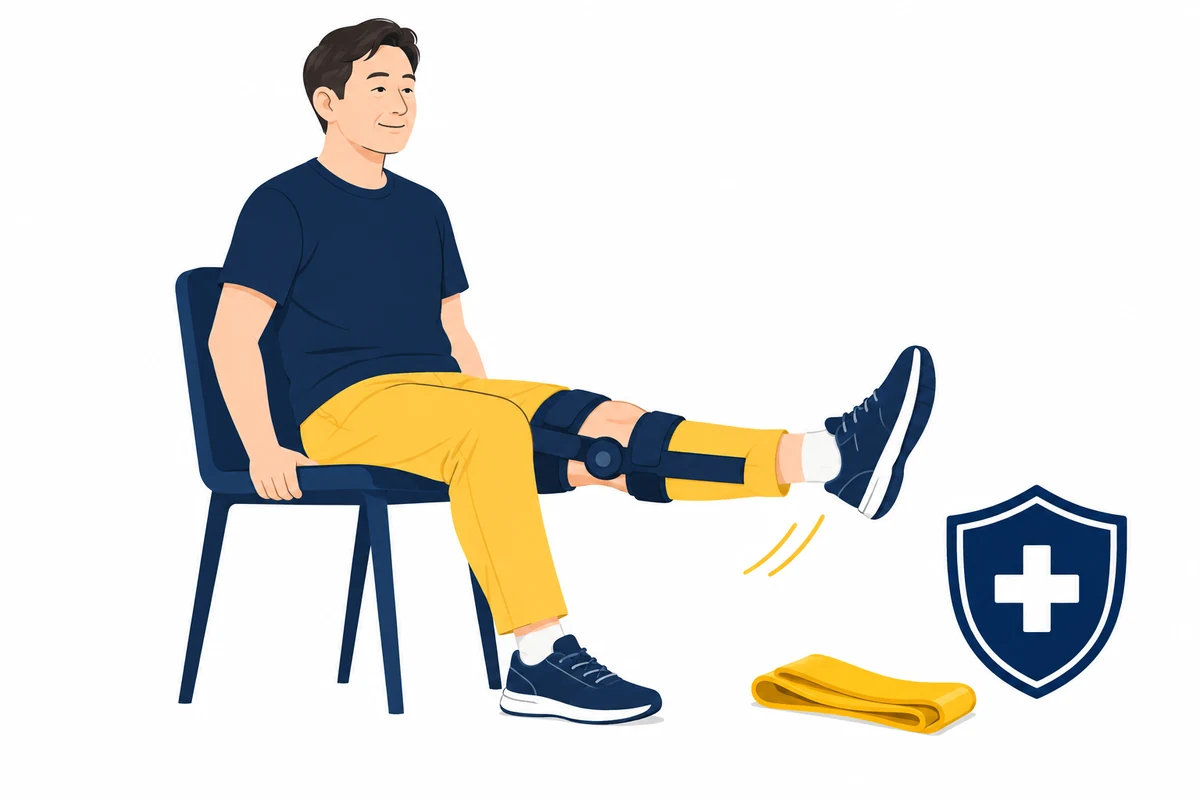
At a glance
- Repair and trimming have different protection goals.
- Follow your own weight-bearing, bending and brace plan.
- Use healing time and function together to progress.
Two patients may have arthroscopy but very different walking instructions. Trimming unstable tissue and stitching a tear have different goals. After repair, the preserved tissue needs protection while healing, alongside recovery of movement and strength.
Restore function while protecting healing
- 01
Protect
Check load, bending and twisting limits
- 02
Maintain
Approved movement and muscle control
- 03
Progress
Review healing, swelling and strength
A sequence connecting protection, approved exercise and progression after assessment
Repair requires biological healing
Partial meniscectomy removes selected unstable tissue; repair holds the torn tissue together to help healing. Stitches do not immediately restore the meniscus to its original strength. Pain relief and tissue healing may follow different timelines.
Location, tear pattern, blood supply, tissue quality and cartilage condition affect healing. Radial and root repairs may need different protection from other repairs. Do not copy another patient’s timetable because yours seems slower.
Weight bearing and bending follow the operation plan
Confirm permitted loading, brace use and flexion range. Loaded deep bending and twisting may stress the repaired area, so stage-specific advice matters. Painless walking is not permission to remove restrictions.
When ACL reconstruction is also performed, the plan must account for both procedures. Do not use a programme designed for isolated ACL surgery. Share the surgical instructions with the physiotherapist to avoid conflicting advice.
Protection does not mean no rehabilitation
Approved movement, thigh activation and ankle exercises can help limit loss of function. Exercise selection and dose depend on the repair, swelling and muscle control. Find the permitted range between complete inactivity and excessive loading.
Use crutches and braces at the height and in the way you were taught. Check that you can follow the restrictions on stairs and in your bathroom. It is important to continue practising stable movement while protecting the repair, rather than rushing to reduce walking aids.
Assess readiness and new symptoms
Sporting progression considers tissue healing, swelling, movement, strength and functional control. Do not begin running or loaded deep squats simply because a number of weeks has passed. Work tasks and goals make the plan more specific.
New locking, giving way, recurrent swelling or increasing joint-line pain warrants reassessment. Report wound drainage or new calf pain promptly. Restrictions during healing are not failure; progression should match the actual course.
Planning recovery around the tissue that was treated
Meniscal repair joins torn tissue so that it can heal; partial meniscectomy trims a damaged portion. When a tear is suitable for repair and repair is likely to help, preserving functional tissue is considered. The appropriate procedure depends on the tear location and pattern, tissue quality, and joint condition.
Repaired tissue needs time to join and heal. Depending on the tear and repair, the early plan may include crutches or limits on weight bearing and knee bending. These restrictions are determined from the tissue findings and the procedure performed.
Rehabilitation gradually increases activity while considering tissue protection, swelling, movement, strength, and control of the leg. Returning to activity after repair takes both healing time and functional recovery into account. Recovery plans can differ even after meniscal surgery, so it is important to follow the guidance of the team familiar with your procedure.
Common Questions
Can I stop crutches if a repaired knee does not hurt?
Pain relief does not establish tissue healing. Check permitted loading and the functional assessment.
Can I follow an ACL rehabilitation video?
Meniscal treatment may impose additional limits. Use a plan that accounts for both procedures.
Does every repair heal?
No guarantee is possible. Tear and tissue characteristics, associated injuries and reinjury affect outcome.
Evidence and references
01When to seek medical care
Each warning sign is a separate reason to seek care. Follow the action below if any one applies.
Emergency department · call 119 in Korea
- Call 119 for sudden breathlessness or chest pain, severe faintness or loss of consciousness. Do not wait for calf swelling to appear.
- Go to an emergency department if you suddenly cannot bear any weight, or if an injured knee swells rapidly or looks deformed. A cold or numb foot after injury also needs immediate assessment.
- Seek emergency care for a hot, swollen and severely painful joint with high fever, shaking chills, confusion or inability to bear weight.
- With back or leg pain, go immediately to an emergency department for new difficulty passing urine, loss of bladder or bowel control, or numbness around the genitals or anus. Severe or rapidly worsening weakness or numbness in both legs also needs immediate assessment.
Same-day assessment
- Arrange assessment today for a newly hot, swollen joint, sudden severe pain, or a knee locked so that it cannot fully straighten. Joint infection can occur without fever.
- Have new swelling or pain in one calf assessed today for a possible blood clot. Call 119 immediately if breathlessness or chest pain develops.
- Severe knee pain or a new limp in a growing adolescent may come from a hip condition such as slipped capital femoral epiphysis. Stop walking and sport and arrange assessment today. Go directly to emergency care if they cannot bear weight.
- Stop running and seek assessment today for new recurring groin pain, pain with walking or at night, or a limp. A femoral neck stress fracture needs to be considered. Keep weight off the painful leg until assessed. Go to emergency care if you cannot bear weight.
Book an outpatient appointment
- If none of the warning signs above is present, book an appointment for pain lasting a few weeks, repeated swelling or reduced daily activity and exercise.