Daily life and exercise
Starting running: a first week of walking and running
Plan easy breathing, recovery days and the next-day response before a finish date.
At a glance
- Use walking ability and comfortable breathing to choose your starting level.
- The first-week run–walk example should be adjusted individually.
- Review next-day daily function before changing one training element.
You do not have to run continuously to begin. Short runs mixed with walking help you assess breathing and leg symptoms. A repeatable schedule that fits your life matters more than achieving 5 km within a fixed number of weeks.
Three commitments for the first week
- 01
Start comfortably
Check comfortable everyday walking and breathing.
- 02
Alternate briefly
Example: mix one minute running and two minutes walking to suit tolerance.
- 03
Check between sessions
Confirm that next-day walking and stairs return to normal.
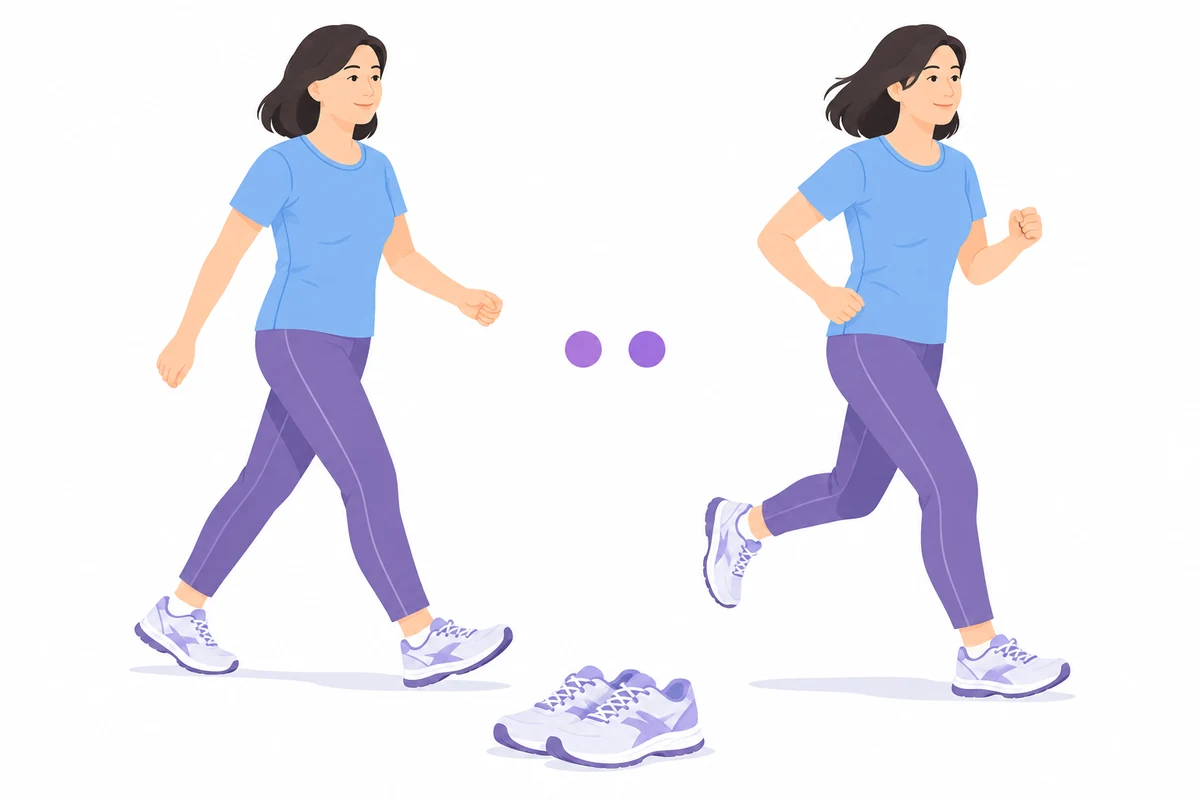
Three panels show an easy start, alternating short runs and walks, and recovery between sessions
Start from your current walking ability
First check whether everyday walking is free of pain and limping. Seek advice before planning runs if level walking is uncomfortable or a recent fracture or operation carries restrictions. If you have heart or lung disease, or a history of exertional chest pain or fainting, clarify your exercise restrictions with your clinician.
Someone already comfortable with walking exercise starts differently from someone returning after a long break. Choose a pace at which you can speak short sentences; switch to walking if conversation becomes difficult. Your response matters more than another runner’s pace or the app’s completion marker.
An example mixing walking and running
An adult who walks without pain might reserve three sessions in the first week, such as Monday, Thursday and Saturday, with days between them. After comfortable walking, alternate one minute of slow running and two minutes of walking five times, then finish by walking. Use walking alone or fewer repetitions if this feels too demanding.
This schedule has not been established as safe for every beginner. Adjust the days, repetitions and running intervals to your fitness and symptoms. Even if the first week feels comfortable, you can repeat the same pattern rather than increasing speed, running time and frequency together.
Put recovery days in the schedule
On non-running days, choose ordinary walking or light activity that feels comfortable and attend to sleep and meals. If new strength exercises cause substantial soreness, adjust your next run. When time is limited to weekends, avoid combining missed weekday sessions into one long outing.
Gradual preparation matters, but increasing mileage by 10% each week does not guarantee injury prevention. A randomized trial in beginners did not find fewer injuries with a longer preparatory program using that rule. Individualize running time using actual responses and the spacing of recovery days.
Progress after confirming recovery
If walking and stairs feel normal the next day and there is no focal pain, maintain the schedule or try a small increase in just one running interval. Reduce or stop running and seek assessment for recurrent joint or tendon pain, accumulating stiffness or a limp.
Choose shoes that fit and feel comfortable, without expecting a price point or cushioning type to prevent injury. Introducing new shoes, surfaces and training separately helps you interpret responses. Stop running and arrange prompt assessment for focal bone pain or painful walking. Stop immediately and seek medical assessment for new chest pain during exercise. Persistent chest pain, severe breathlessness or fainting during exercise requires immediate emergency help.
Compare today's planned distance with your longest run in the past month
Check your running log for the longest single run in the past 30 days. An 18-month study of 5,205 adult runners, published in 2025, found a higher rate of overuse injury when a single run was more than 10% longer than that distance. The hazard rate was about 1.64 times as high for an increase of more than 10% and up to 30%, and about 2.28 times as high when the distance more than doubled.
For example, if your longest run in the past 30 days was 10 km, a single run of more than 11 km falls into the study's distance-spike category. This example does not prescribe a safe target distance. Reduce distance when you have pain or have not recovered well, and avoid increasing distance, speed, and hill training all at once. The study found no association between week-to-week distance increases and injury, so it does not support a guarantee that increasing weekly distance by 10% is safe.
Common Questions
Does walking between runs cancel the benefit?
You can accumulate activity with walking and running. At first, choose an intensity you can repeat consistently.
How soon must I run 5 km?
There is no universal deadline. Base it on current fitness, symptoms and recovery.
Should I follow the plan despite sore muscles?
Observe mild soreness, but reduce activity or rest if movement changes or recovery is incomplete. Recurrent focal pain needs assessment.
Evidence and references
01When to seek medical care
Each warning sign is a separate reason to seek care. Follow the action below if any one applies.
Emergency department · call 119 in Korea
- Call 119 for sudden breathlessness or chest pain, severe faintness or loss of consciousness. Do not wait for calf swelling to appear.
- Go to an emergency department if you suddenly cannot bear any weight, or if an injured knee swells rapidly or looks deformed. A cold or numb foot after injury also needs immediate assessment.
- Seek emergency care for a hot, swollen and severely painful joint with high fever, shaking chills, confusion or inability to bear weight.
- With back or leg pain, go immediately to an emergency department for new difficulty passing urine, loss of bladder or bowel control, or numbness around the genitals or anus. Severe or rapidly worsening weakness or numbness in both legs also needs immediate assessment.
Same-day assessment
- Arrange assessment today for a newly hot, swollen joint, sudden severe pain, or a knee locked so that it cannot fully straighten. Joint infection can occur without fever.
- Have new swelling or pain in one calf assessed today for a possible blood clot. Call 119 immediately if breathlessness or chest pain develops.
- Severe knee pain or a new limp in a growing adolescent may come from a hip condition such as slipped capital femoral epiphysis. Stop walking and sport and arrange assessment today. Go directly to emergency care if they cannot bear weight.
- Stop running and seek assessment today for new recurring groin pain, pain with walking or at night, or a limp. A femoral neck stress fracture needs to be considered. Keep weight off the painful leg until assessed. Go to emergency care if you cannot bear weight.
Book an outpatient appointment
- If none of the warning signs above is present, book an appointment for pain lasting a few weeks, repeated swelling or reduced daily activity and exercise.