Several ligaments stabilize the knee, not only the ACL. Treatment depends on which is injured, whether others are also injured, and how unstable the knee is. Someone else’s cruciate-ligament operation may not apply. Knowing the ligament name helps understand the recovery plan rather than merely memorizing medical vocabulary.
What does the posterior cruciate ligament restrain?
The posterior cruciate ligament lies inside the knee joint and prevents the shinbone from moving too far backward. Its direction of restraint differs from that of the anterior cruciate ligament, which helps control forward movement and rotational stability. The posterior cruciate ligament can be injured by a strong blow to the front of a bent knee or by a fall onto a bent knee. During an examination, moving the shinbone forward and backward helps assess this stability. The direction of the injury matters, so it helps to recall where the impact occurred and the position of the knee at the time.
What do the collateral ligaments do?
The medial and lateral collateral ligaments prevent excessive sideways opening. Side impact or twisting can injure them, but medial pain alone does not diagnose MCL injury: meniscal problems or OA can hurt in the same region. Assess focal tenderness, swelling and side-to-side laxity together.
Why do isolated and multiple-ligament injuries differ?
Single- and multiple-ligament injuries differ in stability. After high-energy knee dislocation, assess surrounding vessels and nerves, even if appearance has returned to normal. Tell clinicians how it was deformed. A cold or pale foot or difficulty moving the ankle or toes needs immediate emergency assessment; one ligament on MRI is not enough.
Does every posterior cruciate ligament tear need reconstruction?
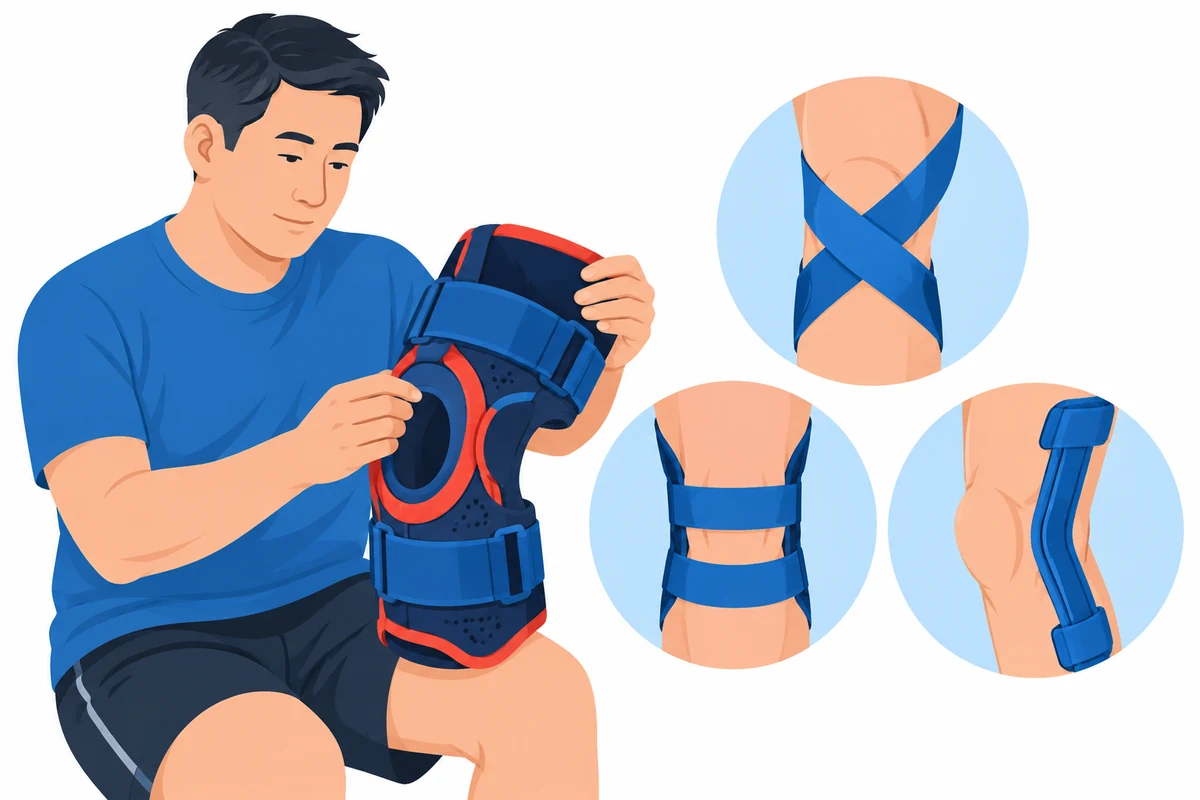
Isolated PCL injury may be treated without surgery using a brace and rehabilitation, depending on the condition. Persistent instability or additional ligament injury may warrant surgical discussion. MRI findings, actual posterior translation and activity limitations are assessed together. One cutoff cannot fit every patient; reassess stability and daily function during treatment.
Can I follow exercises intended for a different ligament injury?
Each ligament needs protection from different forces, so exercise timing and methods can differ. Quadriceps recovery matters in PCL injury, but more exercise immediately is not always better. Confirm brace use, permitted bending, and weight bearing. Multiple-ligament injury or repair and reconstruction need procedure-specific protection. Check that a video exercise suits your current stage.
Confirm the Injured Ligament and the Treatment Goal
Ask which ligament is injured, whether other structures are affected, and which forces to avoid now. Confirm reassessment rather than removing a brace or changing intensity yourself. Report persisting slipping even if pain has eased. Separate everyday-walking goals from sport goals, and explain the movements needed at work or in exercise so rehabilitation has a clear endpoint.