Symptoms and tests
What should I check when knee pain disrupts sleep?
Include the pattern of night pain and its effect on sleep in treatment decisions.
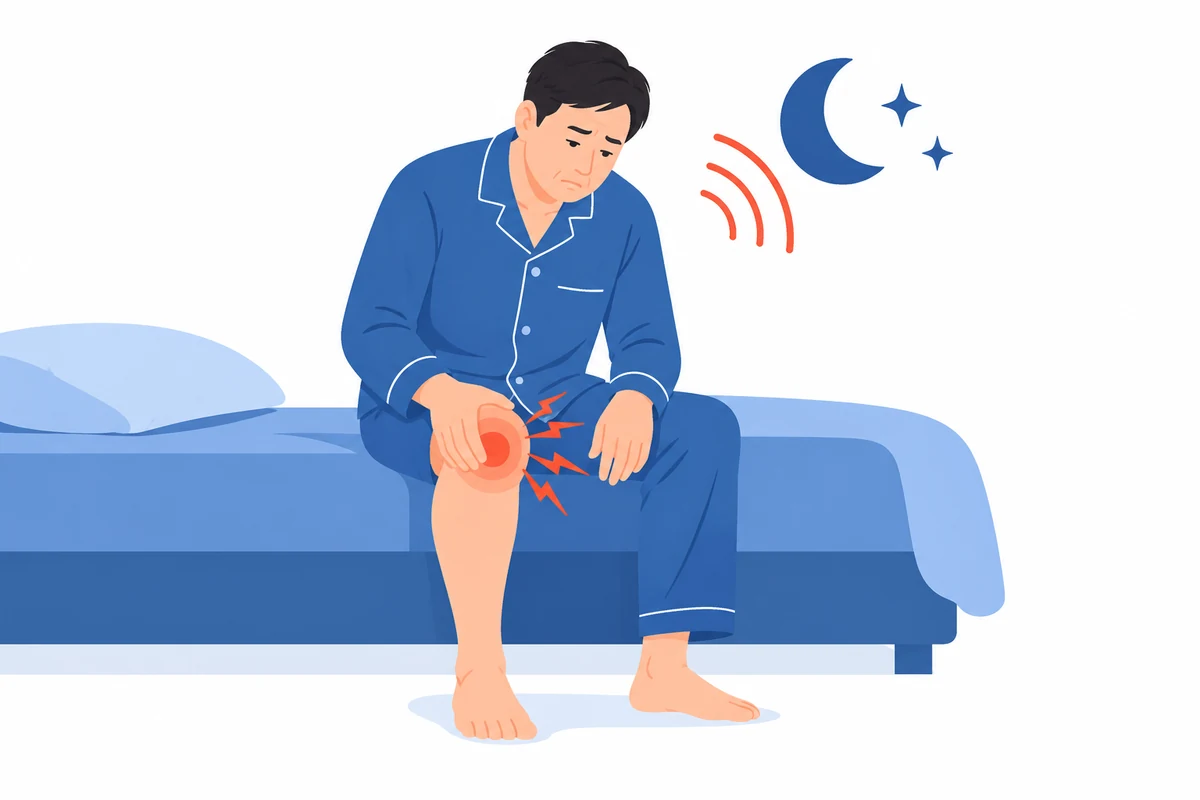
At a glance
- Night pain alone does not determine arthritis stage or the need for surgery.
- Record posture, duration and how often pain wakes you.
- New persistent pain with heat, fever or marked swelling needs assessment.
Waking with knee pain affects fatigue, mood and activity the next day as well as walking. Night pain alone does not establish end-stage arthritis or a need for surgery. Its timing, relation to posture and any new symptoms all need consideration.
Three items to bring to a consultation
When and how
Distinguish lying down, turning and pain at rest.
Effect on life
Record awakenings, next-day fatigue and activity.
Associated changes
Mention warmth, swelling, fever, injury and tingling.
Three panels show timing, sleep disruption and associated new symptoms
Separate difficulty falling asleep from waking with pain
Note whether it hurts on lying down, on turning, or continuously at rest. Compare evenings after a long walk with less active days. The number of awakenings and next-day fatigue show how much everyday life is affected.
Symptoms may change with the knee bent or straight. Try a comfortable position, but fixing the knee with a pillow is not a solution for everyone. After surgery, specific instructions about knee position and range of movement may apply and should guide you.
Consider other reasons sleep is interrupted
Besides joint pain and swelling, pain referred from the back, tingling or leg cramps can disturb sleep. Explain exactly where symptoms occur, whether they extend to the foot and whether movement changes them. An abnormal knee X-ray need not explain every night symptom.
Poor sleep can make coping with pain harder and reduce daytime activity. Alongside pain treatment, review bedtime, waking time, naps and late activities. Increasing sleeping medication alone should not be treated as a solution to the knee problem.
Review medication effects and adverse effects
Record when you take medicine, how long relief lasts, and any stomach discomfort or dizziness. Tell the clinician if you take extra doses overnight. Different products can contain the same ingredient, so adding another medicine without checking can be unsafe.
Repeated waking despite your usual treatment is a reason to revisit the plan. Depending on the situation, discuss activity and strengthening, suitable medication, other causes and the role of surgery. Sleeping comfortably and moving the next day are relevant outcomes, not only the imaging grade.
Assess new persistent night pain separately
Seek same-day assessment for a newly hot, swollen joint, sudden severe pain or a knee locked so that it cannot straighten. Go directly to emergency care if you suddenly cannot bear any weight or the knee swells rapidly after injury. Do not delay care because there is no fever.
Mention injury, recent surgery or injection, and other new health changes. Even familiar longstanding pain should be discussed when it costs you sleep. Comparing better and worse nights helps identify patterns and evaluate the response to treatment.
Common Questions
Does night pain always mean advanced arthritis?
No. The pattern, alternative causes, functional limitations and imaging are considered together.
Can I put a pillow under my knee?
Comfortable positions vary. After surgery, check that this does not conflict with instructions such as restoring knee extension.
Should I take more pain medicine overnight?
Check dosing instructions, overlapping ingredients and side effects first. Adjust the plan with your clinician rather than increasing doses yourself.
Evidence and references
01When to seek medical care
Each warning sign is a separate reason to seek care. Follow the action below if any one applies.
Emergency department · call 119 in Korea
- Call 119 for sudden breathlessness or chest pain, severe faintness or loss of consciousness. Do not wait for calf swelling to appear.
- Go to an emergency department if you suddenly cannot bear any weight, or if an injured knee swells rapidly or looks deformed. A cold or numb foot after injury also needs immediate assessment.
- Seek emergency care for a hot, swollen and severely painful joint with high fever, shaking chills, confusion or inability to bear weight.
- With back or leg pain, go immediately to an emergency department for new difficulty passing urine, loss of bladder or bowel control, or numbness around the genitals or anus. Severe or rapidly worsening weakness or numbness in both legs also needs immediate assessment.
Same-day assessment
- Arrange assessment today for a newly hot, swollen joint, sudden severe pain, or a knee locked so that it cannot fully straighten. Joint infection can occur without fever.
- Have new swelling or pain in one calf assessed today for a possible blood clot. Call 119 immediately if breathlessness or chest pain develops.
- Severe knee pain or a new limp in a growing adolescent may come from a hip condition such as slipped capital femoral epiphysis. Stop walking and sport and arrange assessment today. Go directly to emergency care if they cannot bear weight.
- Stop running and seek assessment today for new recurring groin pain, pain with walking or at night, or a limp. A femoral neck stress fracture needs to be considered. Keep weight off the painful leg until assessed. Go to emergency care if you cannot bear weight.
Book an outpatient appointment
- If none of the warning signs above is present, book an appointment for pain lasting a few weeks, repeated swelling or reduced daily activity and exercise.