Symptoms and tests
How long does morning knee stiffness last?
Record its timing and duration together with symptoms in other joints.
At a glance
- Consider duration and symptoms in other joints together.
- The 30-minute criterion is one part of a NICE clinical assessment, not a standalone self-test.
- Begin gently and assess new swelling or warmth.
Some knees feel stiff for the first steps in the morning and ease after movement. The same can happen after prolonged sitting. Describing duration, swelling and pain alongside stiffness helps a clinician understand the pattern.
A morning stiffness record
When and how long
Record the transition from first movement to usual walking.
What accompanies it
Note knee swelling and symptoms in other joints.
How to begin
Move gently within a comfortable range and observe the response.
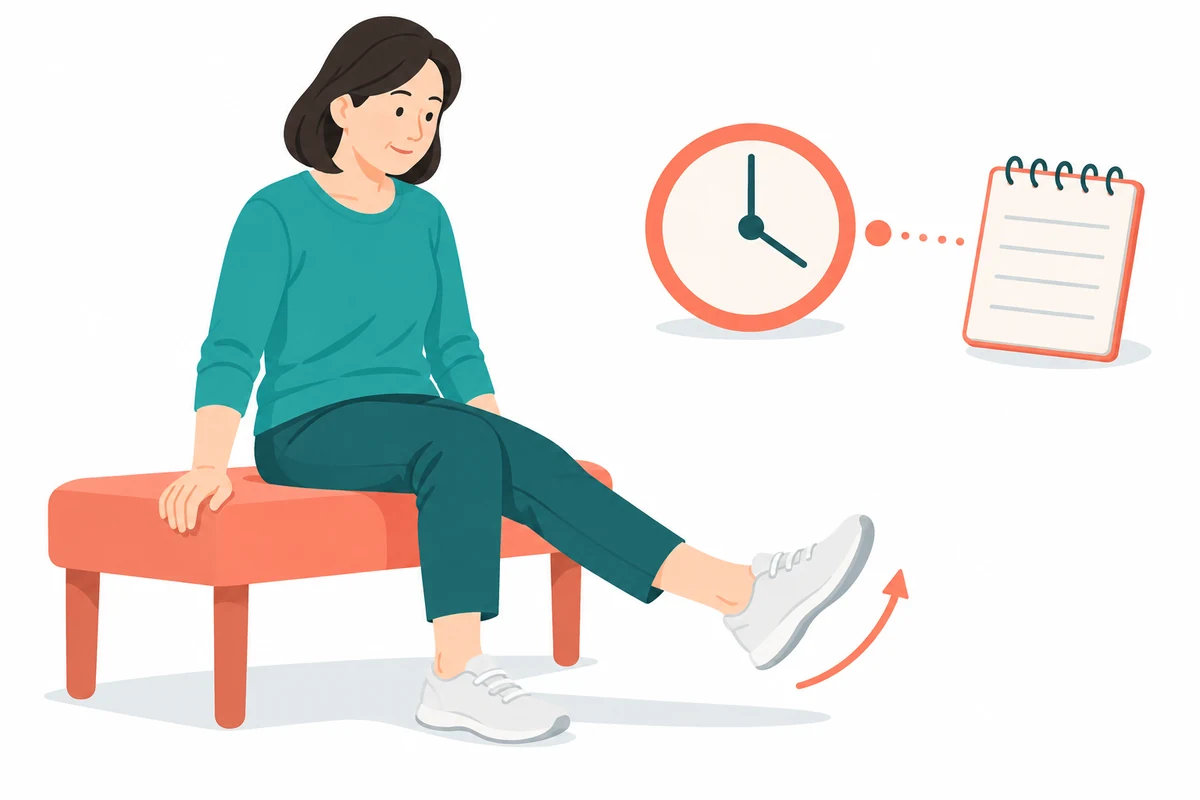
Three panels record timing, accompanying symptoms and first movements
Describe pain and stiffness separately
Stiffness is difficulty getting movement started; pain is the unpleasant sensation. They can coexist but are not identical. A knee that cannot fully bend or straighten has a separate range-of-motion limitation. Distinguish the morning sensation from a restriction that remains all day.
Note when you started moving after waking and roughly how long it took to walk as usual. Compare lying, standing and walking, and whether prolonged sitting causes the same problem. A repeated pattern is more helpful than timing every second.
Duration is one diagnostic clue
Morning stiffness in osteoarthritis is often relatively brief. NICE includes no morning stiffness or stiffness lasting no more than 30 minutes, together with activity-related pain in adults aged 45 or over, in its clinical diagnostic criteria. Duration alone does not diagnose or exclude every case.
Longer stiffness or swelling in several joints, including hands or wrists, may prompt consideration of inflammatory arthritis or other causes. A duration just over 30 minutes does not establish a particular disease. The pattern, examination and selected tests are considered together.
Start the first movements gently
Before a deep squat, begin with slow bending and straightening within a comfortable range in bed or a chair. Check balance before standing and use nearby support if needed. Do not force the joint to its limit to make it loosen.
Brief preparation helps start the day but does not replace strengthening and aerobic exercise. Warmth may feel soothing, but a hot, swollen red knee needs assessment first. Adjust morning activity to the pain and swelling present.
Report new changes separately
Tell the clinician if stiffness lasts longer than usual, several joints swell or daily function declines. Sudden major swelling, fever or difficulty bearing weight differs from ordinary morning stiffness and needs prompt assessment.
Bring a brief record of duration, affected joints, swelling, variation during the day and medication. After treatment, compare the first steps as well as rising from a chair and walking. Improvement in everyday function matters alongside shorter stiffness.
Common Questions
Does more than 30 minutes mean rheumatoid arthritis?
No. Joint swelling, the course of symptoms, examination and selected tests must be considered together.
Should I force the knee straight in the morning?
Start gently in a comfortable range rather than pressing through pain. Persistent loss of extension needs review.
If moving eases stiffness, can I keep increasing exercise?
Easing stiffness does not define a suitable exercise dose. Also check later pain, swelling and function.
Evidence and references
01When to seek medical care
Each warning sign is a separate reason to seek care. Follow the action below if any one applies.
Emergency department · call 119 in Korea
- Call 119 for sudden breathlessness or chest pain, severe faintness or loss of consciousness. Do not wait for calf swelling to appear.
- Go to an emergency department if you suddenly cannot bear any weight, or if an injured knee swells rapidly or looks deformed. A cold or numb foot after injury also needs immediate assessment.
- Seek emergency care for a hot, swollen and severely painful joint with high fever, shaking chills, confusion or inability to bear weight.
- With back or leg pain, go immediately to an emergency department for new difficulty passing urine, loss of bladder or bowel control, or numbness around the genitals or anus. Severe or rapidly worsening weakness or numbness in both legs also needs immediate assessment.
Same-day assessment
- Arrange assessment today for a newly hot, swollen joint, sudden severe pain, or a knee locked so that it cannot fully straighten. Joint infection can occur without fever.
- Have new swelling or pain in one calf assessed today for a possible blood clot. Call 119 immediately if breathlessness or chest pain develops.
- Severe knee pain or a new limp in a growing adolescent may come from a hip condition such as slipped capital femoral epiphysis. Stop walking and sport and arrange assessment today. Go directly to emergency care if they cannot bear weight.
- Stop running and seek assessment today for new recurring groin pain, pain with walking or at night, or a limp. A femoral neck stress fracture needs to be considered. Keep weight off the painful leg until assessed. Go to emergency care if you cannot bear weight.
Book an outpatient appointment
- If none of the warning signs above is present, book an appointment for pain lasting a few weeks, repeated swelling or reduced daily activity and exercise.