Symptoms and tests
Does a noisy knee mean the cartilage is worn?
Consider pain, swelling, locking and movement rather than the sound alone.
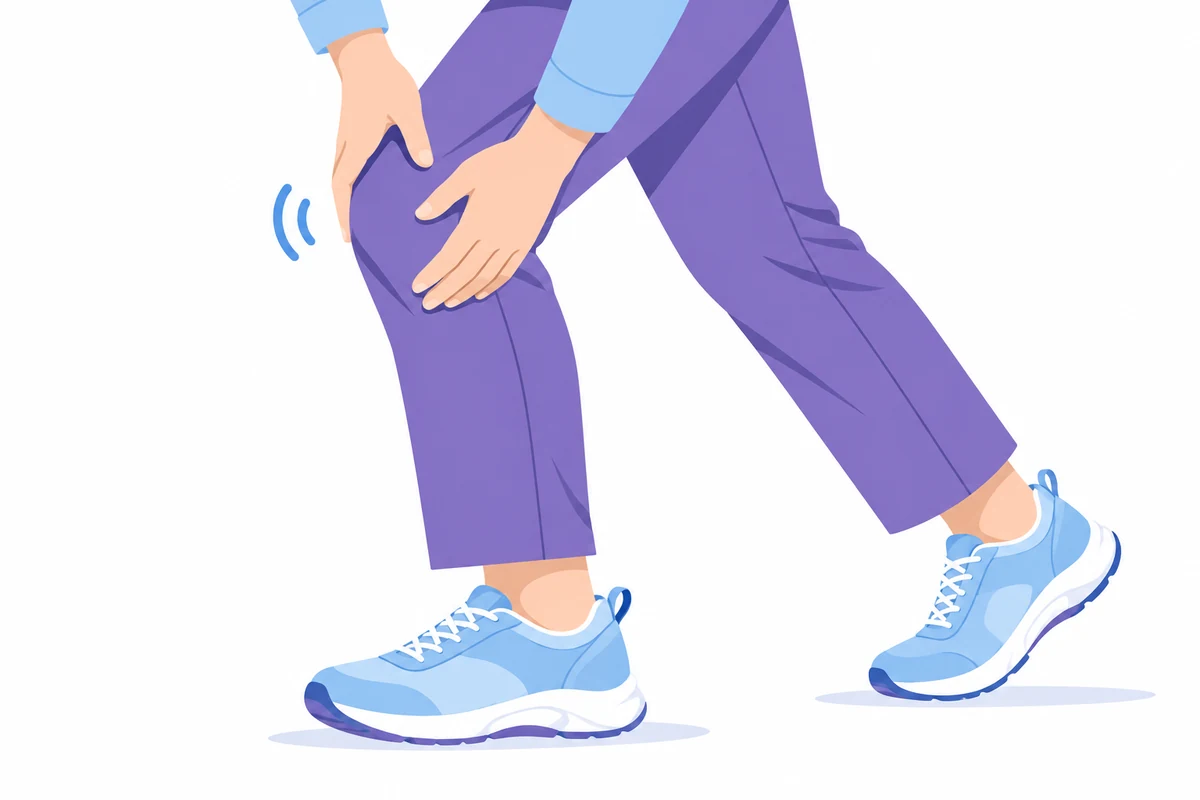
At a glance
- Painless noise alone does not diagnose cartilage damage or osteoarthritis.
- Check for accompanying pain, swelling, instability and true locking.
- Walking and range of movement matter more than loudness.
Clicks or a grinding sensation during bending can be worrying. Painless noises are common, and sound alone does not diagnose osteoarthritis or cartilage damage. The movement involved and the symptoms accompanying it are more useful information.
The same sound can require different responses
- 01
Noise only
Monitor pain, swelling and function during usual activity.
- 02
Pain or swelling
Assess the movement and tissues through examination.
- 03
Injury or true locking
Distinguish from familiar noise and seek prompt assessment.
Three panels compare painless noise, symptomatic noise and injury with locking
Loudness does not measure damage
Moving joint and surrounding tissues can produce different sounds. A single click and a repeated grating sensation are not identical. A loud noise does not necessarily mean a larger injury, and a quiet knee does not prove a normal joint.
An examination considers the location and the movement that reproduces the noise. It matters whether it occurs at the front on stairs or catches on the inner side when turning. Imaging may help when indicated, but eliminating every sound is not the only treatment goal.
If movement remains comfortable
If there is no pain or swelling and walking and range of movement are maintained, noise alone does not require stopping all activity. Avoid repeatedly pressing or deeply bending the knee just to check the sound. How well you move in ordinary activity is more useful.
A light noise during exercise does not cancel its benefits. Move in a controlled way and observe how the knee and foot move. This does not mean you must tolerate symptoms: if pain appears or swelling increases, review the movement and intensity.
Painful clicking and true locking need assessment
Noise with pain, swelling or buckling should be assessed. A brief catching sensation differs from being unable to fully straighten the knee. Meniscal problems, other tissues and arthritis-related changes are among the possibilities considered during examination.
A loud sound during injury followed by rapid swelling or difficulty bearing weight is different from familiar painless clicking. Do not repeatedly force bending in an effort to unlock it. Assessing a possible new injury takes priority over naming the sound.
Record effects on daily life
Briefly note onset, location, pain, swelling, range and walking difficulty. A painless click when rising from a chair poses different questions from pain that makes you stop on stairs. These details are more helpful than loudness alone.
Judge treatment by changes in pain and function as well as noise. If strengthening and movement adjustments make activity easier, persisting noise need not erase that improvement. Explain what is different if symptoms change.
Common Questions
Do noises mean I need an MRI?
Not on their own. Examination and associated symptoms guide whether imaging is useful.
Should I avoid exercise with a noisy knee?
Noise alone is not a reason to stop when there is no pain or functional problem. Adjust and seek review if new pain or swelling develops.
Does catching mean a meniscal tear?
It is one possible explanation. True locking, examination and selected imaging help determine the cause.
Evidence and references
01When to seek medical care
Each warning sign is a separate reason to seek care. Follow the action below if any one applies.
Emergency department · call 119 in Korea
- Call 119 for sudden breathlessness or chest pain, severe faintness or loss of consciousness. Do not wait for calf swelling to appear.
- Go to an emergency department if you suddenly cannot bear any weight, or if an injured knee swells rapidly or looks deformed. A cold or numb foot after injury also needs immediate assessment.
- Seek emergency care for a hot, swollen and severely painful joint with high fever, shaking chills, confusion or inability to bear weight.
- With back or leg pain, go immediately to an emergency department for new difficulty passing urine, loss of bladder or bowel control, or numbness around the genitals or anus. Severe or rapidly worsening weakness or numbness in both legs also needs immediate assessment.
Same-day assessment
- Arrange assessment today for a newly hot, swollen joint, sudden severe pain, or a knee locked so that it cannot fully straighten. Joint infection can occur without fever.
- Have new swelling or pain in one calf assessed today for a possible blood clot. Call 119 immediately if breathlessness or chest pain develops.
- Severe knee pain or a new limp in a growing adolescent may come from a hip condition such as slipped capital femoral epiphysis. Stop walking and sport and arrange assessment today. Go directly to emergency care if they cannot bear weight.
- Stop running and seek assessment today for new recurring groin pain, pain with walking or at night, or a limp. A femoral neck stress fracture needs to be considered. Keep weight off the painful leg until assessed. Go to emergency care if you cannot bear weight.
Book an outpatient appointment
- If none of the warning signs above is present, book an appointment for pain lasting a few weeks, repeated swelling or reduced daily activity and exercise.