2026 · BMC Medicine
Can low-dose radiotherapy reduce knee osteoarthritis symptoms?
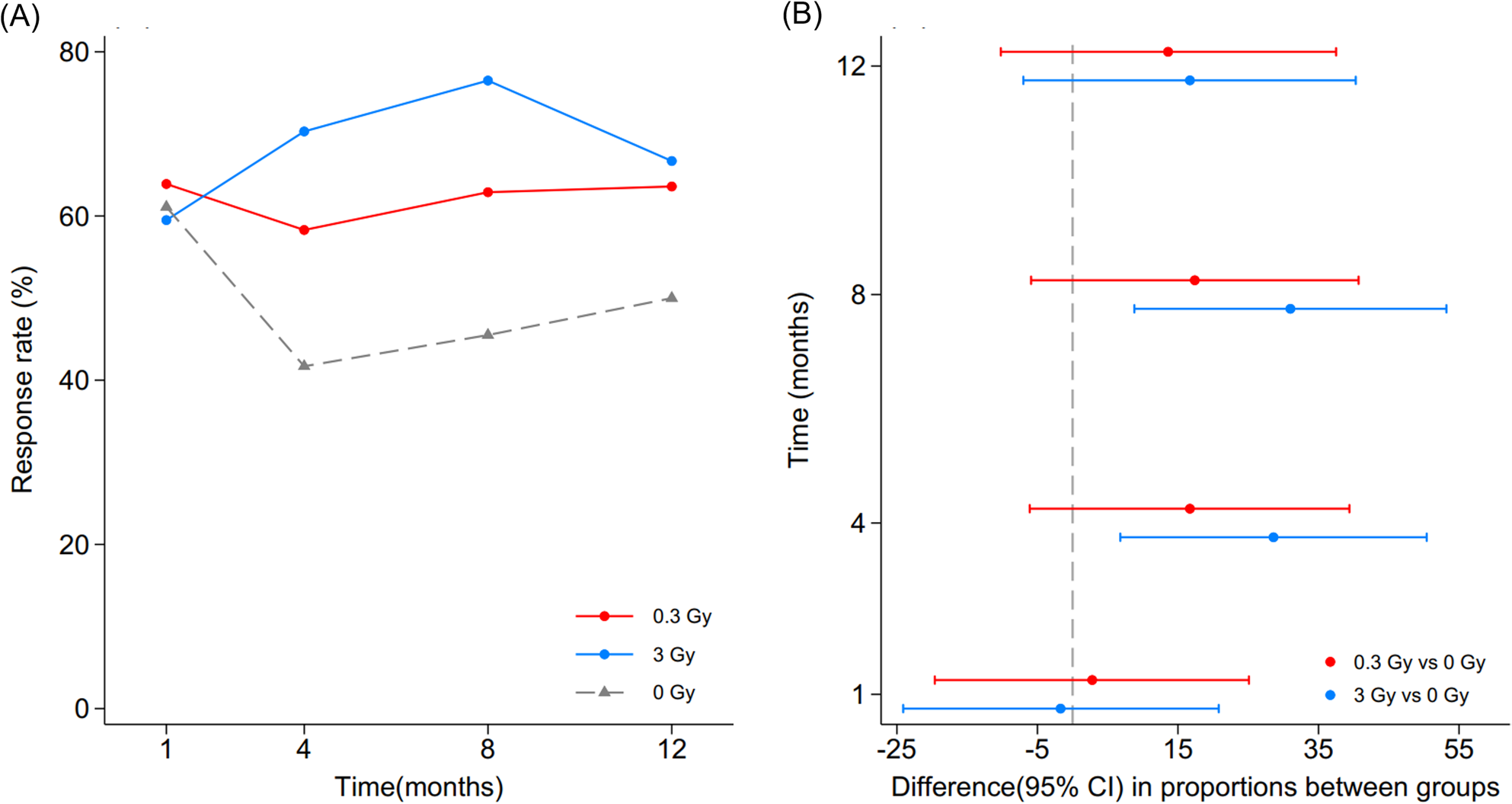
At four months, responder rates were 70.3% with 3 Gy versus 41.7% with sham (p=0.021); the 0.3-Gy rate was 58.3% (p=0.168 versus sham).
Original Figure 2
 Enlarge Figure
Original responder rates at 1, 4, 8 and 12 months and 95% confidence intervals versus sham; the 3-Gy difference was not significant at 12 months.
Kim, Ro, Wang et al., BMC Medicine, 2026 · DOI: 10.1186/s12916-026-05287-9 · Figure 2.
Original Figure 1
 Enlarge Figure
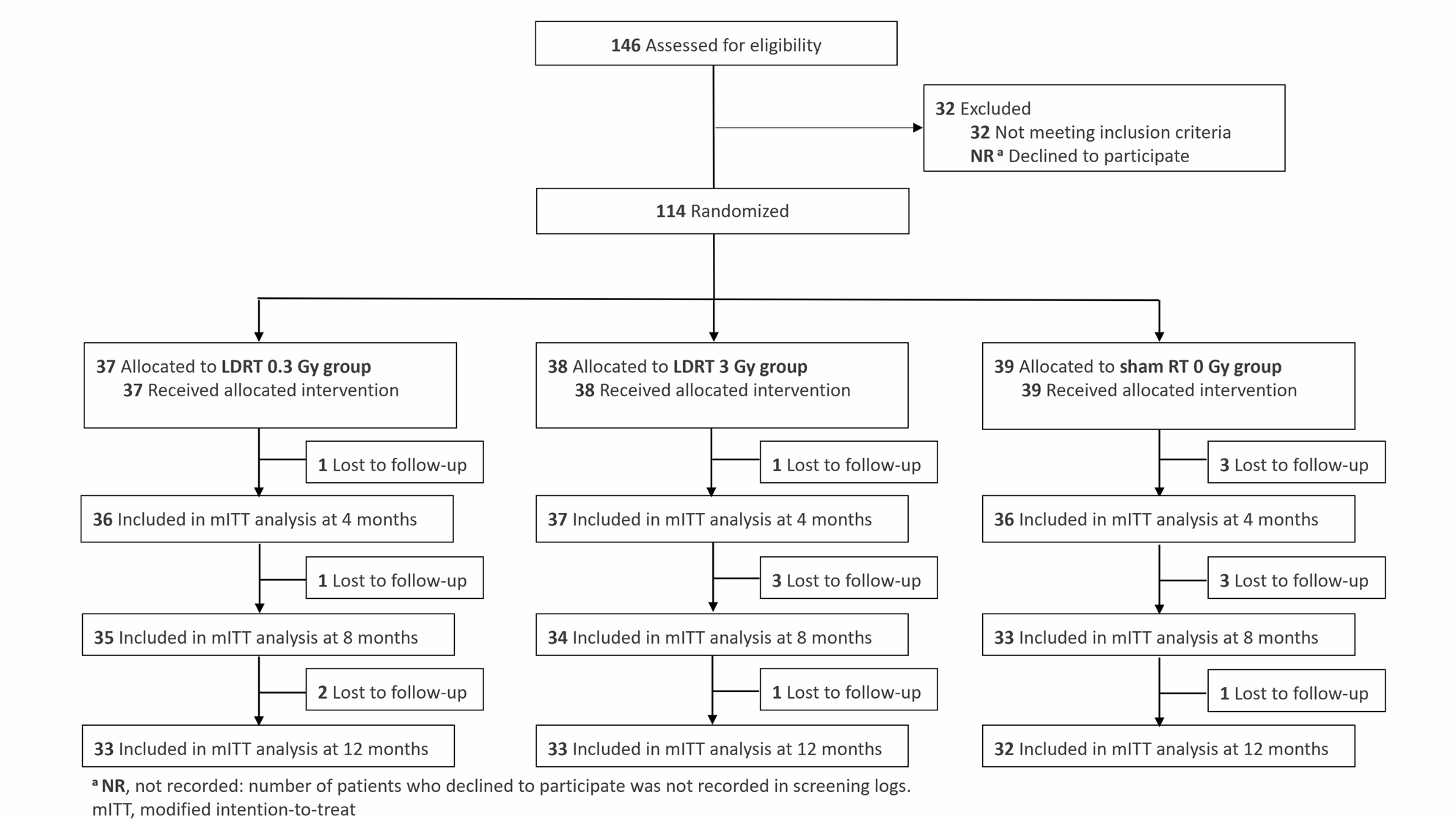
Original CONSORT diagram of allocation and analysis populations.
Kim, Ro, Wang et al., BMC Medicine, 2026 · DOI: 10.1186/s12916-026-05287-9 · Figure 1.
Original Figure 3
 Enlarge Figure
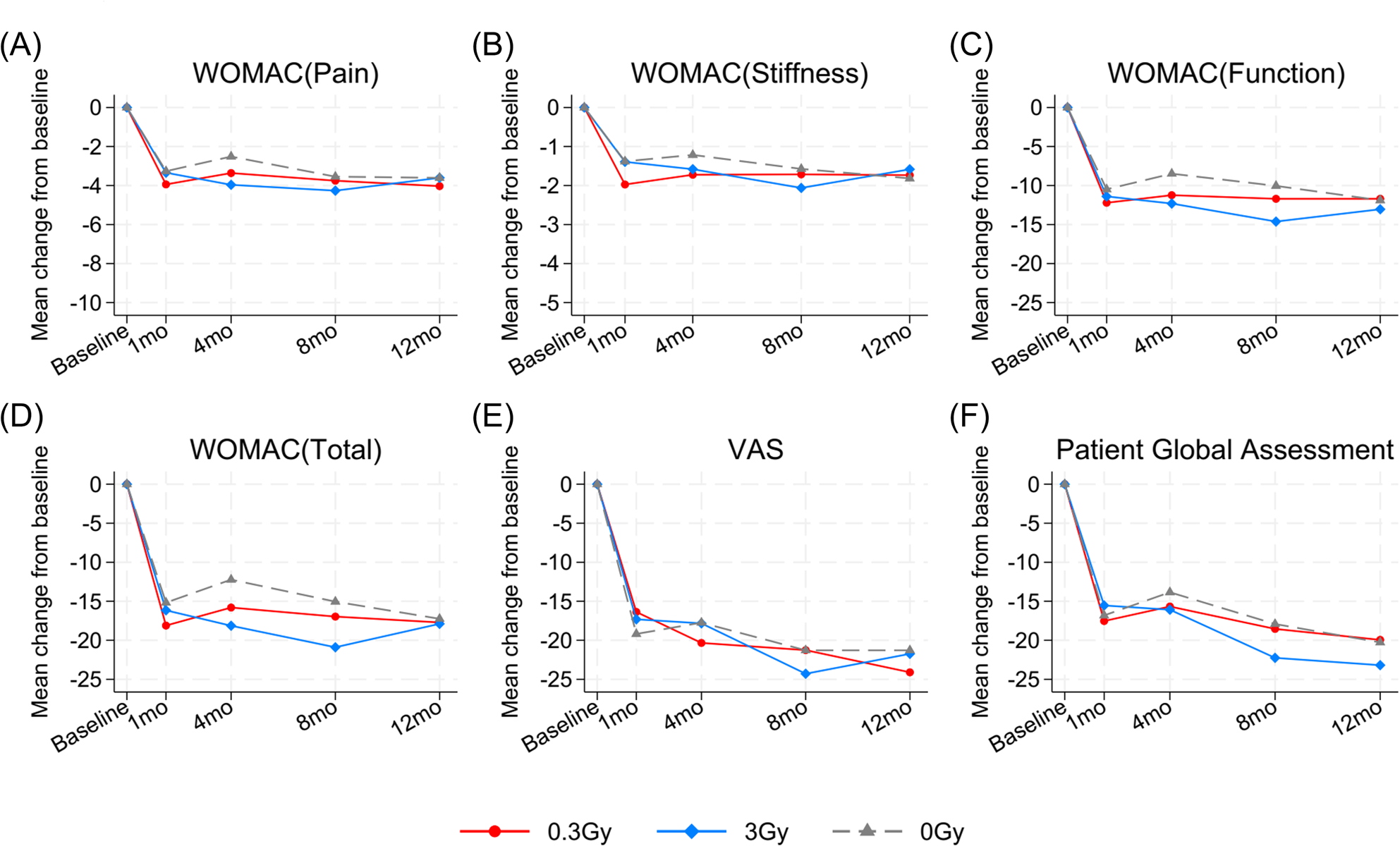
Original WOMAC, VAS and PGA trajectories; continuous secondary outcomes did not show significant between-group differences.
Kim, Ro, Wang et al., BMC Medicine, 2026 · DOI: 10.1186/s12916-026-05287-9 · Figure 3.
Participants and Methods
Main Findings
The point of reading on surgery
Limitations
Let's put it briefly.
What did this study confirm?
At four months, responder rates were 70.3% with 3 Gy versus 41.7% with sham (p=0.021); the 0.3-Gy rate was 58.3% (p=0.168 versus sham).
Can it be applied directly to individual patients' treatment decisions?
Short-term responder benefit does not establish cartilage regeneration, long-term disease modification or a standard treatment for all patients.
Keywords
- knee osteoarthritis
- randomized trial
- low-dose radiotherapy
- symptom response
Abstract · Original text
Byoung Hyuck Kim, Du Hyun Ro, Joon Ho Wang, Dae-Hee Lee, Kichul Shin, Min Jung Kim, Tae Woo Kim, Moon Jong Chang, Dong Hyun Kim, Mira Han, Ji Hyun Lee, Ji Hee Kang, Ji Young Kim, Eun-Hee Hong, Seong-Jun Cho, Hyuk-Soo Han, Hak Jae Kim, Won Park. Single course low-dose radiation therapy in knee osteoarthritis (LoRD-KNeA): a randomized controlled trial. BMC Medicine. 2026. doi:10.1186/s12916-026-05287-9.
Excerpt from the original abstract
Low-dose radiotherapy (LDRT) has been used as a non-pharmacological treatment for osteoarthritis (OA), but robust evidence from randomized, sham-controlled trials remains limited.…© 2026 The Author(s).
The original paper.
Single course low-dose radiation therapy in knee osteoarthritis (LoRD-KNeA): a randomized controlled trial
Byoung Hyuck Kim, Du Hyun Ro, Joon Ho Wang, Dae-Hee Lee, Kichul Shin, Min Jung Kim, Tae Woo Kim, Moon Jong Chang, Dong Hyun Kim, Mira Han, Ji Hyun Lee, Ji Hee Kang, Ji Young Kim, Eun-Hee Hong, Seong-Jun Cho, Hyuk-Soo Han, Hak Jae Kim, Won Park
BMC Medicine · 2026