The research question
Consistent OA assessment prompts the next question: could changes in diagnosis and nonsurgical treatment alter healthcare costs and quality of life? This study calculated that pathway with an economic model.
What was tested?
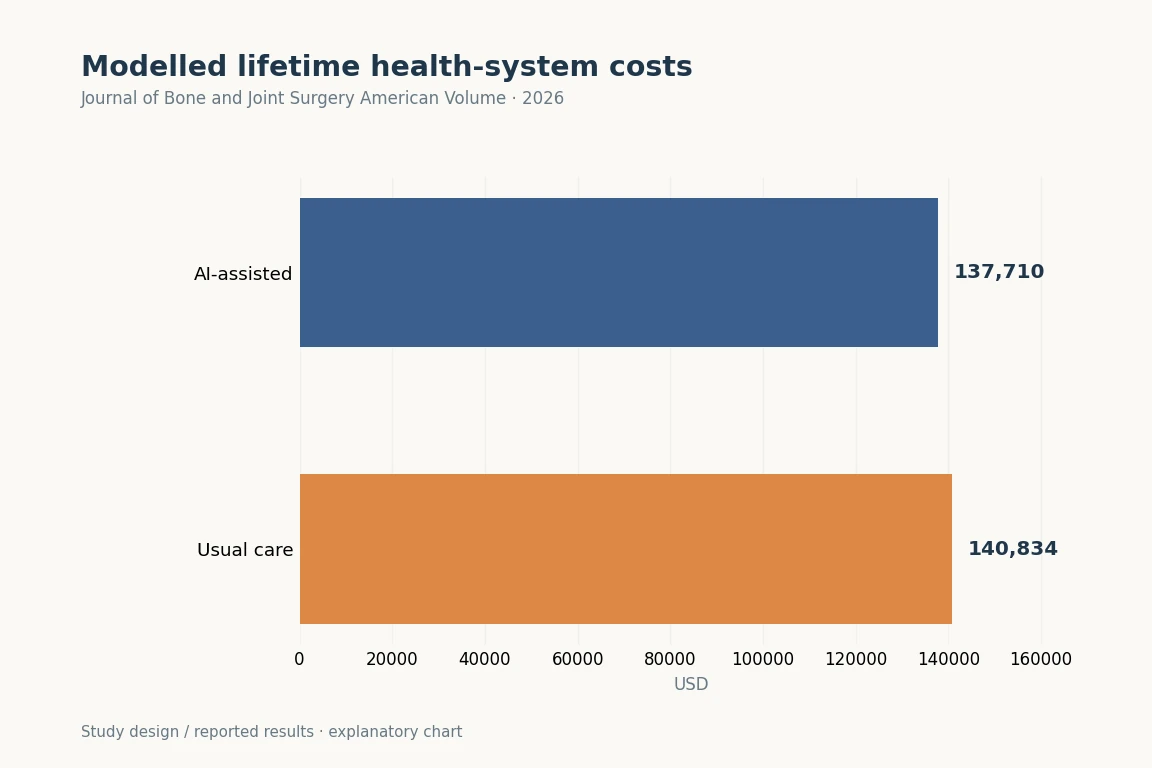
A hypothetical Korean cohort aged ≥50 was modelled over a lifetime with AI-assisted versus conventional grading. Base-case estimates were $3,125 lower costs and 0.260 additional quality-adjusted life years (QALYs). Across varied assumptions, the probability of cost-effectiveness was 55.1%.
Reading this in a clinical context
Measurement technology matters when its numbers improve treatment pathways and daily life. These estimates can guide the next validation using real clinical data.
Scope of Interpretation
This was a simulated cohort, not a trial allocating real patients to two treatments. Results depended on AI costs and nonsurgical-treatment assumptions. It does not guarantee $3,125 savings or a corresponding health gain for an individual.