2026 · Knee Surgery & Related Research
整形外科AIの臨床導入を妨げる要因と、必要な検証は何か?
輸血・再入院予測、骨折・OA画像評価、診療文書・患者説明を支援するLLMを比較した総説です。モデル精度を臨床的利益へ結びつける検証と運用を解説します。
図3はオリジナルです
 図を拡大する
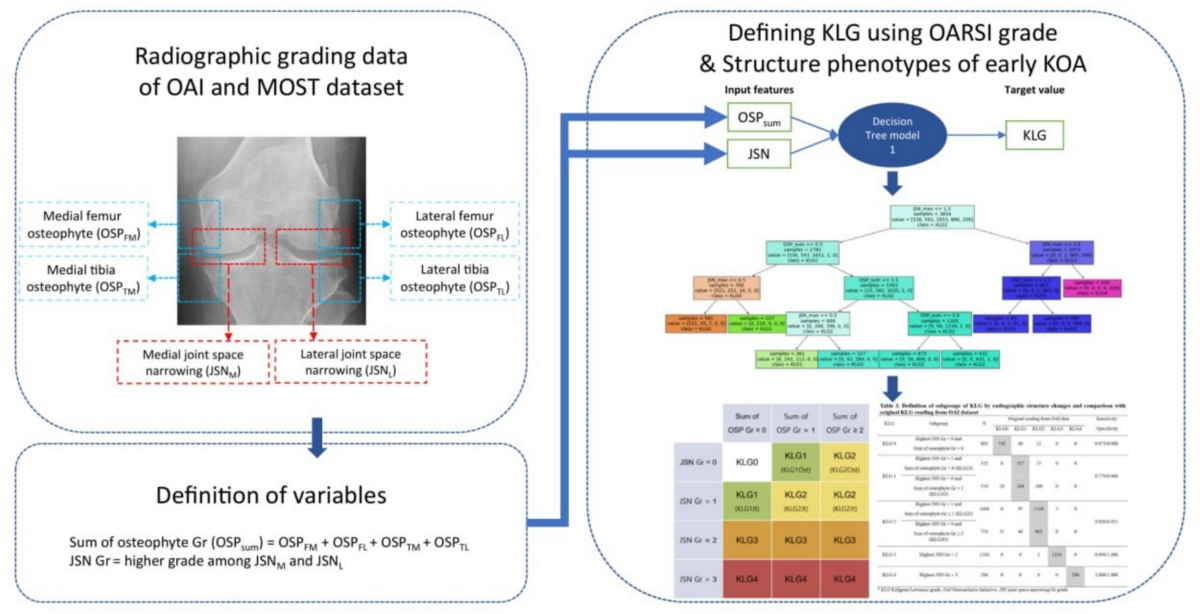
骨棘と関節裂隙狭小化の特徴をKLグレードに関連づけた図です。
Sang Yoon Kim, Byung Sun Choi, Hyuk-Soo Han, Du Hyun Ro. Artificial intelligence in orthopedics: current applications, challenges, and future directions. Knee Surgery & Related Research (2026). DOI: 10.1186/s43019-026-00317-5 · Figure 3. Figure created by the article authors based on Ko et al.
図1はオリジナルです
 図を拡大する
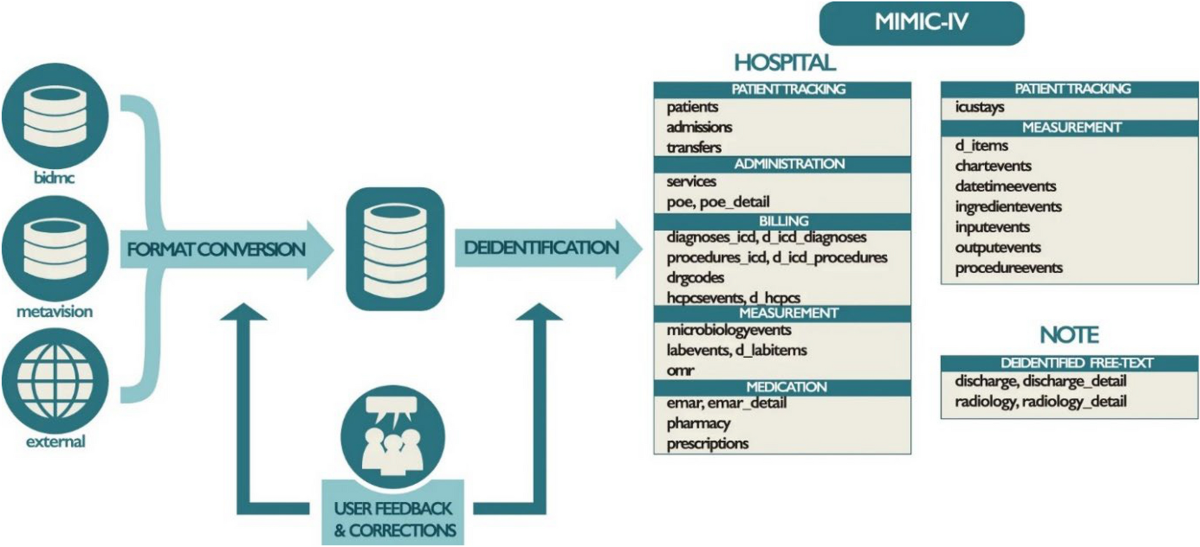
MIMIC-IVの病院・集中治療・診療文書データを連結する構造です。
Sang Yoon Kim, Byung Sun Choi, Hyuk-Soo Han, Du Hyun Ro. Artificial intelligence in orthopedics: current applications, challenges, and future directions. Knee Surgery & Related Research (2026). DOI: 10.1186/s43019-026-00317-5 · Figure 1. Adapted from Johnson et al. under CC BY 4.0; changes were made by the article authors.
図5は最初のものです
 図を拡大する
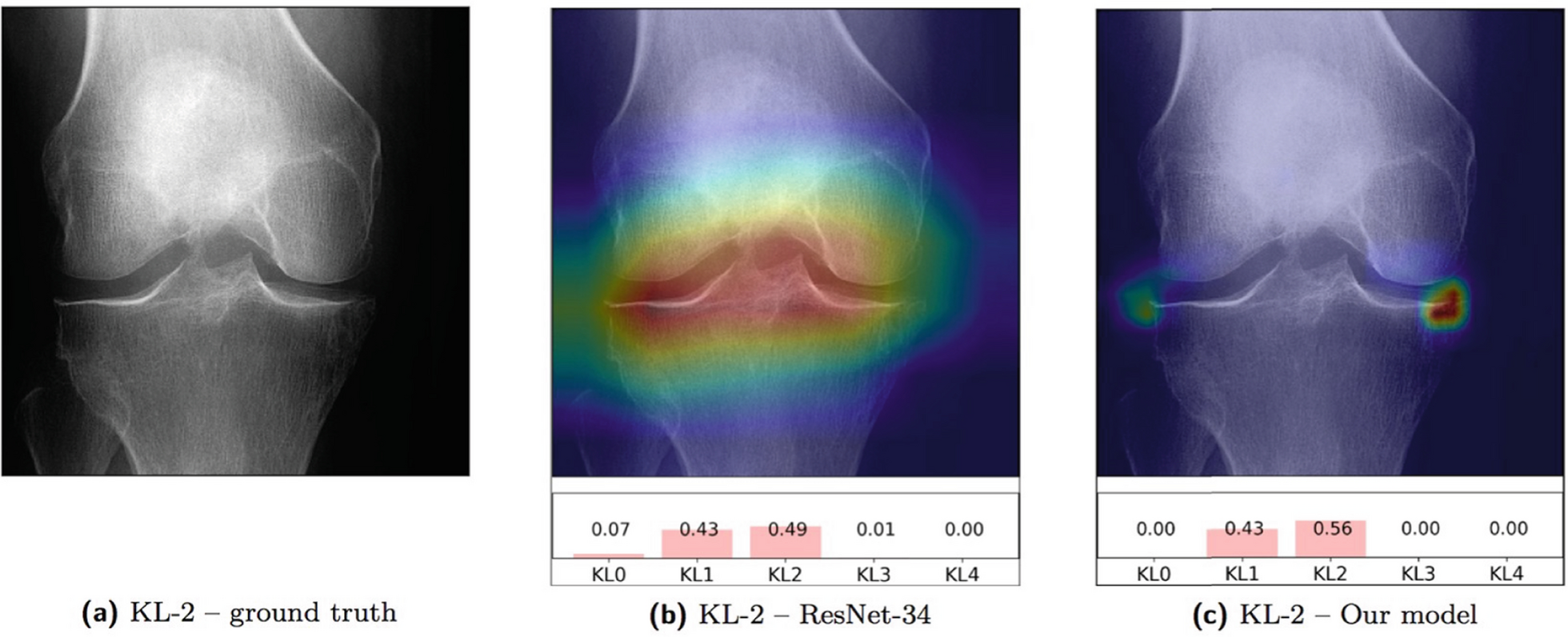
X線、saliency map、KLグレードの確率を並べた図です。
Sang Yoon Kim, Byung Sun Choi, Hyuk-Soo Han, Du Hyun Ro. Artificial intelligence in orthopedics: current applications, challenges, and future directions. Knee Surgery & Related Research (2026). DOI: 10.1186/s43019-026-00317-5. © The Author(s) 2026 Figure credit: Adapted in style from Tiulpin et al., Scientific Reports 2018;8:1727 (CC BY 4.0), with modifications.
原著の図の説明
Chain-of-thought (CoT) rationale for automated Kellgren–Lawrence (KL) grading. a Input anteroposterior weight-bearing radiograph; b Standard Grad-CAM saliency showing nonspecific feature …
総説の問いと検討範囲
臨床課題に合うデータとモデル
周術期予測を診療行動につなげる
画像AIによる診断支援と測定標準化
LLMによる記録・情報抽出・説明
データ漏洩防止と外部検証
判別力・較正・純利益は別の問い
説明可能性の図をどう読むか
Silent modeから医師–AI共同評価へ
導入後の監視と責任
多モダリティとdigital twinの可能性と検証課題
総説を臨床に活用する要点
簡単に説明しましょう
どの整形外科AI業務が臨床導入に近いですか?
総説は構造化リスク予測と画像測定を比較的導入に近い領域としますが、製品ごとの外部検証、業務適合性と医師使用下の利益確認が必要です。
高いAUROCだけで直ちに使用できますか?
いいえ。較正、閾値、外部・群別性能、見逃しと不要対応を評価し、前向き診療環境で検証します。
説明可能性の図があれば信頼できますか?
図は手掛かりであり、正しい因果判断・安全性の証明ではありません。実際の誤り、測定特徴と独立データの性能を併せて確認します。
LLMの現実的な当面の役割は何ですか?
医師が確認する要約、情報抽出と草案作成です。文章品質に加え重要情報欠落、修正負担、個人情報と誤助言を評価します。
Digital twinは患者経過を確実に予測しますか?
いいえ。総説での将来研究方向であり、連結データの信頼性、追加予測価値と前向き利益の検証が必要です。
Keywords・キーワード
- Artificial intelligence
- Clinical translation
- Deep learning
- External validation
- Large language models
- Machine learning
- Musculoskeletal imaging
- Orthopedics
Abstract・原文の抄録
Sang Yoon Kim, Byung Sun Choi, Hyuk-Soo Han, Du Hyun Ro. Artificial intelligence in orthopedics: current applications, challenges, and future directions. Knee surgery & related research. 2026;38(1):14. doi:10.1186/s43019-026-00317-5.
BACKGROUND
Artificial intelligence research in orthopedics has grown rapidly, yet a substantial gap remains between technical development and clinical translation. This narrative review summarizes current applications of artificial intelligence in orthopedic practice and highlights barriers to implementation.
MAIN BODY
Current work converges on three domains: machine learning for structured perioperative risk prediction, deep learning for standardized musculoskeletal imaging, and large language models for workflow and decision support. Applications such as automated fracture detection, Kellgren-Lawrence grading for osteoarthritis, and transfusion risk modeling are approaching clinical maturity. However, routine adoption is limited by algorithmic opacity, performance degradation in new clinical environments, and poor fit within existing workflows. We argue that progress should shift from increasing model complexity toward rigorous evaluation, including external validation on independent cohorts. In addition, probability calibration and uncertainty estimation are important for trustworthy risk communication. Future directions may include multimodal "digital twin" approaches that integrate electronic medical records, imaging phenotypes, and intraoperative data into patient-specific trajectories.
CONCLUSIONS
The clinical impact of artificial intelligence in orthopedics will depend on life-cycle governance and demonstrated net benefit, prioritizing reliability and implementation science over retrospective benchmark performance.
© The Author(s) 2026
オリジナル紙だ
Artificial intelligence in orthopedics: current applications, challenges, and future directions
Sang Yoon Kim, Byung Sun Choi, Hyuk-Soo Han, Du Hyun Ro
Knee Surgery & Related Research · 2026